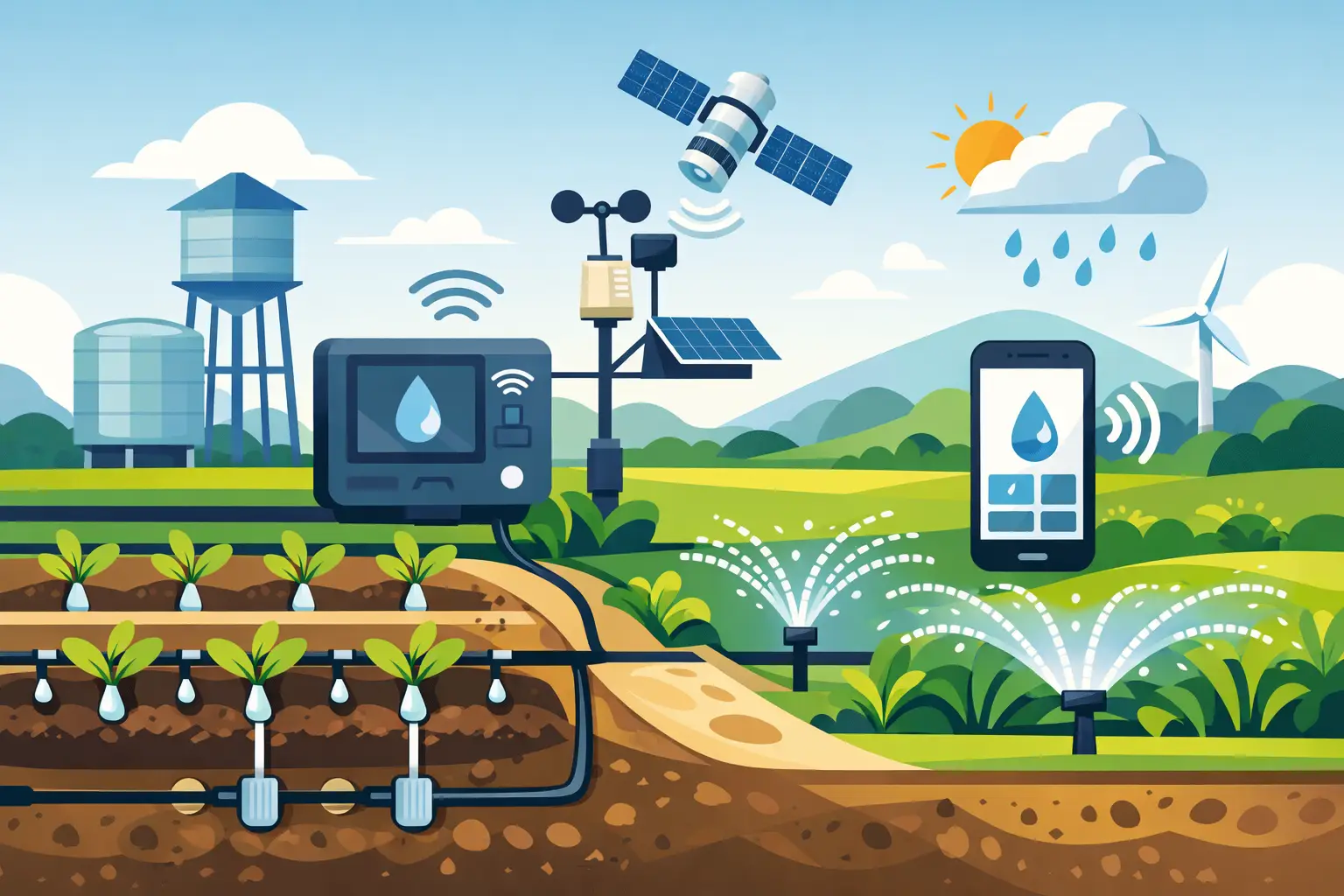
If your lawn looks dry in one area, soggy in another, and your water bill keeps climbing, the problem usually is not how often you remember to water. It is usually the system itself. So, what is smart water irrigation system technology? It is an upgraded irrigation setup that adjusts watering automatically based on real conditions like weather, soil moisture, and seasonal demand instead of running on the same fixed schedule week after week.
For homeowners, that matters because grass and landscaping do not need the same amount of water every day. A hot stretch in July, a cool rainy week in spring, and early fall conditions all call for different watering. A smart irrigation system is built to respond to those changes, which helps protect your lawn while reducing waste.
What is smart water irrigation system technology?
A smart water irrigation system combines standard sprinkler hardware with modern controls that make watering decisions more accurate. In a traditional system, the timer runs on a set schedule unless someone manually changes it. In a smart system, the controller uses weather data, sensors, or both to decide when to water, how long to run, and in some cases which zones need more or less attention.
The goal is simple. Apply the right amount of water at the right time. Not too much, not too little.
That might sound like a small change, but it makes a real difference in day-to-day performance. Lawns get more consistent coverage, plant beds avoid overwatering, and homeowners spend less time guessing whether the schedule still makes sense.
How a smart irrigation system works
At the center of the system is the smart controller. This replaces or upgrades the basic timer that many older sprinkler systems use. Instead of following a fixed program no matter what the forecast says, a smart controller can adjust watering around rainfall, temperature, humidity, and seasonal patterns.
Some systems rely on local weather data pulled through Wi-Fi. Others use on-site devices such as rain sensors or soil moisture sensors. Many systems use a combination of both. If enough rain has fallen, the system can skip a cycle. If the soil is drying out during a heat wave, it can increase watering within the limits you set.
Zones still matter. A front lawn in full sun usually has different watering needs than a shaded side yard or a garden bed. Smart irrigation does not treat the whole property the same way. It allows more precise control so each area gets watering that matches its exposure and plant type.
The main parts of a smart water irrigation system
Most residential smart irrigation systems are built around a few key components. The controller is the brain of the system. It manages schedules, receives data, and adjusts runtimes. Sprinkler heads, valves, and piping still handle the physical delivery of water, just as they do in a conventional setup.
Sensors add another layer of control. A rain sensor can stop watering during or after rainfall. A soil moisture sensor measures how much water is available in the ground and can prevent unnecessary cycles. In some properties, flow monitoring is also useful because it can help detect leaks or abnormal water use before they become expensive problems.
Mobile app access is another common feature. That does not mean you need to manage your irrigation every day from your phone. What it means is you can review schedules, make seasonal changes, or shut the system off remotely when needed. For busy homeowners, that convenience is part of the value.
Why homeowners are switching to smart irrigation
The biggest reason is efficiency. A fixed timer cannot tell the difference between a cool wet week and a stretch of extreme heat. It just runs. That often leads to overwatering, underwatering, or both depending on the time of year.
A smart system is designed to reduce that waste. When watering better matches actual conditions, you typically use less water while keeping the lawn healthier. That is good for the landscape and good for the monthly utility bill.
The second reason is consistency. Many lawn problems come from uneven or poorly timed watering. Brown patches, shallow roots, fungus issues, and runoff are often tied to how water is applied rather than a lack of effort. Better control leads to better results.
The third reason is convenience. Homeowners want a healthy lawn, but most do not want to constantly monitor weather, reset timers, and troubleshoot irrigation issues through the season. Smart controls reduce that hands-on burden.
Smart irrigation vs. a traditional sprinkler timer
A traditional timer follows instructions. A smart irrigation system responds to conditions.
That is the core difference.
With a basic timer, you might set your lawn to run every other morning for a certain number of minutes. If it rains all weekend, the system may still run Monday unless someone intervenes. If temperatures spike, the schedule may not increase enough to support the turf. The system only does what it was told weeks or months earlier.
With a smart controller, adjustments happen automatically within programmed limits. That does not make the system perfect on its own. Design, nozzle selection, pressure, and coverage still matter. But when the control side improves, the whole system usually performs better.
Is a smart water irrigation system worth it?
For many homeowners, yes, but it depends on the starting point.
If you already have a well-designed irrigation system with healthy zones and good coverage, upgrading the controller can deliver immediate value. You may get better water management without replacing every part of the system.
If your existing sprinkler setup has broken heads, poor spacing, pressure problems, or outdated valves, smart controls alone will not solve everything. In that case, the better investment may be a repair-and-upgrade approach that fixes the mechanical issues first and adds smart technology as part of the improvement.
This is where professional guidance matters. A smart controller cannot compensate for a poorly designed system. It can only make better decisions with the system it has.
Common misconceptions about smart irrigation
One common misconception is that smart irrigation means more water. In reality, it usually means more accurate watering. Sometimes that results in shorter run times. Sometimes it means longer cycles in peak summer. The point is not less water at all costs. The point is giving the landscape what it actually needs.
Another misconception is that it is too complicated for the average homeowner. In most cases, the opposite is true. Once installed and set up correctly, smart irrigation often reduces complexity because the system makes routine adjustments for you.
Some homeowners also assume they need a complete new sprinkler system to go smart. Not always. Many existing systems can be modernized with a new controller, added sensors, and a few targeted upgrades.
What to look for in a smart irrigation setup
The best system is not necessarily the one with the most features. It is the one that fits your property and works reliably through the season.
A good setup starts with proper zone design and even water distribution. From there, the controller should be easy to program, flexible enough for seasonal changes, and able to respond to local weather conditions. Sensor integration is valuable, especially when it prevents unnecessary watering after rainfall.
Long-term support matters too. Irrigation is not a one-time concern. Systems need spring startups, adjustments during the growing season, repairs when components wear out, and winterization before freezing weather arrives. Homeowners get the best results when the system is supported across its full life cycle, not just installed and forgotten.
For that reason, many property owners prefer working with a company that can design, install, maintain, and upgrade the system over time. In a market with changing seasons and real weather swings, that full-service approach is often what protects the investment.
Why local experience matters
Smart irrigation is only smart if it is calibrated to real conditions. Soil types, sun exposure, plant material, and seasonal weather patterns all affect performance. What works in one region may not be the best fit in another.
That is why local experience still matters even when the technology is advanced. A contractor who understands how lawns behave through spring rains, summer heat, and winter shutdowns can set up the system more accurately from the start. Advanced Irrigation has built its work around that practical side of irrigation – not just installing equipment, but helping homeowners keep systems efficient, protected, and dependable year after year.
If you are considering an upgrade, the right question is not just whether smart irrigation sounds modern. It is whether your lawn would benefit from more precise watering, less waste, and fewer seasonal headaches. For many homeowners, the answer is yes, and the payoff shows up in greener grass, lower hassle, and a system that works the way it should.