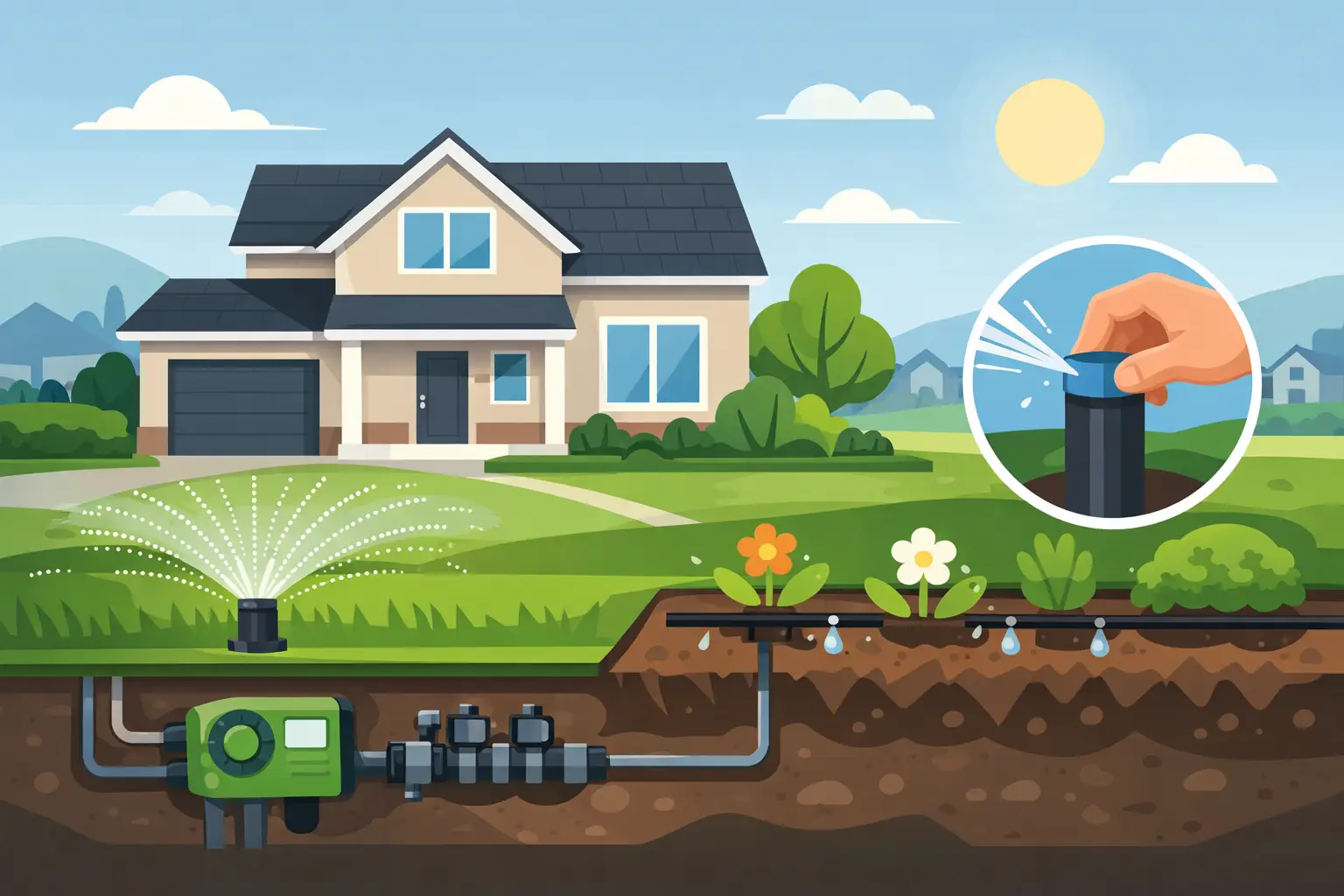
A healthy lawn usually does not fail all at once. It starts with dry strips along the driveway, soggy patches near the fence, and the nagging sense that you are paying for water without getting the results. This residential irrigation system guide is built for homeowners who want a lawn that looks better, uses water more efficiently, and does not demand constant attention.
For most properties, the goal is not just to install sprinklers. It is to get even coverage, reliable operation, and a system that fits the way your yard actually grows. A well-designed irrigation system saves time, reduces waste, and protects the investment you have already made in your lawn and landscaping. A poorly planned one can do the opposite.
What a residential irrigation system should really do
A good system does more than turn water on and off. It delivers the right amount of water to the right areas at the right time. That sounds simple, but every yard has variables. Sun exposure changes across the property. Soil conditions affect how fast water soaks in. Slopes create runoff. Garden beds, turf, and foundation plantings do not all need the same schedule.
That is why professional design matters. Head spacing, water pressure, zone layout, and controller settings all work together. If one part is off, the whole system becomes less efficient. You end up compensating with longer run times, hand watering, or frequent repairs.
Homeowners often assume more water will fix a struggling lawn. In reality, overwatering can be just as damaging as underwatering. It can lead to shallow roots, disease pressure, runoff, and higher utility costs. The best systems are precise, not excessive.
Residential irrigation system guide: the main parts that matter
Every residential system has a few core components, and each one affects performance.
The controller is the system’s command center. Older timers can still do the job, but smart controllers give homeowners better control and better efficiency. They can adjust watering schedules based on weather conditions, season, and usage patterns. For busy households, that convenience matters. For water savings, it matters even more.
Zones divide the property into areas with similar watering needs. Front lawns, shaded side yards, sunny backyards, and planting beds should not always run on the same schedule. Proper zoning is one of the biggest differences between a system that works well and one that wastes water.
Sprinkler heads and nozzles determine how water is distributed. Spray heads work well in smaller areas, while rotors are often better for larger turf sections. Drip irrigation can be a smarter choice for garden beds and foundation plantings where targeted watering is more effective. The right combination depends on the shape of the yard, plant material, and water pressure.
Valves control each zone, and the backflow device helps protect the home’s water supply. These are not the most visible parts of the system, but they are critical for safe, dependable operation.
How to know if you need a new system or an upgrade
Some homes clearly need a new installation. If you are dragging hoses around, relying on portable sprinklers, or never getting even coverage, a custom system can solve the problem at the source.
But many homeowners already have irrigation and still deal with poor results. In those cases, a full replacement is not always necessary. Sometimes the smarter move is to upgrade the existing system. A new smart controller, more efficient nozzles, repaired valves, or improved zone performance can make an older system far more effective.
It depends on the age of the system, the condition of the components, and whether the original design was sound. If the layout was poorly planned from the start, repairs only go so far. If the system was built well but has fallen behind, modernization can be a cost-effective option.
What good irrigation design looks like on a residential property
The best irrigation design is usually the one you do not have to think about. Water reaches the lawn evenly. Dry spots do not keep coming back. Sidewalks and driveways are not getting soaked. Beds are not being watered like turf.
That level of performance starts with a property-specific plan. Sun and shade patterns should be considered. So should slope, soil absorption, planting layout, and municipal water pressure. Even lot shape matters. A narrow side yard has different requirements than an open backyard or a front lawn broken up by trees and walkways.
This is where experience shows. A system should be designed around the property, not forced into a generic layout. Precision during installation pays off for years in reduced waste, healthier growth, and fewer service calls.
Smart irrigation is worth it for most homeowners
A lot of homeowners hear “smart irrigation” and assume it is an extra feature. In many cases, it should be the standard.
Smart controllers help prevent the common problem of watering by habit instead of need. If there has been rain, the system can adjust. If temperatures shift, the schedule can respond. That means less waste and fewer situations where the lawn is stressed because the timer was never updated.
The benefit is not only lower water use. It is also consistency. Lawns perform better when watering is steady and appropriate. Busy homeowners appreciate that the system can do the routine thinking for them, while still allowing control when needed.
Technology does not replace proper design or maintenance, but it makes a good system better.
Seasonal service is part of the job, not an add-on
One of the biggest mistakes homeowners make is treating irrigation like a one-time installation. A system that runs through changing seasons needs service to stay reliable.
Spring startup gets the system running correctly after winter. This is the time to check heads, test zones, inspect for leaks, confirm controller settings, and make sure everything is operating as it should. Small problems caught early are usually far easier and less expensive to fix.
Fall winterization is just as important, especially in climates where freezing can cause serious damage. Water left in the lines can crack pipes, split fittings, and damage components before spring arrives. Proper blowout service helps protect the system and avoid preventable repairs.
For homeowners, this is not just about maintenance. It is about protecting the investment and avoiding the frustration of opening the season with broken equipment.
Common signs your system needs repair
Irrigation problems often show up in the lawn before they show up in the hardware. If sections are staying brown while other areas are too wet, the issue may be a clogged nozzle, broken head, pressure problem, or valve issue.
You might also notice heads that do not pop up properly, water pooling near a zone, unusually high water bills, or a controller that does not seem to match actual system performance. Sometimes the problem is simple. Sometimes it points to wear across the system.
What matters is addressing it early. A small leak or alignment issue can turn into wasted water and declining lawn quality if it is ignored through the season.
Choosing a contractor for long-term results
If you are investing in residential irrigation, the contractor matters as much as the equipment. Design quality, installation precision, and follow-up service all affect how well the system performs over time.
Homeowners should look for experience, clear communication, and a company that handles the full lifecycle of the system. Installation is only one piece. You also want someone who can provide spring startups, winterization, repairs, and upgrades as the system ages.
That full-service approach tends to produce better long-term results because the company understands how the system was built, how it has performed, and what changes will improve it. For Ottawa-area homeowners, Advanced Irrigation has built its reputation around exactly that kind of dependable, ongoing service.
A practical way to think about cost
The cheapest system is rarely the least expensive over time. If poor coverage leads to reseeding, wasted water, and repeated service calls, the original savings disappear quickly.
A better way to think about cost is value over the life of the system. A properly designed installation with efficient controls and regular seasonal service can reduce waste, protect landscaping, and cut down on manual labor. It also saves homeowners from the constant cycle of adjusting hoses, replacing patchy turf, and guessing at watering schedules.
For many households, the real value is convenience backed by results. The lawn looks better, the system works when it should, and upkeep becomes much more manageable.
A good irrigation system should make life easier, not add another thing to monitor. If your lawn is asking for more time than you can give it, the right setup can bring back control, consistency, and a yard that looks cared for without feeling like a second job.