A lawn that looks patchy in July usually is not asking for more guesswork. It is asking for better control. Smart irrigation technology controllers and sensors give homeowners a more accurate way to water, using real conditions instead of a fixed timer that runs whether the lawn needs it or not.
For homeowners who want healthy grass without spending every evening moving hoses or adjusting sprinkler times, this technology solves a real problem. It helps prevent overwatering, cuts down on waste, and keeps your system working in a way that makes sense for the weather, the soil, and the layout of your property.
What smart irrigation technology controllers and sensors actually do
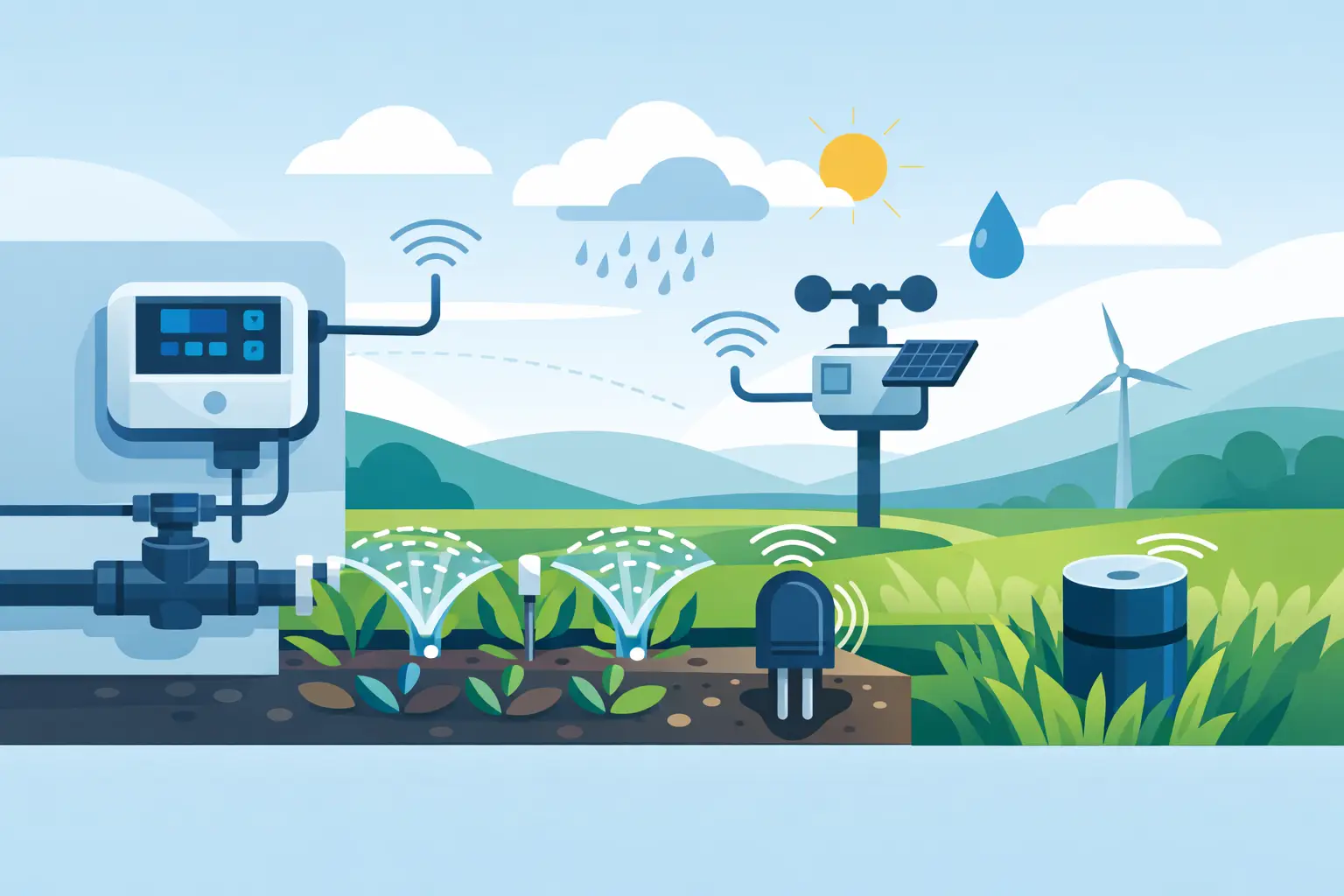
At the center of a smart irrigation system is the controller. Think of it as the brain of the system. A standard timer follows a basic schedule. A smart controller goes further by adjusting watering based on conditions such as rainfall, temperature, season, and sometimes even soil moisture.
Sensors provide the information that makes those decisions possible. A rain sensor can stop a cycle after a storm. A soil moisture sensor can tell the system when the ground is already holding enough water. Some setups also use weather-based data to make ongoing schedule adjustments without the homeowner needing to step in every few days.
That matters because lawns do not need the same amount of water every week. A cool stretch in spring is different from a hot dry period in midsummer. A shaded side yard behaves differently than a full-sun front lawn. Smart equipment helps the system respond to those differences instead of treating every zone the same.
Why fixed watering schedules often fall short
Many older systems are built around convenience, not accuracy. They run on set days at set times and keep doing that until someone notices a problem. If it rains, the system may still run. If temperatures spike, the lawn may not get enough water. If one zone drains poorly, that area may stay too wet while another area dries out.
This is where homeowners often get frustrated. They see brown spots and increase the run time across the whole yard. Or they notice soggy sections and cut watering back everywhere. Both reactions are understandable, but they usually miss the real issue. Most watering problems are not just about volume. They are about timing, zone control, and matching application to actual conditions.
A smart controller helps correct that by making more targeted adjustments. Combined with the right sensors and properly functioning sprinkler heads, it can improve consistency across the property.
The biggest benefits for homeowners
The first benefit is convenience, but convenience is not the whole story. A smart irrigation system reduces the amount of manual monitoring needed to keep a lawn healthy. You are not constantly deciding whether to skip a cycle after rain or wondering if the backyard is getting enough water during a hot week.
The second benefit is water efficiency. When a system waters only when needed, and only as much as needed, waste drops. That can mean lower water use over the season and less runoff onto driveways, sidewalks, and streets.
The third benefit is lawn performance. Grass tends to do better with consistent, measured watering than with irregular heavy watering followed by dry periods. Smart control helps create that consistency. It also supports stronger root development when schedules are set correctly instead of simply watering too often.
There is also a protection factor. Overwatering is not harmless. It can contribute to shallow roots, fungus issues, and unnecessary strain on parts of the system. A better-controlled system helps avoid those problems.
Smart controllers are only as good as the system behind them
This is the part many homeowners do not hear enough. A smart controller is not a magic fix for a poorly designed or poorly maintained irrigation system. If heads are misaligned, zones are unbalanced, pressure is off, or coverage is uneven, adding a new controller will improve some things but not everything.
That is why upgrades should be looked at as part of the full system. In many cases, the best results come from pairing a controller upgrade with repairs, nozzle adjustments, zone review, or replacement of aging components. If a rain sensor is installed but a valve is sticking, you still have a reliability problem. If the controller is advanced but one area has poor head spacing, you still have a coverage problem.
Good technology works best when the fundamentals are right.
Choosing the right smart irrigation technology controllers and sensors
Not every property needs the same setup. A smaller residential lot may only need a dependable smart controller with a rain sensor and properly configured zones. A larger property with varied sun exposure, slopes, or more complex planting areas may benefit from additional sensor input and more customized programming.
The right choice depends on a few practical factors. The age of the current system matters. So does the number of zones, the condition of the wiring, and whether the sprinkler layout already provides good coverage. Homeowners who travel often may place more value on remote access and monitoring. Others may simply want the system to make seasonal adjustments automatically and run reliably in the background.
Ease of use matters too. A system should not feel like another device you have to manage constantly. The best smart irrigation setup is one that gives you control when you want it and dependable automation when you do not.
Where sensors make the biggest difference
Rain sensors are one of the most practical upgrades because they address one of the most common waste issues – watering right after rainfall. That alone can improve efficiency quickly.
Soil moisture sensors add another layer of accuracy. They are useful where soil conditions vary across the property or where drainage issues have made scheduling difficult. These sensors can help prevent unnecessary watering when the ground is already holding enough moisture.
Weather-based adjustments are also valuable, especially over the course of a full season. Spring, summer, and early fall do not place the same demand on your lawn. A controller that adapts to those changes can keep the system more accurate without constant reprogramming.
That said, more technology is not always better. If a property has a straightforward layout and a well-built system, a simpler smart setup may be the better investment. The goal is not to add features for the sake of features. It is to improve watering results in a practical, reliable way.
Installation and setup matter more than the label on the box
A quality controller with poor setup will still produce poor results. Programming needs to reflect the property, not generic defaults. Zone run times, start times, seasonal adjustments, and sensor integration all need to be configured properly.
This is especially important for residential systems where one yard can include full sun, deep shade, narrow side strips, garden beds, and varying grades. Those differences affect how water should be applied. A proper setup accounts for them instead of assuming every zone should run the same way.
Professional installation also helps with compatibility and reliability. Not all existing systems are ready for a quick controller swap. Sometimes the upgrade is simple. Sometimes it reveals worn parts, outdated components, or coverage issues that should be addressed at the same time. A straightforward assessment up front usually saves frustration later.
Long-term value comes from maintenance too
Even smart systems need seasonal attention. Sensors should be checked. Controller settings should be reviewed as conditions change. Sprinkler heads need to stay clean, aligned, and in good condition. In colder climates, proper shutdown and winter protection are also essential if you want the system to perform well year after year.
That is one reason homeowners often get the best return from working with a full-service irrigation company, not just buying hardware. Technology improves control, but long-term results still depend on maintenance, inspection, and timely repairs. Advanced Irrigation sees this often with residential systems that started out well but gradually lost efficiency because small issues were never corrected.
If you are considering an upgrade, the right question is not just which controller to buy. It is whether your system as a whole is set up to deliver even coverage, smart adjustments, and reliable seasonal performance. When that comes together, you get what most homeowners actually want – a greener lawn, less wasted water, and a system that does its job without becoming another chore.
The best irrigation technology is not the flashiest option on the market. It is the one that matches your property, works reliably in real weather, and makes lawn care easier from the first warm week of spring to the last shutdown in fall.