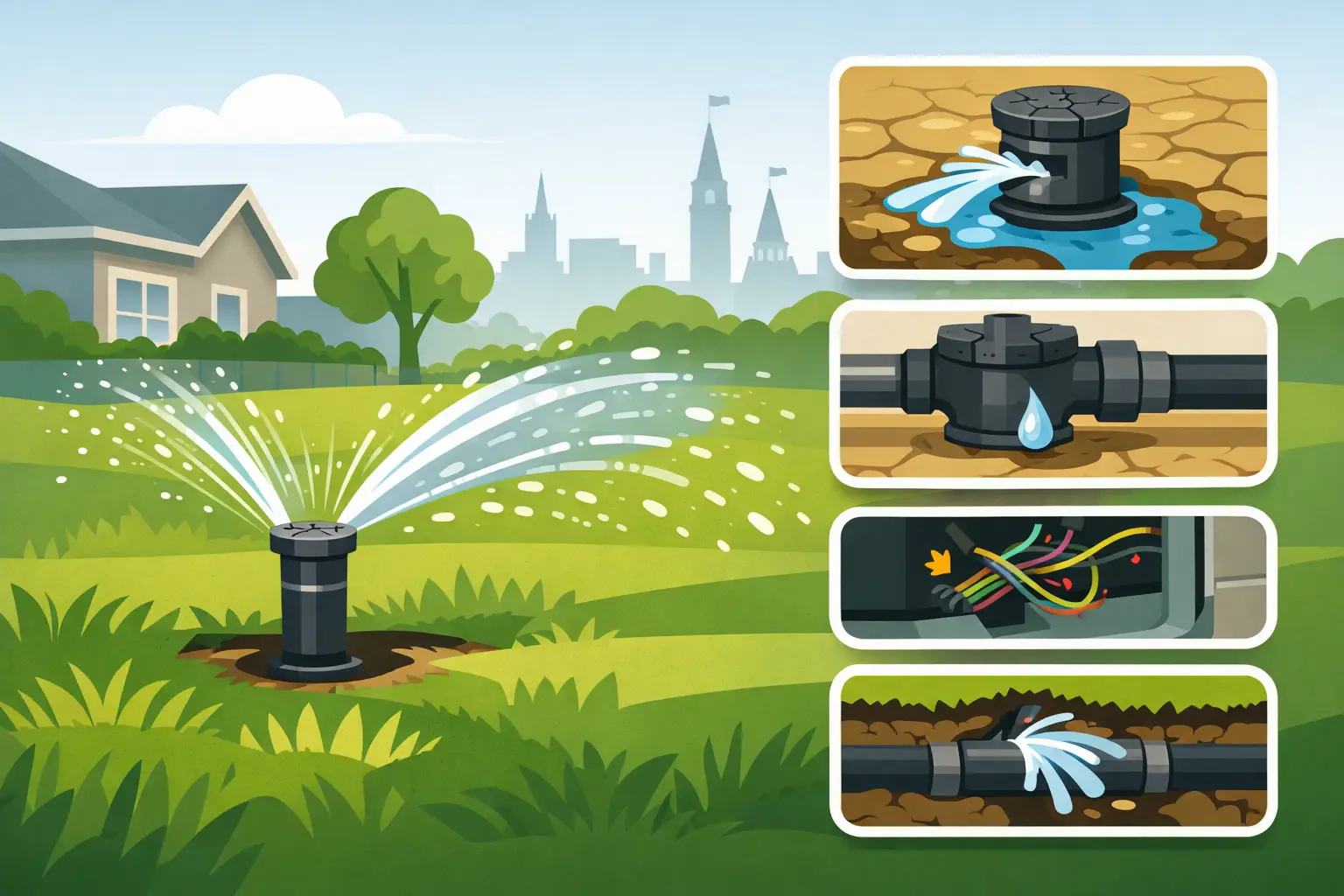
A brown strip beside the driveway, a soggy patch near a flower bed, or a zone that never seems to turn on are more than lawn-care annoyances. They are often early signs of the top causes of sprinkler failure. Catching the issue early can protect your lawn, reduce water waste, and prevent a small repair from becoming a larger system problem.
For Ottawa homeowners, irrigation systems also face a demanding seasonal cycle. A system has to perform through summer heat, then be properly prepared for freezing temperatures. The most reliable way to keep it working is to understand what typically fails, what you can safely check, and when professional service is the right next step.
Top Causes of Sprinkler Failure
Winter freeze damage
Freeze damage is one of the most common and costly causes of sprinkler problems in Ottawa. Water expands when it freezes. If water remains in underground piping, valves, backflow devices, or exposed components after the season ends, it can crack fittings and pipes or damage internal valve parts.
The problem may not be obvious until spring startup. A cracked line can leak underground, leaving a soft or unusually green area of turf. In other cases, a damaged fitting causes low pressure across an entire zone. A broken backflow assembly or valve may create a visible leak as soon as the water supply is turned on.
A proper fall winterization removes water from the system using compressed air at controlled pressure. Simply shutting off the water supply is not enough. Spring startup matters just as much because it allows each zone, valve, and sprinkler head to be checked before regular watering begins.
Damaged or clogged sprinkler heads
Sprinkler heads work close to the ground, which makes them vulnerable to damage from lawn mowers, foot traffic, vehicles, pets, and settling soil. A head that sits too high can be struck by equipment. One that has settled too low may be blocked by grass, mulch, or soil and fail to rise fully during a watering cycle.
Clogs are also common. Dirt can enter an open nozzle after a head is damaged, while small debris may collect in the filter screen. The result is often a weak spray, a distorted pattern, or one dry section of lawn surrounded by healthy turf.
A single bad head can have a larger effect than homeowners expect. If it is broken off or missing entirely, water pressure may drop enough to affect the other heads on that zone. Replacing or adjusting the head is usually straightforward, but the replacement must match the nozzle type, spray pattern, and precipitation rate of the zone. Installing the wrong nozzle can create uneven watering even when every head appears to be operating.
Leaks in pipes, fittings, and valves
Underground leaks waste water quietly. You may not see standing water, especially if the leak is small or the soil drains well. Instead, look for persistently damp ground, spongy turf, unexplained weeds, erosion, or a water bill that rises without a clear reason.
Leaks can develop from freeze damage, aging fittings, root movement, poor installation, or accidental damage during landscaping work. A leak near a valve box may also point to a worn diaphragm, loose fitting, or cracked manifold connection. These issues need a proper diagnosis before digging begins. Water surfacing several feet from the actual break is common, particularly in sloped yards or areas with compacted soil.
Ignoring a leak can damage turf, wash away soil around hardscaping, and make the irrigation system less effective. It also forces the controller to run longer to compensate for poor performance, increasing both water use and wear on the system.
Valve and electrical problems
Each irrigation zone relies on a valve to open and close when the controller sends a signal. When a zone will not turn on, will not shut off, or has weak flow, the source may be mechanical, electrical, or both.
A valve diaphragm can wear out or become blocked by debris. Solenoids can fail, wire connections can corrode, and buried wires can be cut during gardening, fence work, or other property projects. Rodents and shifting soil can also damage wiring over time.
Electrical issues are not always visible from the controller. A controller may display that a zone is running even though the valve is receiving no usable signal. Testing voltage, resistance, and valve operation helps isolate the problem without replacing parts unnecessarily. This is one area where professional troubleshooting can save time and avoid turning a minor wiring repair into an excavation project.
Controller settings and power interruptions
Sometimes the system is mechanically sound, but it is not receiving the right instructions. A controller may lose its schedule after a power outage, have the wrong start times programmed, or be set to seasonal adjustment levels that are too low. It is also possible to accidentally place a controller in rain-delay or off mode.
Smart controllers add useful efficiency, but they still need correct setup. If a rain sensor is disconnected, a Wi-Fi controller loses connection, or weather settings are not matched to the property, watering may be inconsistent. Smart technology should reduce waste, not make operation confusing.
Before assuming a major failure, confirm that the controller has power, the date and time are correct, programmed run times make sense, and each zone can be run manually. If the controller operates normally but a zone does not respond, the issue is more likely at the valve, wiring, or water supply.
Low water pressure and water supply restrictions
Sprinkler heads are designed to operate within a specific pressure range. Too little pressure creates weak sprays and poor coverage. Too much pressure can cause misting, which sends water into sidewalks, driveways, and the street instead of into the root zone.
Low pressure can be caused by a partially closed shutoff valve, a clogged filter, a leak, a failing backflow device, or too many heads operating on one zone. It can also occur when a system was expanded over time without redesigning the zone capacity. Adding a new garden bed or lawn area may seem simple, but every added head changes the system’s hydraulic demand.
The right repair depends on the cause. Adjusting a valve will not fix a hidden leak, and changing nozzles will not correct a zone that is overloaded. A system assessment can determine whether a repair, zone modification, or targeted upgrade will deliver reliable coverage.
Poor drainage, landscaping changes, and root intrusion
Your landscape changes even if the sprinkler system does not. Mature tree roots can shift pipes or pinch fittings. New patios, retaining walls, gardens, and pools can cover sprinkler heads, damage wire paths, or alter how water moves across the property. Soil settling may leave heads too low, while new sod can bury them completely.
Drainage is another factor. Water that pools after every cycle may signal a broken head or pipe, but it can also mean the soil cannot absorb water as quickly as the system applies it. In that case, shorter watering cycles with soak periods between them may be a better solution than simply reducing total watering time.
An irrigation system should be adjusted when the landscape changes. Proper head placement, matched nozzles, and appropriate scheduling keep water on the lawn and planting areas that need it.
How to Respond Before a Small Problem Grows
Walk through your property while each zone runs at least once during the growing season. Watch for heads that do not pop up, spray onto hard surfaces, miss part of the lawn, or continue leaking after the zone shuts off. Check valve boxes for standing water and inspect the controller after power outages or major weather changes.
If you see water bubbling from the ground, a zone that will not shut off, or a visible break near the backflow device, turn off the irrigation water supply and arrange service. Continuing to run a damaged system can waste a significant amount of water and worsen the repair.
Annual spring startup and fall winterization are the best protection against many avoidable failures. Regular service also creates an opportunity to adjust sprinkler heads, replace worn components, test zones, and update settings for changing lawn conditions.
A healthy lawn should not depend on constant guesswork. When your system waters evenly, responds when it should, and is protected through winter, it provides the convenience and curb appeal it was designed to deliver. If something looks off, addressing it early is usually the most efficient way to protect your lawn and your irrigation investment.