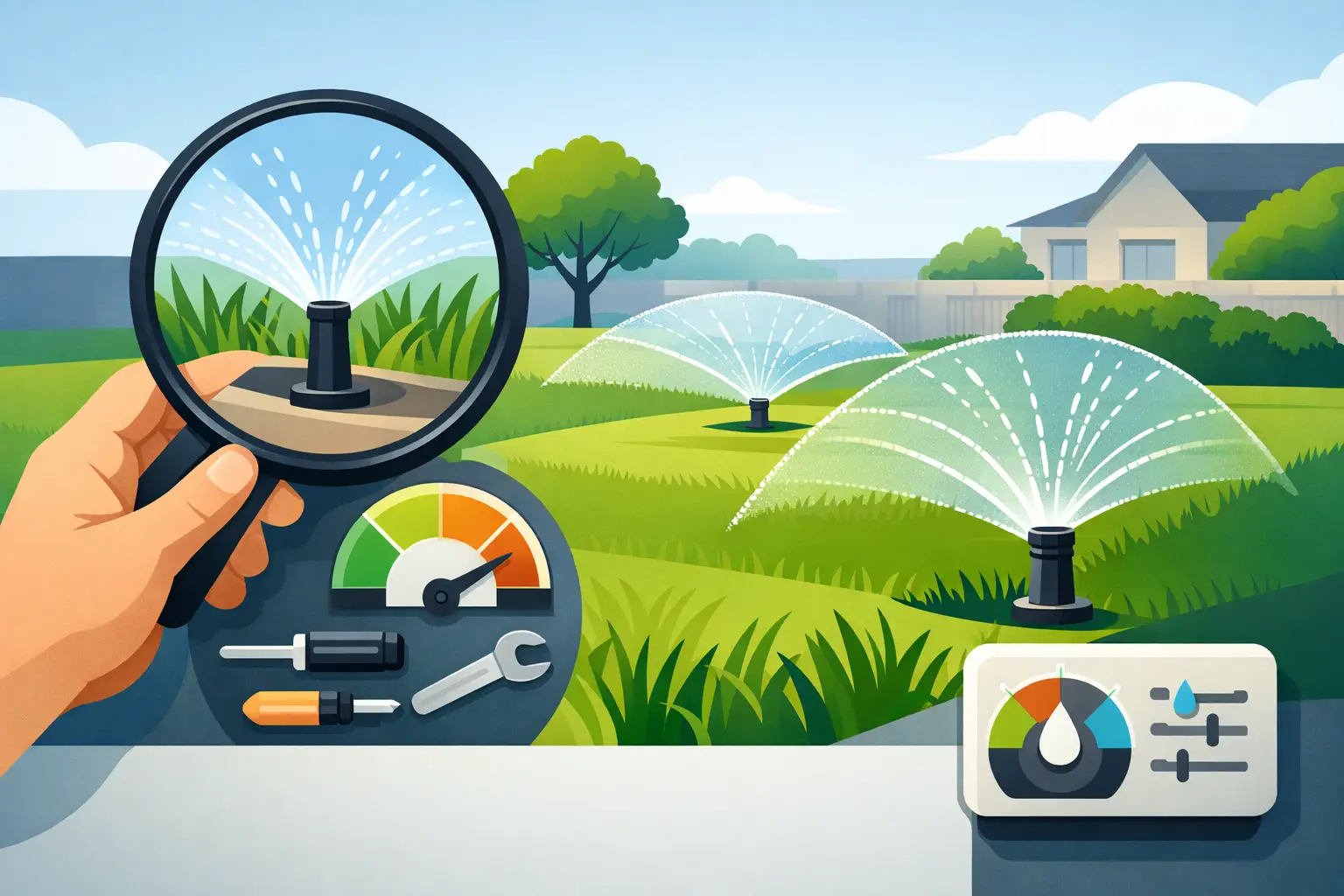
A lawn can look dry in one corner and overwatered near the driveway even when the sprinkler system runs on schedule. The difference is usually not the controller. It is the way each zone applies water. When you calibrate sprinkler zones for lawns, you replace guesswork with measured run times that support healthier grass, lower water use, and more dependable results.
For Ottawa-area homeowners, calibration is especially useful because lawns move through fast spring growth, hot summer stretches, heavy rain, and changing soil conditions. A schedule that worked in May may be excessive in July. The goal is not to run every zone for the same amount of time. The goal is to give each part of the lawn the water it can absorb and use.
Why Lawn Sprinkler Zones Need Calibration
A sprinkler zone is a group of heads that runs together. Ideally, every head in that zone uses the same nozzle type, has similar spacing, and covers a similar type of landscape. In practice, many systems have been changed over time. A repaired head may have a different nozzle, a hedge may now block a spray pattern, or a zone may cover both sunny turf and a shaded side yard.
Those differences matter. Spray heads typically apply water much faster than rotary heads. A narrow side yard with spray heads may be adequately watered in minutes, while a large lawn zone with rotors needs a longer cycle. If both run for 25 minutes, one area may produce runoff while the other stays thirsty.
Calibration also reveals problems a timer cannot solve. Low pressure, tilted heads, clogged nozzles, leaks, and poor head-to-head coverage all create uneven results. Adding more run time to compensate often wastes water and can make the healthy areas too wet.
Start With a System Check
Before measuring water, walk through the system while each zone is running. This is the practical first step because the most accurate schedule cannot overcome damaged equipment.
Look for heads that do not pop up fully, spray onto sidewalks or siding, or fail to reach the next head. Check that rotors turn through their intended arc and that spray heads are upright. Grass, mulch, and soil can cover a head enough to distort the pattern, particularly along garden edges. Clear the area around each head and raise or level it where needed.
Pay attention to changes in pressure when a zone starts. A weak spray pattern across the whole zone may point to a valve issue, a supply problem, or too many heads operating together. One weak head is more likely a clogged nozzle, broken fitting, or damaged internal component. Repairs should come before calibration, not after.
Use the Catch-Can Test to Measure Output
The most reliable way to calibrate lawn zones is a catch-can test. You do not need specialized equipment. Use several straight-sided, identical containers such as tuna cans or irrigation catch cups, plus a ruler marked in inches and a timer.
Place the containers across the zone in a loose grid. Include areas close to heads, between heads, and along the outer edges. Avoid putting every container in the greenest part of the lawn. The test needs to show what the entire zone is receiving.
Run the zone for 15 minutes, then measure the water depth in every container. Record the measurements and calculate the average. If the average amount collected is 0.15 inches in 15 minutes, the zone applies about 0.60 inches per hour. If it collects 0.30 inches in 15 minutes, the application rate is about 1.20 inches per hour.
The readings should be reasonably close. A few small differences are normal, but a container that gets far more or less water than the others indicates a coverage issue. Check for a blocked nozzle, a misaligned head, incorrect nozzle size, or an obstacle in the spray path. Calibration is not just about the average. It is also about identifying dry spots before they become thin turf or brown patches.
Calculate a Practical Run Time
Once you know a zone’s application rate, you can set a run time based on the amount of water the lawn needs. Many established lawns perform well with roughly 1 to 1.5 inches of water per week from rainfall and irrigation combined. The right amount depends on grass type, sun exposure, soil, weather, and local watering restrictions.
For example, a rotor zone applying 0.50 inches per hour would need 60 minutes to deliver 0.50 inches of water. A spray zone applying 1.25 inches per hour would need only about 24 minutes for the same amount. These zones should not share the same run time simply because they run on the same day.
Do not assume the entire weekly requirement needs to come from the irrigation system. Rainfall counts. After a soaking rain, a smart controller with a rain sensor or weather-based adjustment can reduce or skip watering. If your controller does not make those changes automatically, adjust the schedule manually as conditions change.
Match the Schedule to Soil and Sun
The soil determines how quickly water can move downward. Clay-heavy soil absorbs water slowly and is more likely to shed water across a slope. Sandy soil takes water in quickly but dries faster. Loam generally holds moisture well, though compaction can still limit absorption.
If water begins flowing onto the sidewalk or pooling before the scheduled run ends, use cycle-and-soak watering. Rather than running a spray zone for 20 minutes straight, run it for 10 minutes, pause for 30 to 60 minutes, then run the remaining 10 minutes. The total water stays the same, but more of it reaches the root zone instead of the curb.
Sun exposure also changes the equation. A sunny front lawn may need more frequent watering than a shaded backyard zone. Areas beside concrete, stone, or a south-facing wall often dry faster because they absorb and reflect heat. Shaded turf may need less water and can develop fungal problems if it stays wet too long. Separate zones make these adjustments easier, which is one reason thoughtful system design matters.
Set Watering Times That Protect the Lawn
Early morning is generally the best time to water. The lawn has time to absorb moisture before heat builds, and the blades can dry after sunrise. Evening watering can leave turf wet for extended periods, while midday watering loses more water to evaporation and wind.
Water deeply enough to encourage roots to grow down rather than staying near the surface. Frequent, shallow watering can create a lawn that struggles during heat. At the same time, deeper watering does not mean excessive watering. If the soil is already moist several inches below the surface, wait before running the next cycle.
A simple screwdriver test can help. Push a long screwdriver into the lawn after watering. It should move into moist soil with moderate resistance. If it stops after an inch or two, the zone may not be watering deeply enough. If the ground feels saturated or spongy, reduce the schedule and check drainage.
Recheck Zones Through the Season
Calibration is not a one-time task. Check your settings at spring startup, during the hottest part of summer, and after repairs or landscaping changes. New sod, newly seeded areas, and young plantings require a different schedule from an established lawn, often with shorter and more frequent cycles until roots develop.
It is also worth checking after a mower, edging tool, vehicle, or winter freeze damages a head. A small leak or broken nozzle can quietly waste a significant amount of water while leaving the lawn uneven. Seasonal inspections help catch these issues before they become larger repairs.
For homeowners with older systems, a controller upgrade, rain sensor, pressure-regulating heads, or properly matched nozzles can make calibration easier and more consistent. Advanced Irrigation can assess whether an existing system is applying water evenly and make practical improvements that protect both the lawn and the equipment.
A properly calibrated sprinkler system should disappear into the routine of a well-kept home: the grass receives what it needs, the pavement stays dry, and you spend less time correcting problems that started with a timer setting.