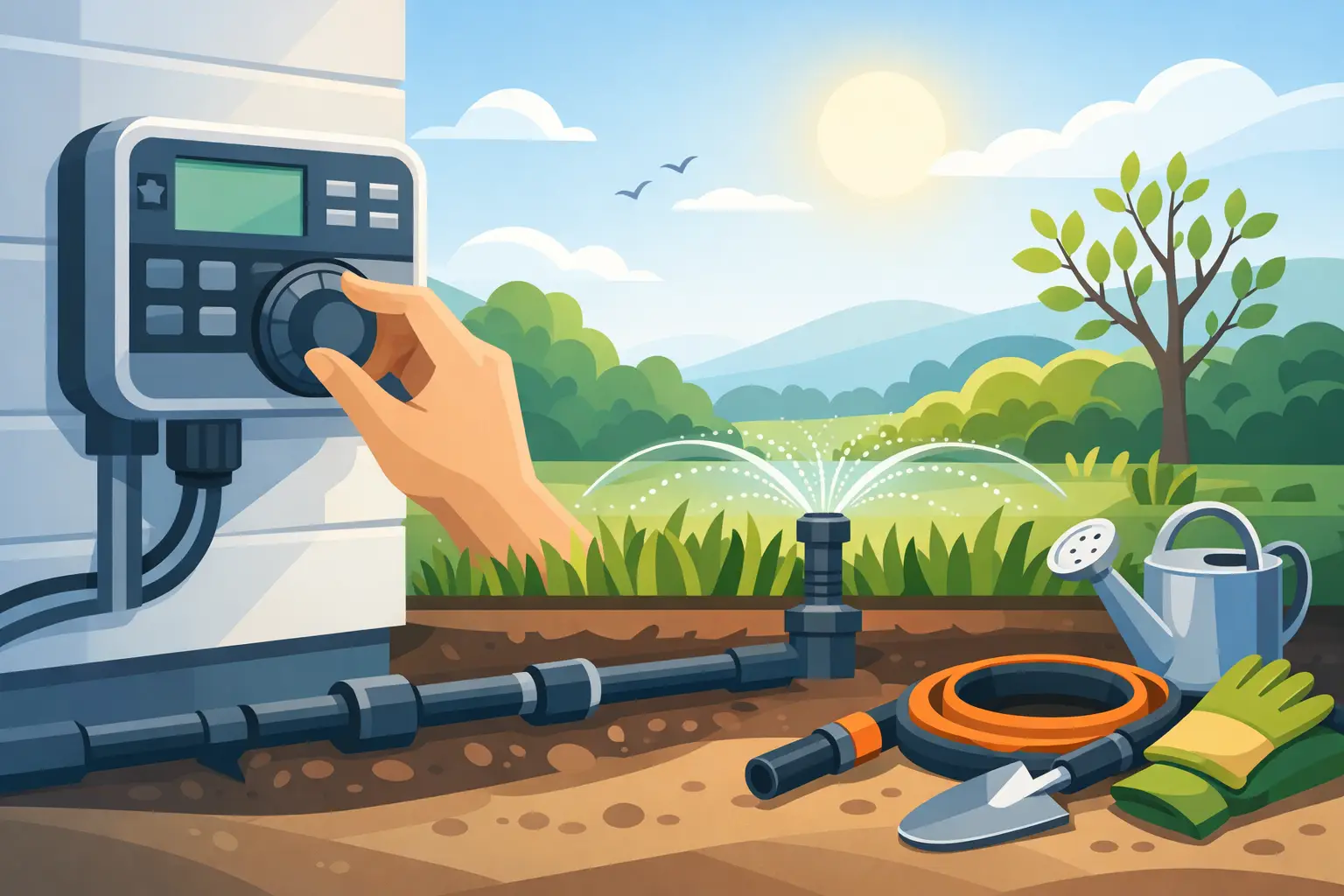
The first warm weekend can make a dormant lawn look ready for water, but rushing a startup is one of the easiest ways to damage an irrigation system. To prepare irrigation for spring properly, your system needs more than a quick turn of the valve. It needs a controlled inspection that confirms every pipe, valve, sprinkler head, and controller is ready for another season.
For Ottawa-area homeowners, timing matters. Overnight freezing temperatures can linger well into spring, even after daytime conditions improve. Starting too early can put exposed components at risk. Starting carefully, once the chance of a hard freeze has passed, protects your investment and gives your lawn the consistent coverage it needs when active growth begins.
Why a Careful Spring Startup Matters
An irrigation system spends winter empty, shut down, and exposed to changing temperatures. Even when it was winterized correctly, small issues can appear between seasons. A cracked fitting, a worn valve diaphragm, a broken sprinkler head, or a controller setting left over from last year can lead to wasted water and uneven lawn growth.
The goal of a spring startup is not simply to get water flowing. It is to bring pressure back into the system gradually, identify problems before they become expensive repairs, and make sure each zone is watering where it should. A system that looks fine from the driveway may still be soaking a fence, spraying a sidewalk, or leaving dry strips along the edge of the lawn.
A professional startup also gives homeowners a clear picture of the system’s condition. That is especially valuable for older systems or properties that have had landscaping, patios, garden beds, or fencing added since the irrigation was installed.
When to Prepare Irrigation for Spring
Wait until the risk of a sustained hard freeze has passed and the ground has begun to thaw. The exact date changes from year to year, so it is better to follow weather conditions than a date on the calendar. If nighttime temperatures are still regularly dropping below freezing, keeping the system shut down is the safer choice.
There is a trade-off: waiting too long can leave new grass, gardens, and early-season plantings short on moisture, while starting too soon can damage backflow equipment, exposed piping, and other vulnerable components. A measured startup lets you protect the system without missing the early part of the growing season.
Before activating the water supply, walk around the property. Look for sprinkler heads pushed out of position by frost, soil, snow removal, pets, or foot traffic. Check for visible damage near outdoor connections, valve boxes, and the backflow preventer. Remove leaves, mulch, and debris that may block sprinkler heads or interfere with their spray pattern.
Start the Water Supply Slowly
Water should never be sent into a winterized irrigation system at full pressure all at once. Open the main irrigation shutoff valve slowly. This allows air to move out of the pipes gradually and reduces the stress that a sudden pressure surge can place on fittings and valves.
Listen and watch as the system pressurizes. Hissing, persistent dripping, water pooling around a valve box, or a noticeable drop in pressure can point to a leak. If you see water collecting near the foundation, driveway, or irrigation components, shut the system off and have the issue assessed before running the zones.
The backflow preventer deserves particular attention. This assembly helps keep irrigation water from flowing back into the home’s potable water supply. It can be vulnerable to freeze damage, and a cracked device may not always be obvious until the water is turned on. Any leaking, damaged, or improperly operating backflow component should be repaired by a qualified irrigation professional.
Test Every Zone, Not Just the Lawn
Once the system is pressurized, run each zone one at a time. Stay outside while it operates. A controller can tell you a zone is active, but it cannot tell you whether the water is reaching the intended area efficiently.
As each zone runs, check that sprinkler heads rise fully, rotate as designed, and retract after the cycle. Look for heads that spray into windows, siding, walkways, driveways, or neighboring property. Also watch for low heads hidden by grass, heads that have tilted, and nozzles clogged with dirt.
Coverage is just as important as operation. Adjacent sprinkler patterns should overlap enough to water evenly, since the outer edge of a spray pattern receives less water than the area close to the head. Brown patches later in the season often begin with poor coverage in spring, not a lack of watering time.
Pay close attention to drip irrigation in gardens and planting beds. Drip lines can be cut by shovels, damaged by animals, buried under mulch, or displaced during cleanup. A damaged drip line may waste water below the mulch where the problem is not immediately visible.
Inspect the Controller and Rain Sensor
Your irrigation controller should be treated as the system’s operating plan, not a set-it-and-forget-it device. Confirm the date and time, replace backup batteries if needed, and review all zone run times. Settings from the peak heat of last summer are rarely appropriate for early spring.
Spring lawns generally need less water than they will in July. Cooler temperatures, lower evaporation, and seasonal rainfall can reduce watering needs significantly. Begin with conservative run times, then adjust based on rainfall, soil moisture, sun exposure, and the condition of the grass. Watering deeply but less often is usually more effective than frequent, shallow watering, but the right schedule depends on soil type, slope, plant material, and the type of sprinkler coverage in each zone.
If your system has a rain sensor, test it. A functioning sensor pauses scheduled watering during or after sufficient rainfall, helping prevent unnecessary cycles. Smart controllers can add another level of control by adjusting schedules based on local weather conditions, but they still need proper programming and periodic oversight.
Correct Problems Before Summer Demand Arrives
Small irrigation issues tend to become more obvious when summer heat puts lawns under stress. A weak zone may be a sign of a valve issue, a leak, a clogged nozzle, or a pressure problem. Water running down a slope or pooling at the bottom of a yard may mean the zone needs shorter cycle times with a pause between them, rather than one long run.
Spring is also a practical time to consider upgrades. Older controllers can be replaced with smart models, inefficient spray heads can be improved, and zones can be adjusted to reflect changes in the landscape. A new garden bed, mature tree, expanded patio, or renovated front entrance can all change how water should be delivered across the property.
Professional service is especially worthwhile when a system has not been inspected in several seasons, has recurring leaks, or shows inconsistent pressure. Advanced Irrigation can assess the complete system during a spring startup, address repairs, and fine-tune watering for healthier turf without unnecessary waste.
Keep an Eye on the System After Startup
The first inspection should not be the last time you look at your irrigation system this season. Check it again after the first few weeks of regular operation and after major landscaping work. Mowers, edging tools, delivery vehicles, and changing soil levels can all affect sprinkler heads and buried components.
It is also worth checking your water bill early in the season. An unexpected increase can be a useful warning sign, particularly if you have not changed your watering schedule. Catching a leak or stuck valve early protects both the lawn and your budget.
A properly prepared system should disappear into the background: the lawn receives even coverage, the controller runs according to conditions, and you are not spending weekends dragging hoses across the yard. Taking the time to start the season carefully gives your irrigation system the best chance to deliver that kind of dependable performance all summer.