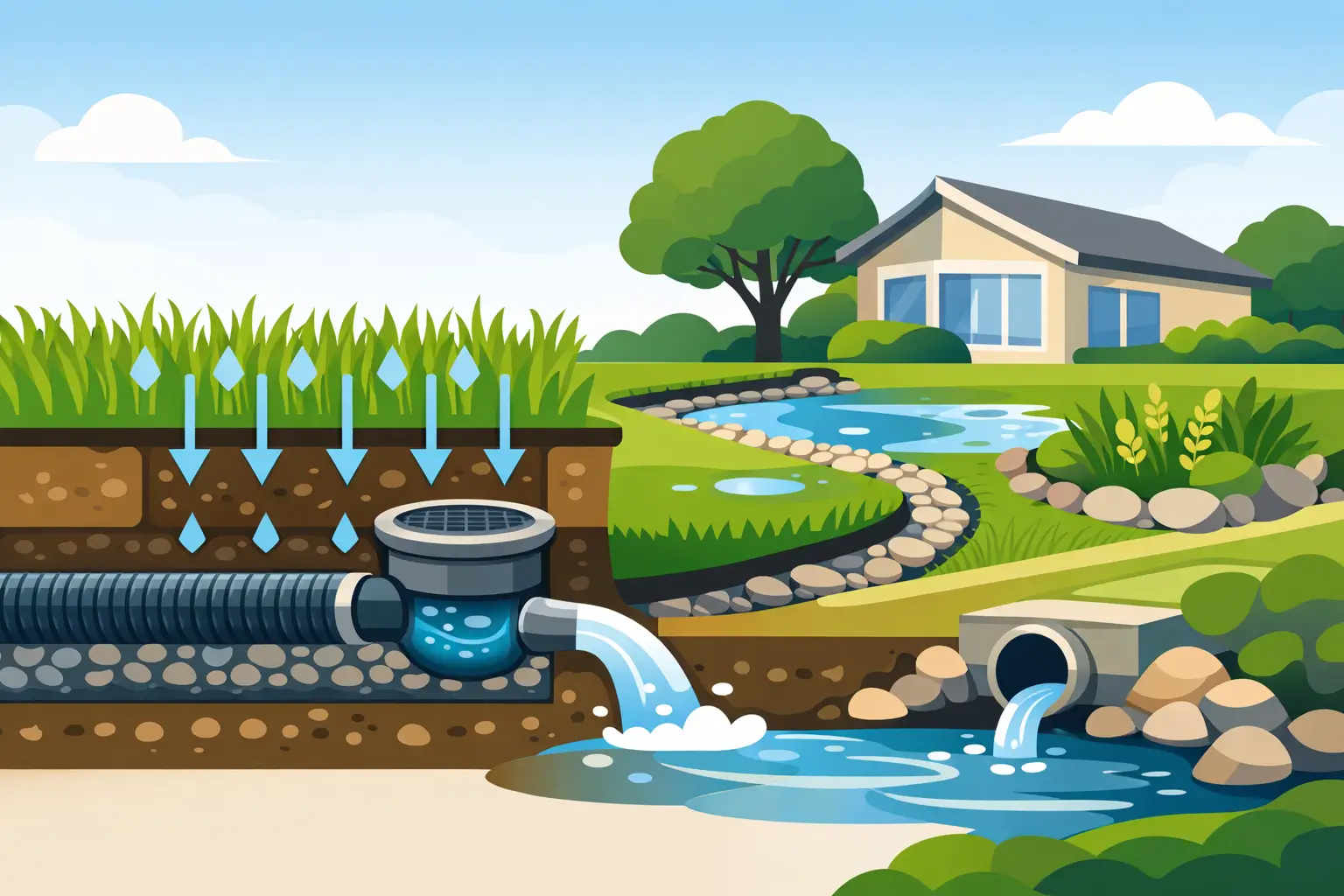
A lawn can look thirsty in one area and waterlogged a few feet away. That is usually not a watering-time problem alone. It is often a drainage problem that affects how irrigation performs. The right irrigation drainage solutions help water reach the root zone, move away from areas that cannot absorb it, and protect your sprinkler system from avoidable damage.
For Ottawa homeowners, drainage deserves attention before it turns into muddy turf, dying grass, standing water, or a costly repair. A professionally designed irrigation system should work with the grade, soil, landscaping, and drainage conditions of your property – not fight against them.
Why Drainage Affects Lawn Irrigation
Grass needs water, but its roots also need oxygen. When soil stays saturated, air pockets fill with water and roots struggle. The lawn may yellow, thin out, or develop disease even though the sprinkler system is delivering plenty of water.
Poor drainage also makes watering less efficient. Water that pools on compacted soil, runs down a slope, or collects beside a driveway is not doing much for your lawn. Increasing run times to compensate can make the wet areas worse while still leaving high spots dry.
Drainage problems can also affect the irrigation equipment itself. Valve boxes can fill with sediment, heads can sit too low after soil movement, and exposed components can be damaged by repeated pooling. In winter, Ottawa’s freeze-thaw cycles add another concern: water left where it should not be can contribute to shifting soil and damaged landscape areas.
Signs Your Property Needs Irrigation Drainage Solutions
Most drainage issues are easy to spot once you know what to look for. A few isolated puddles after a heavy storm do not always mean a major project is needed. If water remains for more than a day, returns in the same area after regular watering, or leaves the lawn soft and muddy, it is worth having the site assessed.
Watch for sprinkler heads surrounded by standing water, runoff moving toward the house, bare patches in low areas, moss growth, and tracks left in the lawn after mowing. You may also notice that certain zones need frequent adjustment because one part of the lawn dries out while another is constantly wet.
A damp basement, water near the foundation, or downspouts that discharge directly onto a lawn area should be handled with particular care. Irrigation should never add to a foundation drainage concern. In these cases, sprinkler scheduling and site drainage need to be considered together.
Start With the Watering System
Not every wet lawn needs a drain installed. Sometimes the practical fix is correcting how water is applied. A sprinkler zone that runs too long, uses the wrong nozzle, or overlaps heavily can create conditions that look like a grading issue.
A professional inspection starts by checking coverage, precipitation rate, pressure, head placement, and controller settings. Different sprinkler heads apply water at different rates. If one zone combines heads with mismatched output, some areas may receive far more water than others.
Smart controllers can make a meaningful difference as well. They adjust schedules based on weather conditions and can prevent unnecessary watering after rainfall. For slopes or heavy clay soil, cycle-and-soak scheduling is often effective. Instead of applying all water in one long run, the controller runs shorter cycles with time between them, allowing water to soak in before more is applied.
This approach will not correct a serious low spot or a blocked drainage path, but it can reduce runoff and improve results without major landscape work.
Match the Drainage Approach to the Property
Effective drainage is site-specific. Soil type, lot elevation, existing landscaping, roof runoff, and the location of utilities all influence the right solution. Installing a drain without identifying where water originates and where it can safely discharge can simply move the problem elsewhere.
Surface Grading and Swales
When water naturally collects across a broad section of lawn, minor grading changes may be the best answer. A shallow swale is a gently shaped channel that guides surface water away from vulnerable areas without looking like a ditch. Once established with turf or suitable planting, it can blend into the landscape.
Grading must be planned carefully around the home. The goal is to direct water away from the foundation while preserving an even, usable lawn. This is often more involved than adding topsoil to a low spot, particularly when irrigation lines and sprinkler heads are already in place.
French Drains and Catch Basins
A French drain uses gravel and perforated pipe to collect groundwater and carry it toward an approved outlet. It can be useful where water consistently moves below the surface or where a low area cannot be corrected through grading alone.
Catch basins are more suited to collecting surface water at a specific low point, such as near a patio, walkway, or driveway. They require maintenance because leaves, mulch, and sediment can block the grate. The trade-off is clear: these systems can be very effective, but they need a proper outlet and periodic cleaning to keep working.
Downspout Management
Roof runoff is frequently mistaken for an irrigation problem. A heavy rain can send a large volume of water into one area of the lawn in a short time. If downspouts empty near a sprinkler zone, the soil may never have time to dry properly.
Extending or redirecting downspouts can reduce the load on the lawn and help irrigation zones perform more predictably. Any changes should follow local requirements and avoid directing water onto a neighboring property.
Protect Irrigation Components During Drainage Work
Drainage projects and sprinkler systems share the same underground space. That makes planning essential. Irrigation pipes, wires, valves, and heads can be damaged when trenching is done without a clear layout.
Before grading or installing drainage, identify existing irrigation components. In some cases, lines may need to be relocated, heads raised or lowered, or zones adjusted after the final grade is complete. A sprinkler head that was correctly positioned before a landscaping project may end up buried, tilted, or too high afterward.
This is also a good time to inspect aging equipment. Replacing a worn valve, correcting a leaking connection, or upgrading to pressure-regulated heads while the area is open can prevent a second disruption later. The lowest initial-cost option is not always the best value if it leaves known irrigation issues in place.
Seasonal Care Matters in Ottawa
Drainage performance changes throughout the year. Spring snowmelt can expose low areas and compacted soil before the lawn has fully dried. Summer storms can reveal runoff patterns that are not obvious during normal sprinkler cycles. In fall, leaves can clog catch basins and drainage inlets just before wet weather arrives.
Seasonal irrigation service supports the drainage side of lawn care, too. During spring startup, zones can be checked for leaks, misdirected heads, and overspray. Before winter, proper irrigation winterization removes water from the lines, helping protect the system from freezing conditions.
Homeowners should avoid running irrigation simply because a schedule says it is time. If the ground is saturated after rainfall, pause the system. A smart controller helps automate that decision, but regular observation still matters, especially after landscaping changes or major storms.
When to Call a Professional
Call for an assessment when standing water is persistent, runoff is approaching the home, sprinkler zones are creating muddy areas, or you are planning a drainage or landscaping project near existing irrigation. The sooner the cause is identified, the easier it is to prevent lawn damage and system repairs.
Advanced Irrigation can assess how your sprinkler system is contributing to wet areas and recommend practical changes that improve coverage, efficiency, and long-term reliability. Where drainage work is required, irrigation components should be protected and adjusted as part of the plan.
A healthy lawn should feel firm underfoot, absorb water at a reasonable pace, and dry evenly after rain or irrigation. If yours does not, start with a professional look at both the water going onto the lawn and the water trying to leave it.