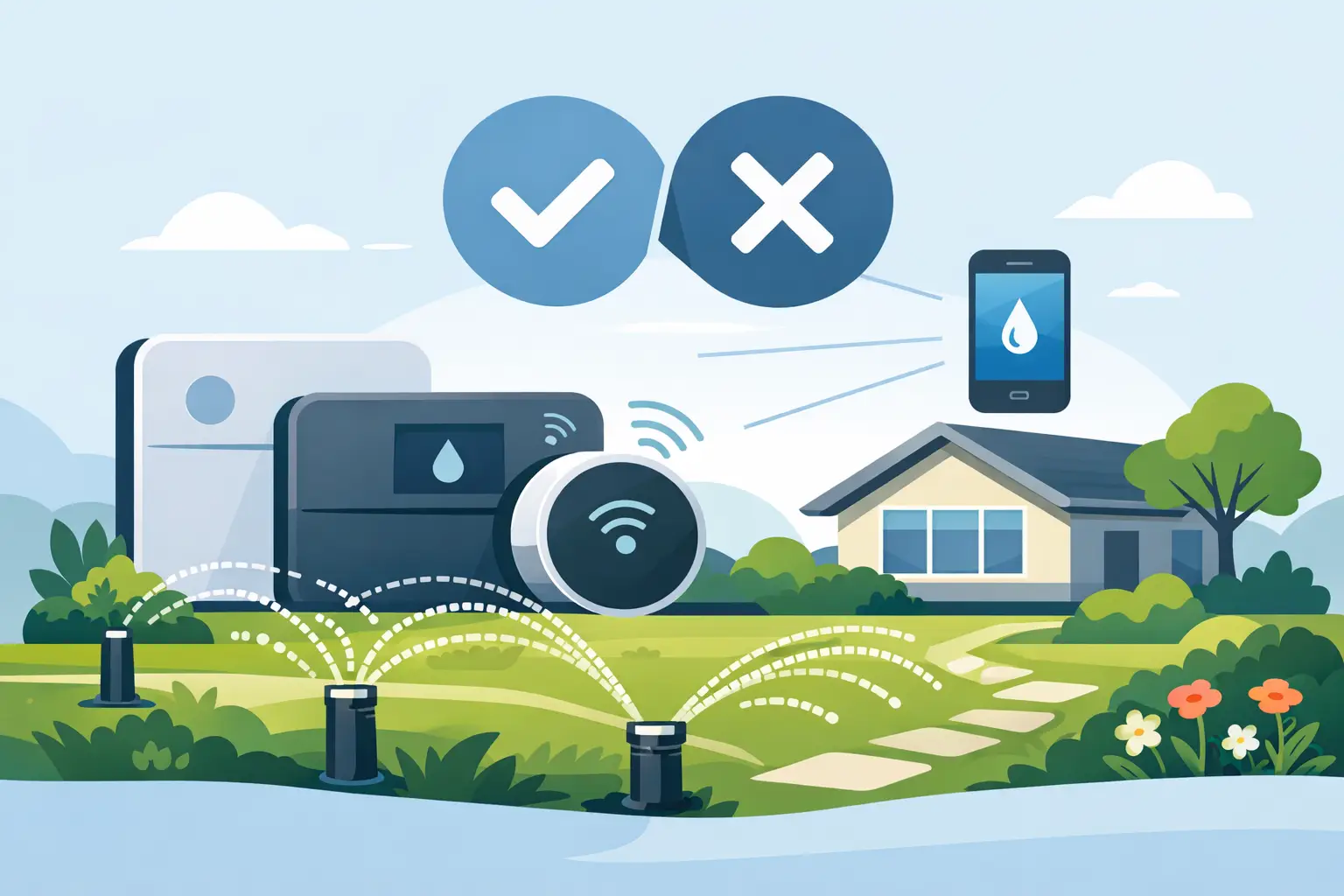
A smart sprinkler controller comparison starts with one practical question: will the controller make your existing irrigation system easier to manage while helping your lawn get the water it actually needs? For most homeowners, the right choice is not the controller with the longest feature list. It is the one that fits the number of zones, wiring, landscape conditions, and level of day-to-day control your property requires.
A smart controller can replace fixed watering schedules with adjustments based on weather, season, and local conditions. That can mean less wasted water after rain, fewer dry spots during hot weather, and far less time spent changing programs by hand. But smart technology works best when it is paired with a properly designed, well-maintained sprinkler system.
What Makes a Sprinkler Controller Smart?
Traditional controllers run on a schedule you set manually. If a program is set for Tuesday, Thursday, and Saturday at 5 a.m., it will run at those times unless someone changes it. That approach can water during a rainstorm, miss the needs of a newly seeded area, or keep running the same schedule as temperatures change.
Smart controllers connect to Wi-Fi, use weather data, accept sensor input, or combine all three. Instead of treating every week the same, they can adjust watering run times or skip a cycle when conditions do not call for irrigation. Most are managed through a phone app, although a good unit should still allow basic control at the controller itself.
The benefit is control with less guesswork. The trade-off is that setup matters. A controller needs accurate zone information, reliable Wi-Fi, and sensible programming to deliver consistent results.
Smart Sprinkler Controller Comparison: The Main Options
The best way to compare controllers is by the type of decision-making they offer and how well they work with your current system.
Wi-Fi Weather-Based Controllers
These are the most common smart-controller upgrades for residential systems. They connect to your home Wi-Fi and use local weather information to adjust watering schedules. Many allow you to set plant type, soil type, sun exposure, slope, and sprinkler type for each zone.
For an established lawn with conventional spray heads or rotors, this is often the most practical option. You can manage schedules from your phone, receive notifications, and make quick changes when you are away. Weather-based adjustments can reduce unnecessary watering without requiring an outdoor sensor in every part of the yard.
Their main limitation is that weather data is an estimate for your property. A forecast may say your neighborhood received rain when your lawn stayed dry, or it may not account for a shaded side yard that holds moisture longer than an open front lawn. These controllers are effective, but they still need thoughtful zone settings and occasional review.
Sensor-Based Controllers
Sensor-based systems use devices such as rain sensors, soil moisture sensors, or flow sensors to provide information from the property itself. A rain sensor is the simplest option. It interrupts watering after a set amount of rainfall, helping prevent the system from running when the ground is already wet.
Soil moisture sensors take the comparison a step further. They measure moisture in the root zone and can tell the controller when watering is needed. This can be useful for properties with varied soil, shaded planting beds, new landscaping, or areas that dry out differently from the rest of the lawn.
The advantage is direct information from your yard. The trade-off is installation and maintenance. Sensors must be placed correctly, kept in working order, and matched to the right zones. They are not always necessary for a straightforward lawn, but they can be valuable where watering needs vary significantly across the property.
Flow-Monitoring Controllers and Add-Ons
Flow monitoring is especially useful for homeowners concerned about leaks, broken heads, or unusually high water use. A flow sensor measures water moving through the irrigation system. If the system detects a significant difference from expected flow, it may send an alert or shut down a zone, depending on the equipment and programming.
This is a strong option for larger systems, seasonal homes, or properties where a hidden leak could run for days before anyone notices. It can also help identify problems that are easy to miss, such as a cracked pipe, damaged valve, or head knocked loose by lawn equipment.
Flow monitoring adds cost and is only as accurate as the system setup. The controller needs to know what normal flow looks like for each zone. For homeowners who want early warning of irrigation problems, however, it can provide real peace of mind.
Features That Matter More Than a Long App Menu
A controller should suit the property before it impresses on a screen. Start with zone capacity. If your system has eight zones, choose a controller that supports at least eight, with room for future additions if you plan to expand beds, gardens, or lawn areas.
Look for independent zone programming. Front lawn, backyard, shaded beds, and sunny garden areas should not all receive the same run time. A capable controller lets you adjust watering by zone, including start times, run times, cycle-and-soak settings, and seasonal changes.
Cycle-and-soak is particularly useful on slopes or compacted soil. Rather than applying all the water at once and sending it down the driveway, the controller runs shorter cycles with a pause between them. This gives water time to soak into the soil and reduces runoff.
A rain-sensor connection is also worth considering, even if the controller uses online weather data. Local sensors provide a simple backup when conditions at your home differ from the nearest weather station.
Finally, consider the manual controls. Phone access is convenient, but a homeowner or service technician should still be able to run a zone from the controller during a repair, spring startup, or system check.
The Controller Cannot Fix Irrigation Problems
Smart programming will not correct poor head spacing, clogged nozzles, low water pressure, leaks, or zones that combine incompatible sprinkler types. If one part of the lawn is dry while another is soggy, the issue may be coverage or equipment, not the controller schedule.
Before upgrading, inspect the system while it is running. Check that heads pop up fully, spray in the intended direction, and deliver water evenly. Watch for pooling around valves, misting from excessive pressure, and water hitting pavement or siding. These issues should be addressed before relying on a smart controller to improve results.
This is also why professional setup matters. A controller can only make good decisions when each zone is labeled correctly and programmed around the actual landscape. A sunny rotor zone should not be treated like a shaded spray-head zone simply because both are connected to the same controller.
Choosing the Right Controller for Your Property
For a typical established home with a working multi-zone system, a Wi-Fi weather-based controller with independent zone settings and rain-sensor compatibility is usually the best balance of convenience and water efficiency. It gives homeowners practical control without adding unnecessary complexity.
For a property with slopes, new landscaping, varied sun exposure, or difficult soil conditions, consider a controller that supports soil moisture sensors or more detailed zone configuration. The additional setup can be worthwhile when different areas of the yard have very different watering needs.
For larger properties or homeowners who travel often, flow monitoring may be the deciding feature. A fast alert about abnormal water use can prevent a small irrigation failure from becoming a large water bill or a damaged landscape.
In Ottawa, winter protection should remain part of the decision. A smart controller helps manage watering during the growing season, but it does not replace a proper fall winterization or spring startup. The controller, valves, lines, and backflow equipment all need seasonal attention to protect the system from freezing temperatures.
A Better Upgrade Starts With the System You Have
The right smart controller should make lawn care more predictable, not more complicated. Choose one that matches your zone count, supports the sensors you will actually use, and gives you clear control over each area of the yard. Then make sure the sprinklers themselves are operating properly.
Advanced Irrigation helps homeowners modernize existing systems with practical smart-irrigation upgrades, professional programming, repairs, and seasonal service. A controller is a useful tool, but the best results come from accurate coverage, efficient scheduling, and a system that is maintained year after year.