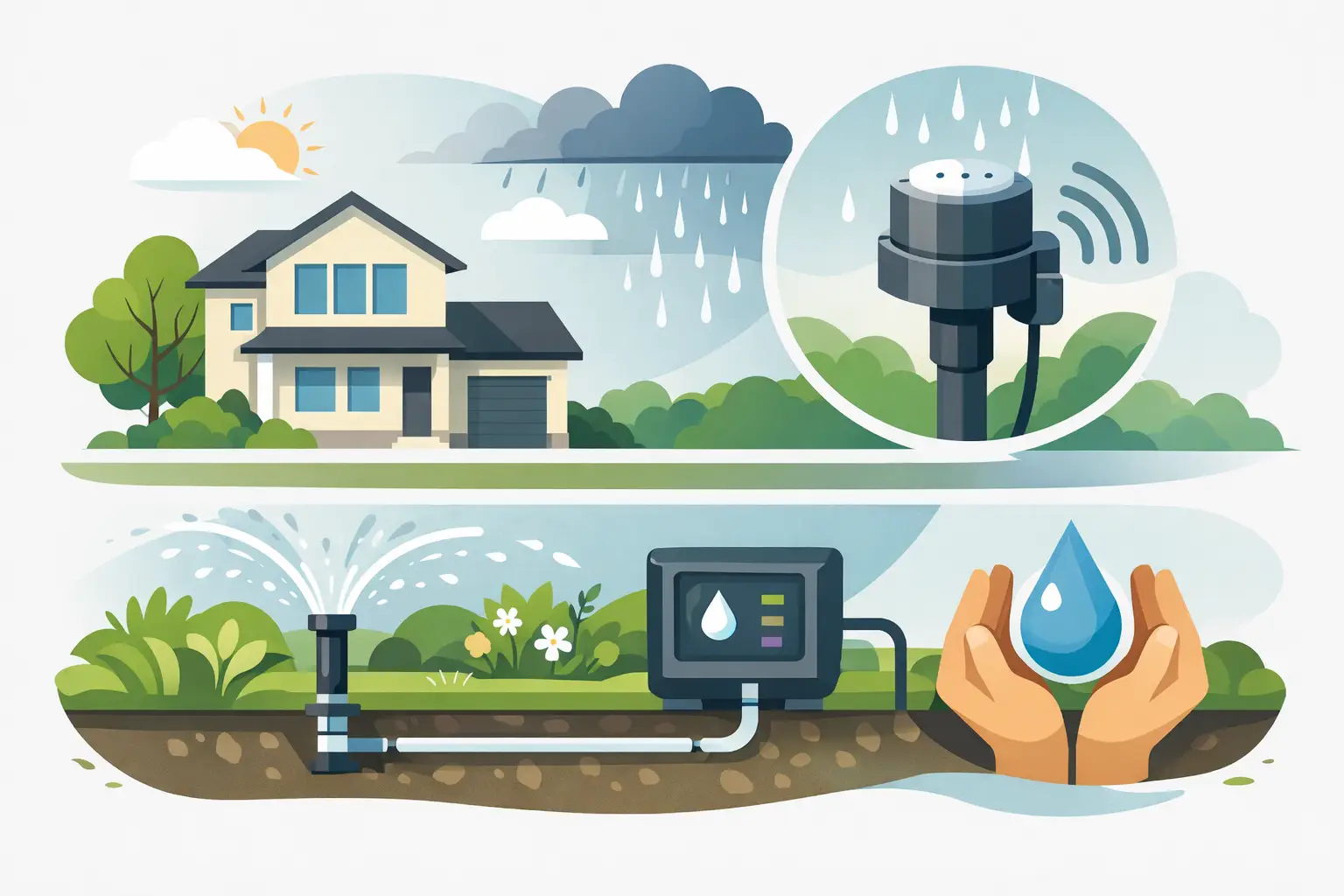
A sprinkler system running through a steady rain is more than frustrating to watch. It sends water into soil that may already be saturated, wastes money, and can leave parts of the lawn too wet. So, do rain sensors save water? Yes – when properly installed and maintained, they are one of the simplest, most dependable upgrades a homeowner can make to an automatic irrigation system.
A rain sensor does not replace good sprinkler design or thoughtful controller programming. It adds a practical layer of protection: when enough rain has fallen, the sensor tells the irrigation controller to pause scheduled watering. Once conditions dry out, regular programming resumes. For busy homeowners, that means less monitoring, less waste, and a healthier watering routine without another task on the weekly list.
How a rain sensor stops unnecessary watering
Most rain sensors are mounted in an open area where they can receive natural rainfall. Inside the sensor are moisture-absorbing discs that swell when wet. Once those discs absorb enough water, the sensor interrupts the signal between the controller and the irrigation valves. The scheduled cycle will not run until the discs dry and the sensor resets.
The process is automatic, but the settings matter. A homeowner or technician can usually adjust the amount of rainfall needed to shut the system down. A light shower may not provide enough water to benefit the root zone, while a longer rain can replace a full scheduled irrigation cycle. Setting the sensor correctly helps the system respond to useful rainfall rather than reacting to every brief sprinkle.
This is a straightforward upgrade because it works with many existing controllers. It is also separate from the weather forecast. The sensor responds to rain that actually reaches your property, not a forecast that may have missed your neighborhood entirely.
Do rain sensors save water in real conditions?
They can save a meaningful amount of water, particularly in a season with regular rainfall and on properties where the irrigation schedule is set to run several times each week. Every skipped cycle prevents water from being applied when the lawn and landscape have already received moisture naturally.
The exact savings depend on several factors: the size of the irrigated area, the number of zones, sprinkler runtime, soil type, plant material, and local weather. A large system with long runtimes has more potential for savings than a small system that is already watered conservatively. Still, the value is not limited to the water bill.
Overwatering can create problems that cost time and money. Lawns may develop shallow roots when they receive frequent, unnecessary watering. Garden beds can suffer from stressed plants, runoff can carry soil and nutrients away, and soggy ground is more likely to produce muddy areas or fungal disease. A rain sensor helps prevent these avoidable conditions by ensuring the irrigation system does not compete with the weather.
For homeowners who travel, work long hours, or simply do not want to check the forecast before every scheduled cycle, the convenience is just as valuable as the savings. The system makes a sensible adjustment on its own.
Rain sensors work best with a well-designed system
A rain sensor is effective only when the rest of the irrigation system is operating properly. If a zone has broken sprinkler heads, poor coverage, leaking valves, or incorrect run times, the sensor cannot solve those issues. It can stop watering after rainfall, but it cannot correct water that is being applied unevenly when the system does run.
Proper placement also matters. A sensor installed beneath a roof overhang, dense tree canopy, or covered deck may not receive the same rainfall as the lawn. Conversely, a location exposed to sprinkler spray can cause false shutoffs. The goal is an open, representative location that sees normal rainfall but remains clear of irrigation coverage.
During a service visit, a qualified irrigation technician can check the wiring, mounting location, controller connection, and shutoff threshold. This is especially helpful for older systems, where previous repairs or controller replacements may have left the sensor disconnected or bypassed.
Rain sensor vs. smart controller: which is right for your lawn?
A rain sensor and a smart irrigation controller both reduce unnecessary watering, but they do it differently. For many homeowners, the best choice depends on the age of the system, the property’s needs, and how much control they want.
A rain sensor is a focused, reliable solution. It detects local rainfall and pauses watering when a set amount has fallen. It is generally affordable, easy to understand, and a strong upgrade for a conventional controller that otherwise works well.
A smart controller takes a broader approach. Depending on the model and setup, it can adjust watering based on weather data, temperature, seasonal conditions, and sometimes soil or site information. It may reduce watering before an expected storm and modify schedules as the season changes. This can provide more precise control, especially for properties with multiple sun exposures, gardens, and varied landscape zones.
Neither option eliminates the need for seasonal service. Controllers need programming adjustments, sensors need testing, and sprinkler heads need inspection. In areas with freezing winters, proper fall winterization and spring startup remain essential to protect the system and confirm everything is working as intended.
For an existing system in good condition, a rain sensor may be the practical first step. For an aging controller, a major landscape renovation, or a homeowner who wants app-based control and more automated adjustments, a smart controller may offer better long-term value.
Common reasons rain sensors fail to save water
Rain sensors are simple devices, but they are not completely maintenance-free. The most common issue is not a failed sensor – it is a sensor that is installed but no longer connected to the controller. During a repair, controller replacement, or wiring change, the sensor circuit can be bypassed. The system then waters on schedule regardless of rain.
Another issue is a poor shutoff setting. If the threshold is set too high, the system may continue to run after moderate rainfall. If it is set too low, the system may skip watering after a quick shower that did not sufficiently soak the root zone. Adjustments should reflect the lawn’s soil, slope, shade, and sprinkler application rate.
Physical damage and placement problems are also common. Sun, wind, debris, animals, and seasonal weather can affect a sensor over time. A spring system check is a good opportunity to test whether the sensor is interrupting the irrigation cycle as it should.
Homeowners should also avoid assuming rain always means no irrigation is needed. A brief storm can wet the surface while leaving dry soil beneath, particularly in hot weather or under mature trees. The sensor’s threshold and the regular watering schedule should be set to support deep, efficient watering rather than simply reacting to any visible rain.
A small upgrade that supports better lawn care
The best irrigation systems apply the right amount of water, in the right areas, at the right time. A rain sensor supports that goal with a simple instruction: do not water when nature has already done the job.
For a new sprinkler installation, including a rain sensor from the start helps build efficiency into the system. For an existing system, it is often a practical modernization that can be completed without replacing every component. Advanced Irrigation can assess the condition of the system, confirm whether a sensor is already installed and working, and recommend upgrades that fit the property instead of adding technology for its own sake.
A healthy lawn does not need more water than necessary. It needs consistent coverage, smart timing, and a system that knows when to pause. When the next rainfall arrives, a properly functioning rain sensor lets your sprinkler system do exactly that.