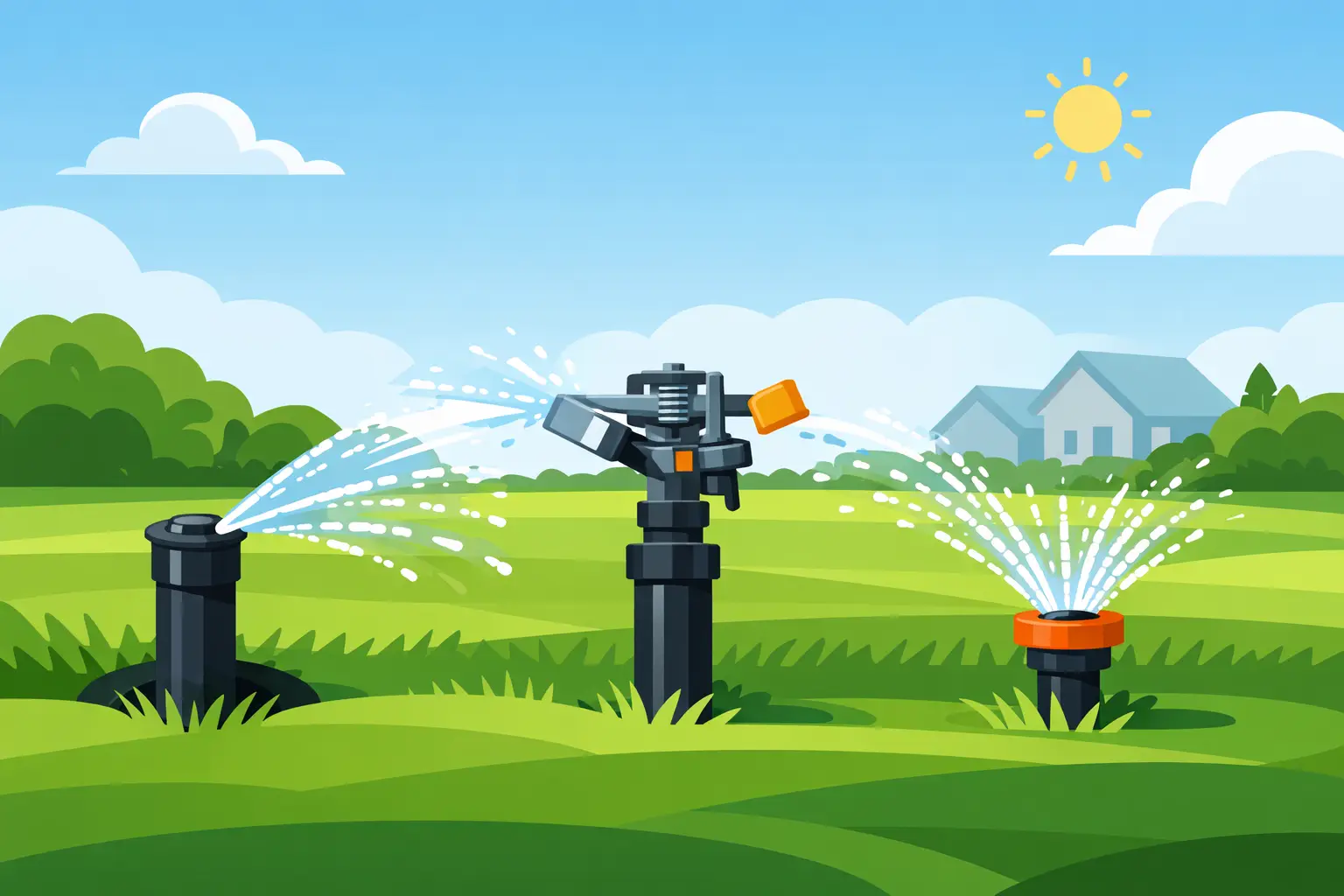
A sprinkler head that throws water too far can waste water on the driveway. One that does not throw far enough leaves dry strips between zones. The best sprinkler heads for lawns are not necessarily the most powerful or the most expensive. They are the heads that match your lawn’s shape, soil, water pressure, and landscaping so every area receives the right amount of water.
For Ottawa homeowners, that fit matters. Summer weather can shift from hot and dry to heavy rain quickly, while mature trees, narrow side yards, slopes, and mixed planting beds make one-size-fits-all watering unreliable. A properly designed system uses different sprinkler heads where they make sense, then sets them up for even, efficient coverage.
Best Sprinkler Heads for Lawns by Lawn Area
Most residential systems use a combination of head types. This is good design, not added complexity. The open center lawn needs different coverage than a narrow boulevard or a shaded strip beside the house.
Fixed spray heads for small, defined areas
Pop-up spray heads are a practical choice for smaller lawn sections, tight corners, and areas with unusual shapes. They deliver a fan-shaped spray at a relatively short distance and are commonly used along walkways, patios, foundation beds, and compact front yards.
Their main advantage is precise coverage. With the right nozzle, a spray head can be adjusted for a quarter circle, half circle, or full circle pattern. This helps keep water on the grass instead of the siding, pavement, or neighboring property.
The trade-off is that spray heads apply water quickly. On compacted clay soil or a slope, they can create runoff if the zone runs too long at once. A professional can address this with shorter cycle-and-soak run times, appropriate nozzles, and careful head spacing.
Rotary nozzles for water-saving upgrades
Rotary nozzles fit on many standard pop-up spray bodies but apply water in multiple rotating streams rather than a fixed fan. They generally use water more slowly than conventional spray nozzles, giving the soil more time to absorb it. That makes them a strong option for established lawns, moderate slopes, and homeowners looking to reduce waste without rebuilding an entire system.
They also tend to provide better resistance to wind than a fine spray pattern. This can be especially useful in exposed front yards where water drift leads to dry patches and inconsistent results.
Rotary nozzles are not the answer for every zone. They need to be matched to the system’s pressure and designed around their longer run times. Mixing rotary nozzles and conventional sprays on the same zone is usually a mistake because they apply water at different rates. One area will be overwatered before the other receives enough.
Gear-driven rotors for larger lawn spaces
For broad front lawns, large backyards, and open side yards, gear-driven rotor heads are often the right choice. Rotors rotate slowly and throw water farther than standard spray heads, making them efficient when heads can be spaced farther apart.
A quality rotor can be adjusted for both arc and distance, allowing it to cover a wide sweep without watering a driveway or fence. Because it applies water at a slower rate than a conventional spray head, it can also be a better fit for heavier soils.
Rotors need adequate water pressure and flow to operate correctly. If too many rotors are installed on one zone, they may barely turn, throw unevenly, or leave dry sections at the edges. Proper zone sizing is just as important as choosing the rotor itself.
High-efficiency nozzles for narrow strips
Narrow turf strips are among the hardest areas to water well. Think of the grass between a sidewalk and driveway, beside a fence, or along the side of the home. Standard full-circle heads can easily overspray these areas.
Strip-pattern nozzles are designed specifically for these long, narrow spaces. They distribute water in a rectangular pattern that follows the shape of the turf. This reduces pavement runoff and helps prevent the familiar brown line along the edge of the lawn.
These nozzles are small, but their placement requires accuracy. A few inches of poor positioning can mean water on concrete and dry grass where it counts.
The Best Lawn Sprinkler Heads Need Proper Spacing
Even a high-quality sprinkler head will disappoint if it is spaced incorrectly. The goal is head-to-head coverage, meaning water from one sprinkler reaches the next sprinkler. This overlapping pattern prevents dry pockets between heads and produces more consistent moisture across the lawn.
Homeowners often notice a problem after replacing a broken head with a different model or nozzle. The new head may have a shorter throw distance, a different precipitation rate, or a mismatched spray pattern. It may look as though it is working, yet the lawn slowly develops uneven color and thin growth.
Height matters, too. Pop-up heads should clear the grass enough to spray freely, but they should retract properly below grade when the system is off. Heads that sit too low get blocked by turf. Heads that sit too high are easier to damage with a mower, foot traffic, or snow-clearing equipment.
Features Worth Paying For
A reliable sprinkler system is built around performance, but a few features help protect it over time. Pressure-regulated spray bodies can reduce misting when water pressure is high, keeping more water on the lawn. Check valves help prevent low-head drainage, which can leave puddles around the lowest sprinkler after a zone shuts off.
Durable pop-up bodies, properly installed swing joints, and correctly sized nozzles also make a difference. These details reduce broken fittings, tilted heads, and uneven coverage after seasonal ground movement.
For lawns with mature landscaping, pop-up heights deserve attention. A taller pop-up body may be needed where grass grows thickly or groundcover can block a standard head. In contrast, choosing a taller body where it is not needed can make the head more vulnerable to damage. The right choice depends on the site.
Do Not Use Sprinkler Heads to Water Everything
Lawn sprinklers are designed for turf. Garden beds, shrubs, and vegetable gardens usually benefit more from drip irrigation or targeted micro-irrigation. These methods apply water near the root zone, reduce evaporation, and avoid soaking foliage unnecessarily.
Trying to water lawn and planting beds with the same sprinkler zone creates a compromise. Turf generally needs broad, even coverage, while established shrubs often need slower, deeper watering. Separating these areas gives each plant type a more appropriate schedule and can reduce water use.
Pressure, Soil, and Scheduling Still Matter
Sprinkler heads distribute water, but they cannot correct a poor schedule. Sandy soil drains quickly and may need shorter, more frequent watering. Clay soil absorbs water slowly and often benefits from multiple shorter cycles with time between them. Shaded grass usually needs less water than turf in direct afternoon sun.
A smart controller can account for local weather, seasonal changes, and watering restrictions more consistently than a fixed timer. Paired with properly selected sprinkler heads, it helps prevent the common problem of watering after rainfall or applying the same schedule in May as in July.
Seasonal care protects that investment. A spring startup allows the system to be inspected for leaks, broken heads, and coverage issues before summer stress shows up in the lawn. In fall, professional winterization is essential in a cold-weather market like Ottawa. Water left in irrigation lines, valves, or sprinkler bodies can freeze and cause costly damage.
When an Upgrade Makes More Sense Than Another Repair
Replacing a single damaged sprinkler head is often straightforward. But repeated breaks, chronic dry spots, puddling, or misting can point to a larger design or pressure issue. In those cases, changing head types, splitting an overloaded zone, or modernizing the controller may deliver a better long-term result than replacing the same part again.
Advanced Irrigation approaches upgrades with the whole property in mind: lawn layout, water source, landscaping, drainage, and how the system performs through the season. That is how a system becomes easier to manage instead of becoming a regular repair project.
Before the next hot stretch exposes dry patches in your lawn, watch the system run for one full cycle. Water hitting pavement, heads hidden in grass, weak spray, and uneven green areas are useful clues that the right sprinkler head or adjustment can make a noticeable difference.