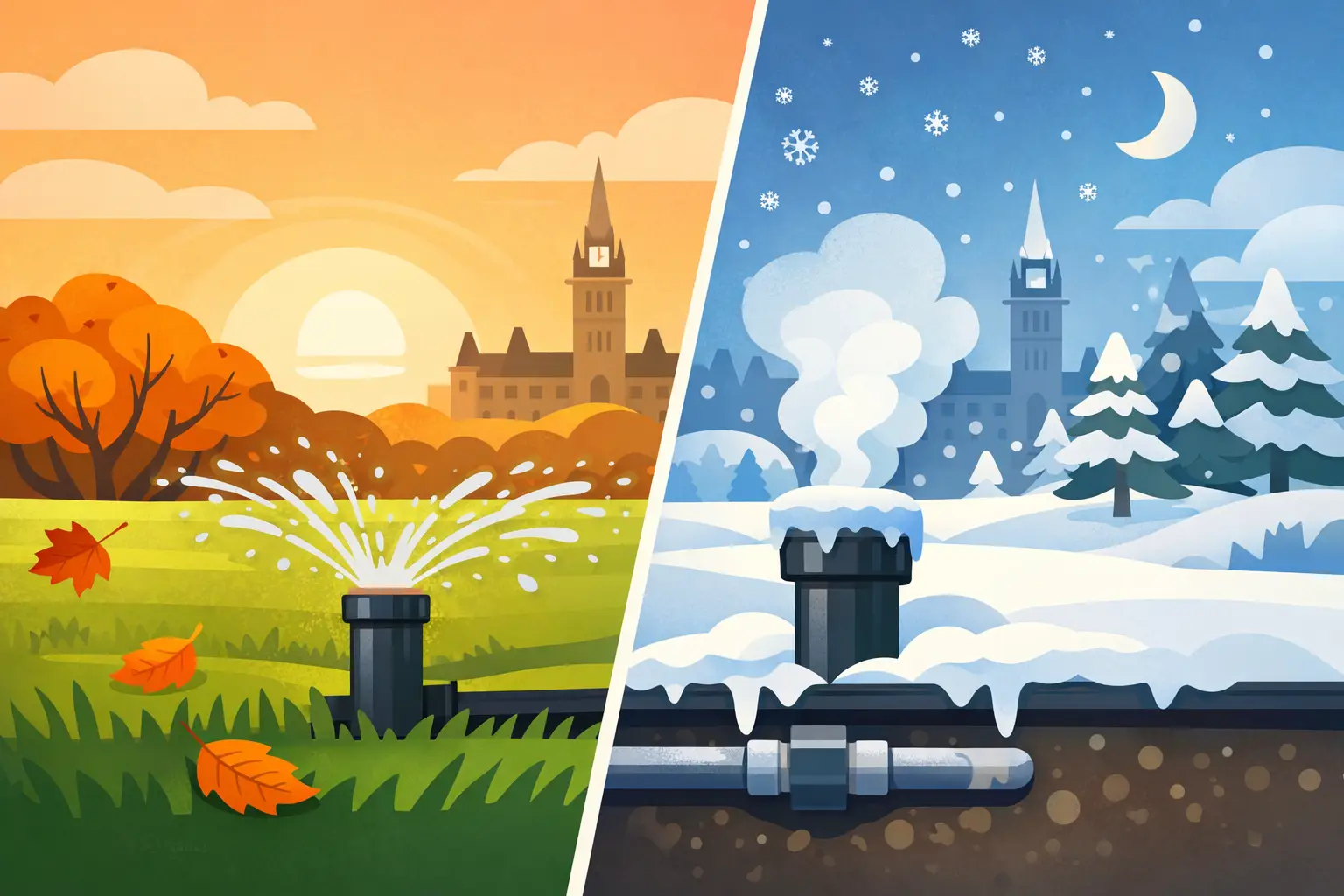
A single hard freeze can turn a reliable irrigation system into an expensive spring repair. Knowing when to winterize sprinkler system equipment is less about picking one calendar date and more about acting before Ottawa’s overnight temperatures put water-filled pipes, valves, and sprinkler heads at risk.
For most homeowners, fall winterization should be booked well before consistently freezing nights arrive. This protects the system you rely on for a green lawn and gives you one less seasonal maintenance job to worry about when the weather changes quickly.
When to Winterize Sprinkler System Equipment
In Ottawa and surrounding communities, the right time is usually from late September through October. The exact timing changes from year to year. A mild fall may keep lawns growing into October, while an early cold snap can bring overnight frost much sooner.
The practical rule is simple: winterize your irrigation system before the first sustained freezing temperatures. One light frost does not always cause damage, especially if the ground is still warm. But waiting until a freeze is in the forecast leaves very little margin for error. Water can remain in shallow supply lines, sprinkler heads, valves, and backflow components even after the controller has been turned off.
A professional fall blowout removes that remaining water with carefully regulated compressed air. It is the most dependable way to protect a residential irrigation system through a Canadian winter.
Why the Calendar Alone Is Not Enough
Many homeowners choose a date based on what worked last year. That is understandable, but weather conditions matter more than the date on the calendar. Early fall can still bring warm, dry days that benefit your lawn, while nighttime temperatures may fall sharply without much warning.
Pay attention to the forecast as September turns into October. If several nights near or below 32 degrees Fahrenheit are expected, your system should already be winterized or scheduled immediately. This is particularly true for exposed plumbing, shallow irrigation lines, systems installed in windy areas, and older systems with components that may not drain as easily.
Waiting until the lawn is completely dormant is not the goal. The goal is to protect the equipment before freezing water has a chance to expand inside it.
What Happens If You Wait Too Long
Water expands when it freezes. Inside an irrigation system, that expansion can crack PVC piping, split fittings, damage valves, and affect sprinkler heads. Backflow preventers are also vulnerable and can be costly to repair or replace.
The frustrating part is that winter damage is not always visible right away. A cracked line may stay hidden underground until spring startup, when the system is pressurized again. Homeowners may then notice low pressure, pooling water, a zone that will not run, or a leak near the valve box.
A winterization appointment is far less costly and disruptive than chasing down freeze damage after the ground has thawed. It also helps ensure your spring startup goes smoothly, so your system is ready when your lawn needs regular watering again.
Signs It Is Time to Book Your Fall Blowout
Rather than waiting for the first snow, use the conditions around your property to guide your decision. It is time to arrange winterization when these signs begin to line up:
- Overnight temperatures are regularly approaching freezing.
- The extended forecast shows a hard freeze or several cold nights ahead.
- Your lawn’s watering needs have dropped significantly with cooler fall weather.
- You have completed fall landscaping, overseeding, or other work that requires irrigation.
- Local service schedules are filling up as homeowners prepare their properties for winter.
The last point matters. Fall is a busy season for irrigation companies. Booking early gives you more flexibility and avoids the rush that follows the first serious cold-weather forecast.
Turning Off the Controller Is Not Winterization
It is common to assume that shutting off the irrigation controller is enough. It is a good first step, but it does not remove water from the system. Turning off the controller simply stops scheduled watering cycles.
A complete winterization service involves shutting off the water supply to the irrigation system, managing the backflow assembly, and using compressed air to clear water from each zone. The process must be done carefully. Too little air pressure can leave water behind, while excessive pressure can damage components.
This is why professional service is the safer choice for most residential systems. An experienced technician understands how to work with the system’s layout, pipe material, valves, sprinkler heads, and backflow equipment. The goal is not simply to hear air coming from the heads. It is to clear each zone thoroughly without putting unnecessary stress on the system.
Do You Need to Winterize a Drip System?
Yes. Drip irrigation, garden zones, and low-volume systems need winter protection too. Their tubing, emitters, filters, and valves can hold water in small spaces where freezing causes damage. These zones often operate at lower pressure and may require a different approach during the blowout process.
If your property has a mix of lawn sprinklers, drip lines, garden beds, or a smart controller, make sure every irrigation zone is included in the winterization plan. A system is only as protected as its most vulnerable component.
Protecting Smart Irrigation Equipment for Winter
Smart controllers are designed to make watering more efficient during the growing season, but they should still be checked as part of fall shutdown. Once the irrigation supply has been winterized, the controller should be set to an off or rain mode so it does not call for watering during warm spells.
Do not unplug a controller if doing so will erase programming, Wi-Fi settings, or battery backup information. In many cases, using the controller’s seasonal shutdown setting is the better option. If you are unsure, a technician can confirm the proper setting and identify any system upgrades that could improve efficiency next season.
Winter is also a useful time to plan repairs. If you noticed uneven coverage, wet spots, weak heads, or high water use during the summer, address those concerns before spring demand returns. Small corrections to nozzle selection, head placement, pressure regulation, or controller programming can make a noticeable difference in lawn health and water use.
A Simple Fall Plan for Homeowners
Keep using your system as needed while daytime conditions are warm and your lawn is actively growing. As cooler nights become more frequent, watch the forecast rather than relying on a fixed date. Then schedule a professional blowout before hard freezes become routine.
After winterization, leave the irrigation water supply off and keep the controller in its seasonal shutdown mode. Avoid reopening the system for a brief warm spell. Reintroducing water too early can undo the protection the blowout provided if temperatures drop again.
Reliable Winter Protection Starts Early
Your sprinkler system is built to make lawn care easier, not to create surprise repairs after winter. Booking fall winterization early protects the investment beneath your lawn and puts your system in a better position for a dependable spring startup.
Advanced Irrigation helps Ottawa homeowners prepare residential sprinkler systems for winter with careful, professional blowouts and service built around long-term reliability. When cold nights begin showing up in the forecast, it is a good time to get your system protected and your fall to-do list one step shorter.