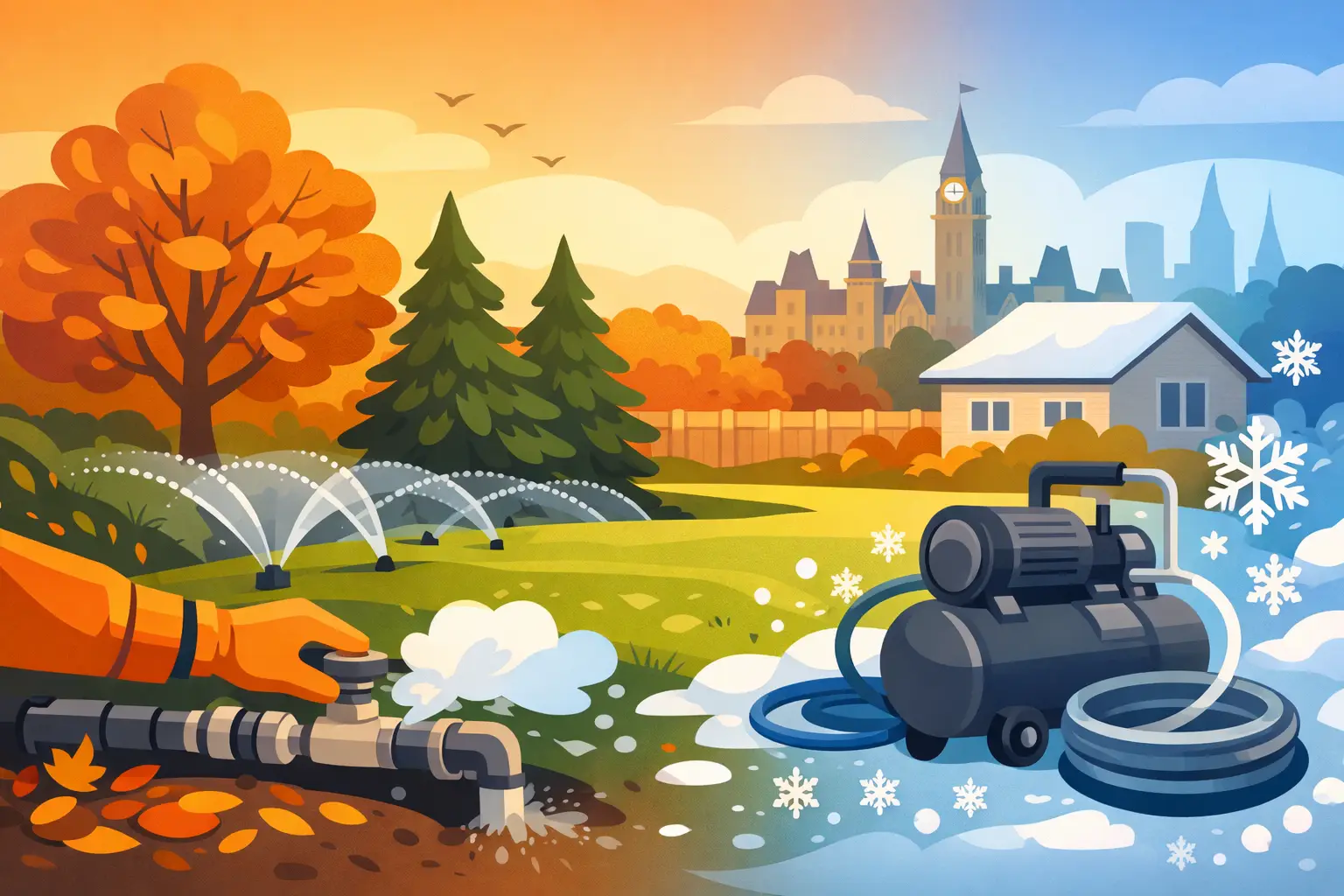
The first overnight freeze can turn an overlooked sprinkler line into an expensive spring repair. A professional fall irrigation winterization service removes water from the parts of your system most vulnerable to freezing, helping protect pipes, valves, sprinkler heads, and backflow equipment through an Ottawa winter.
For homeowners, winterization is one of the simplest ways to protect the investment already under the lawn. Your irrigation system works hard all summer to keep grass healthy and watering consistent. Before temperatures drop, it needs the same level of professional attention to be ready for months of freezing conditions.
Why Ottawa sprinkler systems need winterization
Water expands when it freezes. If water remains trapped inside an irrigation pipe, valve, fitting, or sprinkler head, that expansion can crack components that looked perfectly fine when the system was last used. Some damage is obvious right away. Other issues stay hidden underground until spring startup, when a broken line creates a leak, weak pressure, or a soggy area in the yard.
Ottawa’s long, cold winters make proper shutdown especially important. A few warm fall days after the first cold night do not make a system safe. Water can remain in low points, lateral lines, manifold components, and backflow assemblies even when the main water supply has been turned off.
Winterization is not simply about switching the controller to off. A complete service focuses on removing water from the system and protecting the components that cannot tolerate freezing temperatures.
What a fall irrigation winterization service includes
A professional winterization appointment begins with shutting off the irrigation water supply. From there, the technician prepares the system for a controlled blowout using compressed air. Each zone is cleared individually so water is pushed out through the sprinkler heads without putting unnecessary stress on pipes, valves, or fittings.
The goal is not to force every last drop from every component with maximum air pressure. Excessive pressure can damage an irrigation system just as easily as frozen water can. Proper winterization requires the right equipment, appropriate pressure, and the experience to recognize how different zones, pipe sizes, and system components should be handled.
During service, a technician may also inspect accessible parts of the system for concerns worth addressing before spring. This can include damaged sprinkler heads, aging valves, exposed wiring, controller issues, or signs that a zone was not operating as it should. Catching these items in the fall can make spring startup smoother and reduce the chance of discovering a problem when your lawn needs water most.
Backflow prevention equipment also deserves careful attention. Depending on the installation, it may need to be shut down, drained, or otherwise protected according to the system design. This is one reason professional service is valuable. No two irrigation systems are exactly alike, particularly when they have been expanded, repaired, or upgraded over the years.
The cost of skipping winterization
A sprinkler system can survive one mild season without trouble and still fail after the next hard freeze. That uncertainty is not a good maintenance plan. Freeze damage often happens out of sight, below grade, or inside components that are not checked until spring.
The result can range from a single broken head to cracked pipes, failed valves, damaged backflow devices, and leaks that waste water once the system is restarted. Repair costs vary based on where the damage is located and how much of the yard needs to be accessed. In many cases, a seasonal winterization service costs far less than diagnosing and repairing freeze-related damage in the spring.
There is also the inconvenience to consider. Spring is when homeowners want their systems running, lawns greening up, and outdoor routines getting easier. A damaged system can delay that process and leave sections of the lawn without reliable coverage during an important growing period.
When to schedule irrigation winterization
The best time to schedule is before a sustained hard freeze, not after temperatures have already dropped for several nights. Fall weather can change quickly, and seasonal service appointments tend to fill as homeowners prepare their properties for winter.
There is no single calendar date that works every year. The right timing depends on local temperatures, your property’s exposure, and the forecast. A system that serves a shaded area or has above-ground equipment may face risk sooner than one in a more protected location. Scheduling early gives you more flexibility and avoids the rush that often follows the first serious cold snap.
If you are still using your irrigation system in early fall, that does not mean you need to wait until the last possible day. A professional can help you determine a practical cutoff based on current weather and the condition of your lawn. In most cases, protecting the system before winter is more valuable than squeezing out a few extra watering cycles late in the season.
Why a DIY blowout is not always the best choice
Homeowners can handle basic fall tasks such as clearing leaves away from sprinkler heads, checking that the controller is set for the season, and noting any areas that performed poorly during summer. The blowout itself is different.
Compressed-air winterization requires a properly sized compressor and a clear understanding of safe operating pressure. Too little air may leave water in the lines. Too much air can damage fittings, valves, or sprinkler components. It also takes time to run every zone correctly and confirm the system has been prepared for shutdown.
DIY winterization may make sense for someone with the right equipment and experience working with irrigation systems. For many homeowners, however, the potential savings are small compared with the risk of a missed step or damaged component. Professional service provides confidence that the job is handled with equipment designed for the task and a process tailored to the system.
Protect more than just the pipes
Fall is also a useful time to think about what worked well during the watering season. Did one section of lawn stay dry? Did a garden bed receive too much water? Did you notice higher water use, poor sprinkler coverage, or a controller that was difficult to manage?
These details can point to improvements that make next season easier. A worn nozzle, poorly positioned head, or outdated controller can affect coverage and water use. Modern smart irrigation controls can adjust schedules more efficiently, while properly designed zones help deliver water where it is needed instead of onto driveways, fences, and sidewalks.
Winterization does not need to become a major upgrade project. Sometimes a small repair or adjustment is enough. Other properties may benefit from a spring plan that includes new heads, improved zoning, leak repairs, or a controller update. The right solution depends on the age of the system, the condition of the lawn, and how you want the system to perform next year.
Choose a service provider who knows your system
A dependable winterization visit should feel organized and straightforward. Your provider should have the right equipment, follow a careful process, and treat your property with respect. Experience matters because irrigation systems can include a mix of older components, newer technology, custom zones, and past repairs that all influence how the system should be shut down.
Advanced Irrigation brings more than 30 years of hands-on irrigation experience to residential properties in Ottawa and surrounding communities. Whether your system was recently installed or has been serving your lawn for years, proper fall service helps protect its performance and extend its useful life.
A healthy lawn starts with a system that is protected in every season. Before winter settles in, schedule your service, make note of any summer concerns, and give your irrigation system the professional shutdown it needs to be ready for spring.