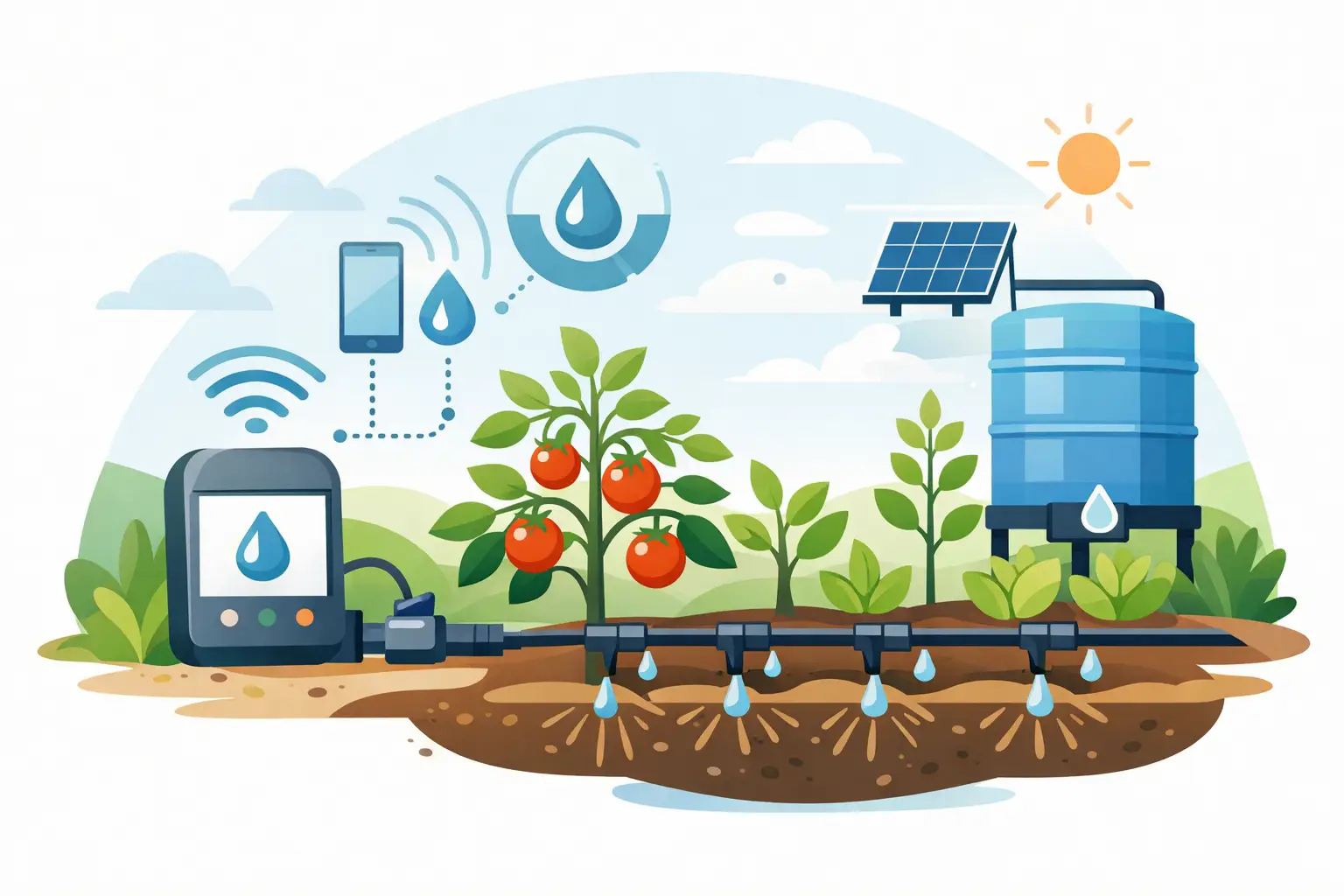
If you are asking what is smart drip irrigation system technology really supposed to do, the short answer is this: it waters plants slowly, accurately, and automatically based on real conditions instead of guesswork. For homeowners, that means less wasted water, fewer dry spots, and less time dragging hoses around the yard.
A basic drip system already improves efficiency by sending water directly to the root zone. A smart drip irrigation system adds a controller, sensors, weather data, or app-based scheduling so the system can make better decisions about when to water and how much. The goal is simple – give your landscape what it needs without overwatering.
What is a smart drip irrigation system and how does it work?
A smart drip irrigation system combines low-volume watering equipment with automated controls. Instead of spraying large areas the way traditional sprinklers do, drip irrigation delivers water through tubing, emitters, or drip lines placed close to plants, garden beds, shrubs, or foundation plantings.
What makes it smart is the control side. The system can adjust watering based on rainfall, temperature, soil moisture, or seasonal changes. Some setups use weather-based controllers. Others rely on soil sensors. Many modern systems use both, along with phone access that lets a homeowner check schedules or make changes without going out to the garage.
In practical terms, the system usually includes a controller, valves, tubing, emitters, filters, pressure regulation, and sometimes moisture or rain sensors. Each part matters. The controller tells the system when to run. The drip components control how water is applied. The sensors help prevent unnecessary watering.
For a homeowner, the benefit is not just automation. It is precision. Beds, shrubs, and targeted planting areas rarely need the same watering pattern as turf. A smart drip zone lets those areas get a more measured amount of water, which can improve plant health and help control water use.
Why homeowners choose smart drip systems
Most watering problems come from applying too much water, too little water, or water in the wrong place. Smart drip systems address all three.
Because water is delivered near the roots, less is lost to evaporation or overspray. That matters during hot weather, windy days, and in landscapes with narrow planting beds where traditional spray heads often waste water on sidewalks, driveways, or fences. Drip also reduces runoff, which is especially helpful if parts of the property slope or if soil does not absorb water evenly.
The smart controls add another layer of value. If it rains, the system can delay watering. If temperatures rise, it can adjust runtime. If a zone tends to stay moist longer, the schedule can be fine-tuned instead of treating every part of the landscape the same.
For busy homeowners, convenience is a major reason to upgrade. You do not have to remember when you watered last. You do not have to stand outside moving hoses. You also do not have to rely on a fixed timer that keeps watering even when conditions change.
Where smart drip irrigation works best
Smart drip irrigation is not always meant to replace every sprinkler on a property. In many residential systems, it works best as part of a larger design.
It is especially effective in flower beds, shrub borders, vegetable gardens, foundation plantings, newly planted trees, and narrow side yards. These are areas where spray irrigation can be inefficient or uneven. Drip can also be useful where homeowners want to avoid wetting leaves, fences, siding, or hard surfaces.
Lawns are a different story. Turf usually needs head-to-head sprinkler coverage rather than standard drip components, although some subsurface options exist. For most homes, the right answer is a combination system: efficient sprinklers for the lawn and smart drip zones for planting beds and landscaped areas.
That is why professional design matters. The best irrigation setup is based on the property, plant material, sun exposure, soil conditions, and how the homeowner wants the yard to perform over time.
What makes a system truly smart
Some systems are marketed as smart when they are really just basic timers with a phone app. That can still be useful, but true smart irrigation goes further.
A genuinely smart drip irrigation system responds to changing conditions. Weather-based scheduling is one of the most common features. The controller uses local weather information to adjust watering instead of sticking to the same program week after week. Rain sensors can stop watering during or after a storm. Soil moisture sensors add even more precision by measuring what is happening in the ground.
Zone-specific programming also matters. A shaded bed under mature trees should not be watered like a sunny border near the street. A smart controller lets each area run according to its own needs.
The result is better consistency. Plants are less likely to swing between too dry and too wet, and the system can adapt through spring, summer, and early fall without constant manual changes.
The trade-offs to know before installing one
Smart drip systems offer real advantages, but they are not maintenance-free and they are not one-size-fits-all.
Drip components can clog if the system is not properly filtered or maintained. Emitters need to be selected and spaced correctly. Pressure has to be regulated. If the layout is poorly planned, some plants can get too much water while others get too little. In colder climates, seasonal winterization is also essential to protect the system from freeze damage.
There is also an upfront cost. A professionally installed smart system costs more than a hose-end timer or a basic manual setup. But lower water waste, better plant performance, and reduced frustration often make that investment worthwhile, especially for homeowners who care about long-term curb appeal and convenience.
Another point is that smart controls help most when the irrigation design is sound to begin with. A high-end controller cannot fully fix bad zoning, poor head placement, or worn-out components. Technology works best when the foundation is right.
Is a smart drip irrigation system worth it?
For many homeowners, yes – especially if you have garden beds, shrubs, specialty plantings, or areas that are difficult to water evenly by hand. It is also a strong fit if you travel often, have a busy schedule, or want more control over water use.
The value depends on what problem you are trying to solve. If the main issue is a brown lawn, the answer may involve sprinkler repairs, coverage adjustments, or better zone design rather than drip alone. If the issue is wasted water in planting beds, overspray on pavement, or inconsistent hand watering, smart drip irrigation can be a very effective upgrade.
For existing irrigation systems, adding drip zones and upgrading the controller can often modernize the setup without replacing everything. For new installations, it makes sense to build the right mix of sprinklers and drip from the start.
Professional installation vs. DIY
Some homeowners try to build drip systems themselves, and for a small garden bed that may be fine. But once a system is tied into the home irrigation layout, automation, zoning, water pressure, and seasonal servicing become more important.
A professionally installed system is designed around the property instead of assembled from a box kit. That means better zone planning, cleaner water delivery, and controls that are set up to perform reliably through changing weather. It also means the system can be serviced, adjusted, and winterized properly.
For homeowners in climates with freezing winters, this is not a small detail. Seasonal startup and shutdown are part of protecting the investment. A smart irrigation system should save time, not create extra headaches every spring and fall.
At Advanced Irrigation, this is where experience matters. Smart technology works best when it is backed by precise installation, reliable service, and ongoing support.
What to expect from the right system
A good smart drip irrigation system should do three things well. It should apply water where it is needed, adjust to changing conditions, and stay dependable over time.
If your current watering routine feels inconsistent, wasteful, or too hands-on, smart drip irrigation is worth a closer look. The best setup is not the one with the most features. It is the one that fits your property, protects your landscape, and makes it easier to keep everything healthy without constant effort.
A greener yard usually starts with better control, and better control starts with watering the right areas the right way.