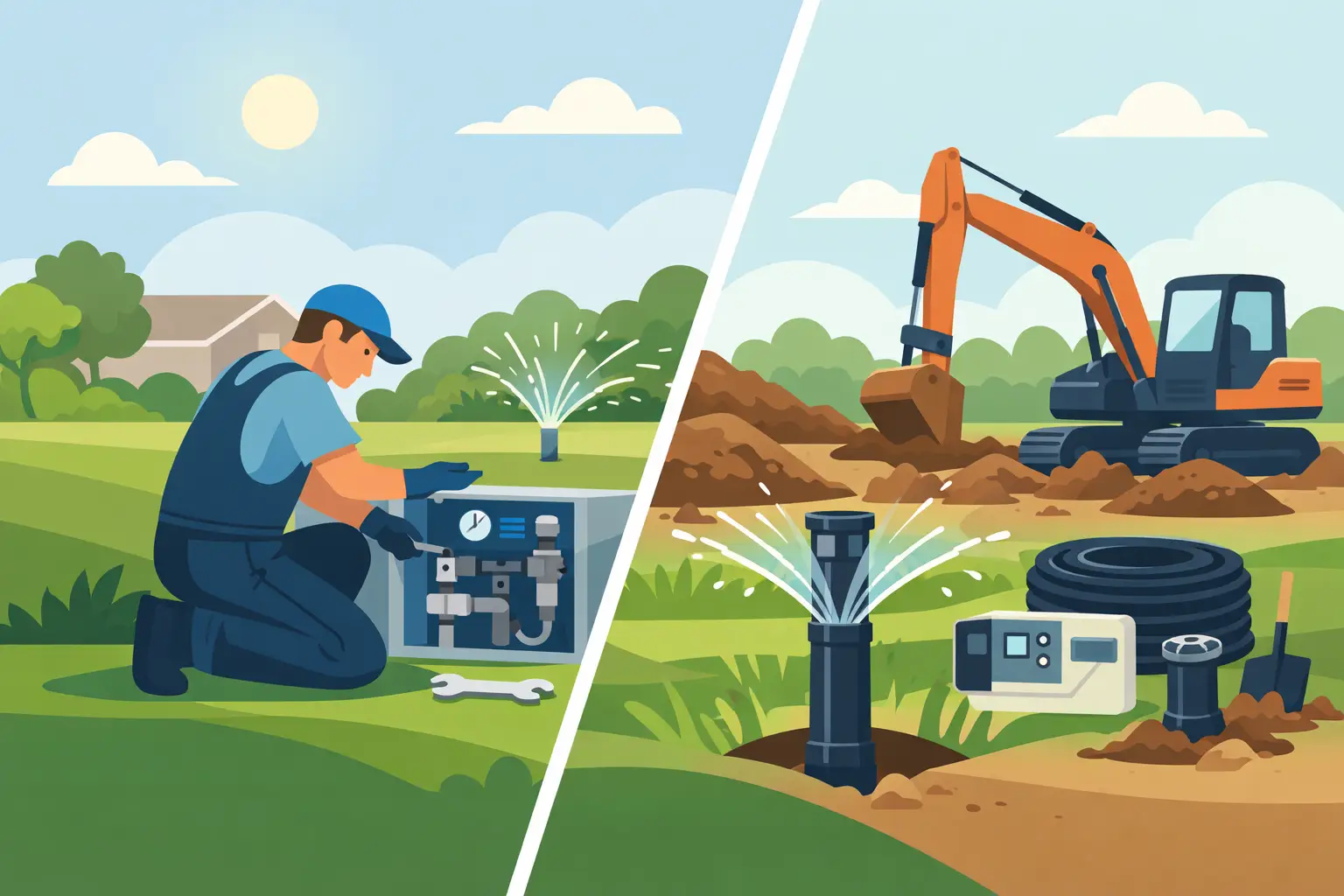
A brown strip along the driveway, a sprinkler head that will not rise, or a controller that keeps losing its schedule can make one question urgent: is irrigation service versus replacement the smarter move? For Ottawa homeowners, the answer is rarely based on one broken part alone. It comes down to the system’s age, condition, coverage, water use, and the cost of keeping it dependable season after season.
A well-built irrigation system can serve a property for many years with proper maintenance. But every system eventually reaches a point where individual repairs no longer solve the larger problem. Knowing where that line is helps protect your lawn, your water bill, and your budget.
Irrigation Service Versus Replacement: Start With the System’s Condition
Service is usually the right choice when the problem is isolated and the rest of the system is working as it should. A damaged sprinkler head, leaking valve, broken fitting, wiring issue, or controller programming problem does not automatically call for a new system. These are common repair needs, especially after winter or lawn work, and they can often be corrected quickly.
A professional service visit should do more than replace the visible broken part. It should identify why the issue happened and confirm that the repair restores proper performance. For example, a head that breaks repeatedly may be sitting too high for the lawn mower. A dry area may be caused by a clogged nozzle, but it may also point to low pressure, a valve issue, or poor zone design.
Service makes the most sense when your system still provides even coverage, responds reliably, and has components that are readily available. Seasonal startup, mid-season adjustments, and fall winterization also play a major role in extending the useful life of the system. In Ottawa, proper winterization is particularly important because frozen water left in lines or components can create costly damage before spring arrives.
Signs Your System Is a Good Candidate for Service
An existing system is often worth repairing when it has a sound layout and the issues are limited. Look for a system that still waters the lawn evenly, has stable water pressure, and does not require frequent emergency visits.
Service is commonly the practical choice if you are dealing with a recent leak, a few damaged heads, a failed solenoid, a worn valve diaphragm, or a controller that needs replacement or reprogramming. Modernizing a controller can also improve an otherwise dependable system without the expense of replacing underground piping and sprinkler zones.
The key is consistency. If repairs are occasional and the lawn responds well after adjustments, ongoing service can be a cost-effective way to protect the investment you already have.
When Repeated Repairs Point to Replacement
Replacement becomes the better long-term value when the system has broad, recurring issues rather than a single clear fault. An old irrigation system may continue to run, but that does not mean it is watering efficiently or reliably. Constant repairs can add up, while uneven coverage can leave parts of the lawn stressed and other areas overwatered.
Consider replacement or a major system upgrade when you notice several of these issues at once:
- Multiple zones leak, fail to activate, or have inconsistent pressure.
- Sprinkler heads regularly break, sink, stick, or require repeated adjustment.
- Pipes, valves, and fittings need repair in different areas each season.
- The system leaves dry patches, oversprays walkways, or waters the same area unevenly.
- The controller is outdated, difficult to program, or cannot support weather-based scheduling.
- Your landscaping, lawn layout, or water needs have changed since the system was installed.
These symptoms can indicate aging infrastructure, poor original design, or a system that no longer fits the property. Patching one issue at a time may keep the system running, but it may not deliver the healthy, uniform lawn you expect.
A Changed Yard Can Make an Old Design Obsolete
Many homeowners assume replacement is only about old pipes. In practice, the layout can be just as important. A system designed before a patio expansion, new garden bed, mature tree growth, pool installation, or lawn renovation may no longer place water where it is needed.
Trees and shrubs can block sprinkler patterns. New hardscaping can create overspray. A larger garden area may need drip irrigation rather than spray heads. Even a lawn that has been reshaped can require different zone boundaries and nozzle types.
Replacement does not always mean removing every component and starting from scratch. In some cases, a targeted redesign can reuse sound sections of the system while replacing the zones, heads, controller, or piping that are no longer performing. The right scope depends on the condition of the existing infrastructure and the goals for the property.
What a Modern Irrigation Upgrade Can Improve
A replacement system should solve the limitations that caused the decision in the first place. That may include better coverage, reduced water waste, easier control, or improved reliability. A professionally designed system matches sprinkler type, nozzle output, spacing, and zone run times to the lawn and landscape rather than relying on one-size-fits-all settings.
Smart controllers are one of the most valuable upgrades for many homeowners. They allow more precise scheduling and can adjust watering based on local weather conditions. Instead of manually changing run times during a hot, dry stretch or after heavy rainfall, the system can respond with less effort and less unnecessary watering.
Modern components can also make maintenance easier. Properly placed heads are less exposed to mower damage. Efficient nozzles apply water more evenly. Drip zones can deliver water directly to plants and garden beds. Well-designed zones prevent low-pressure performance caused by trying to water too much area at once.
The result is not simply a newer system. It is a system built around healthier turf, better curb appeal, and more efficient water use.
Compare Long-Term Costs, Not Just Today’s Repair Bill
A repair estimate is usually lower than a replacement estimate, which is why service can feel like the obvious decision. But the immediate price is only part of the comparison. A better question is what the system will cost over the next several years in repairs, wasted water, lawn recovery, and time spent managing recurring problems.
If a repair restores reliable performance and should last, it is money well spent. If it only gets the system through another season before the next valve, pipe, or zone fails, replacement may be more economical over time. There is no fixed number of repairs that automatically means replacement. The pattern matters more than the count.
A homeowner with a 10-year-old system that needs one valve repair may have no reason to replace it. Another homeowner with an older system may face low pressure, leaking lines, poor coverage, failing wiring, and an outdated controller in the same year. Those are very different situations, even if both systems technically still operate.
Ottawa’s Seasonal Conditions Should Shape the Decision
Irrigation systems in Ottawa face a demanding annual cycle. Spring startup reveals winter damage. Summer heat exposes weak coverage and pressure problems. Fall winterization protects the system from freeze damage. A service plan that addresses each stage can prevent small issues from becoming major repairs.
If a system has survived several winters but is now showing cracked fittings, recurring leaks, or unreliable zones, a professional inspection can determine whether the damage is isolated or widespread. It is also an opportunity to check whether the system has adequate drainage, proper head placement, and appropriate protection for valves and backflow components.
Advanced Irrigation approaches this decision with the full lifecycle in mind. The goal is not to recommend replacement when a dependable repair will do the job. It is to give homeowners a clear assessment of what the system needs to perform reliably now and what may be worth planning for later.
Make the Decision With a Full System Assessment
Before approving a major repair or replacement, ask for an assessment of the complete system. The inspection should include the controller, wiring, valves, zone pressure, sprinkler heads, coverage patterns, and visible signs of leaks. It should also account for recent changes to the property and your expectations for convenience, water efficiency, and lawn appearance.
A trustworthy recommendation explains the trade-off plainly. If service is the right answer, you should understand what will be repaired, why it failed, and what maintenance will help prevent a repeat issue. If replacement is recommended, you should know which limitations of the old system it will correct and whether a phased upgrade is possible.
The best next step is not choosing the cheapest option or the biggest project. It is choosing the work that gives your lawn dependable coverage and gives you confidence each time the system turns on.