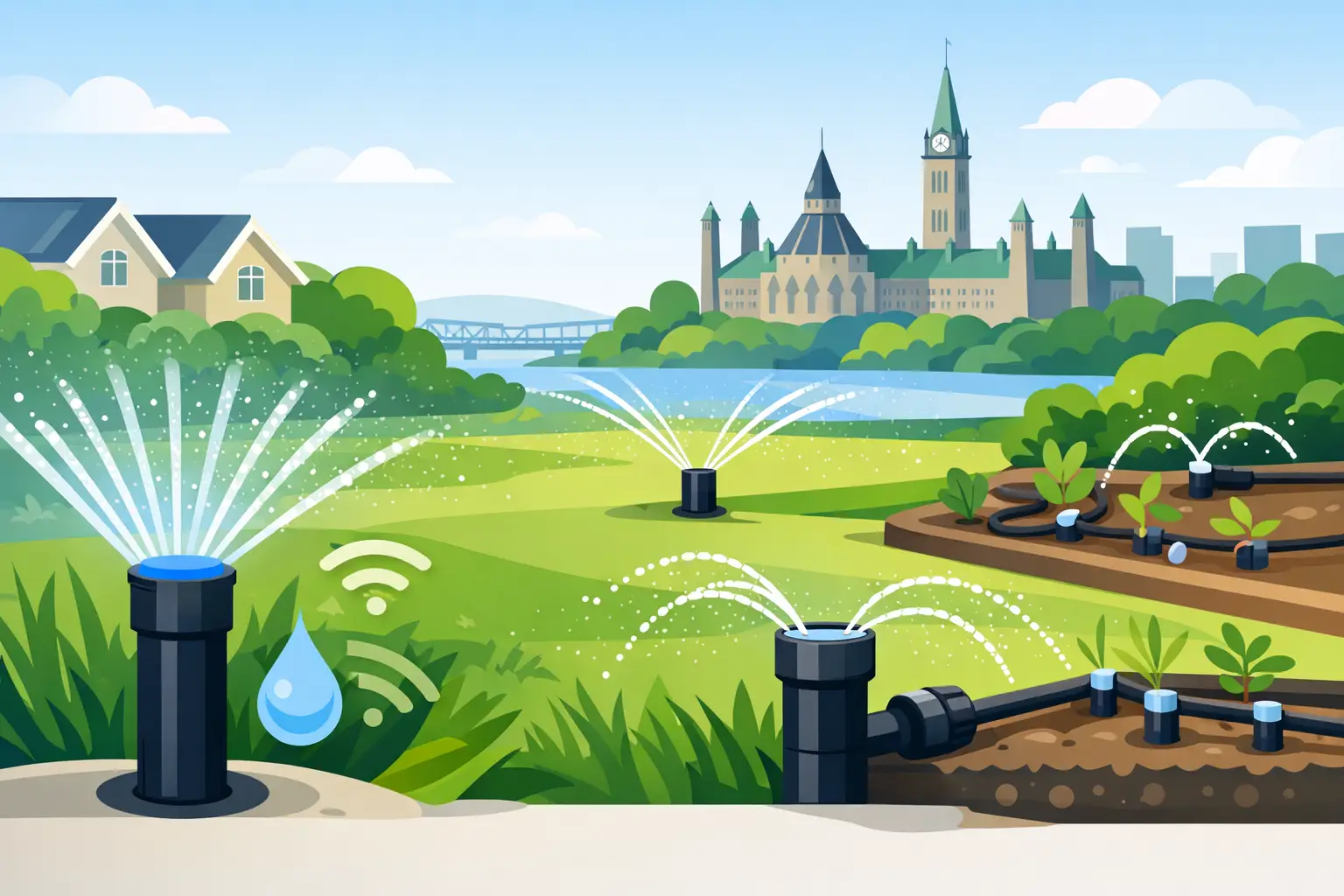
A lawn can look thirsty even when a sprinkler system runs every day. Often, the problem is not a lack of water. It is poor coverage, outdated programming, leaks, or sprinklers applying water faster than the soil can absorb it. The best water saving sprinkler upgrades address those issues directly, helping Ottawa homeowners keep lawns green while reducing runoff, waste, and unnecessary system wear.
For an aging irrigation system, a full replacement is not always necessary. The right upgrades can improve efficiency, convenience, and reliability without disturbing an established yard. The best choice depends on your system’s condition, your landscape layout, and whether you have sun-exposed turf, shaded areas, garden beds, or slopes that need different watering approaches.
7 Best Water Saving Sprinkler Upgrades
1. Install a weather-based smart controller
A smart irrigation controller is often the most meaningful upgrade for a system that still runs on fixed timers. Traditional controllers water according to a schedule, whether the lawn needs water or not. A weather-based controller adjusts run times based on local conditions such as rainfall, temperature, and seasonal changes.
This means the system can reduce watering after a rainy stretch and increase it during a hot, dry period. It also eliminates much of the guesswork that leads homeowners to overwater. For busy families, the convenience matters just as much as the savings: the controller manages regular adjustments without requiring constant attention.
Not every smart controller performs the same way. Proper setup is essential. Each zone must be programmed for its soil, plant material, sprinkler type, sun exposure, and slope. A professionally configured controller is far more likely to deliver consistent results than one set with a generic schedule.
2. Replace old spray nozzles with high-efficiency nozzles
Older fixed spray nozzles can put down water quickly, particularly in small lawn areas. If the soil cannot absorb that water at the same rate, it runs onto walkways, driveways, and the street. That is wasted water, and it can leave the turf unevenly hydrated.
High-efficiency rotary nozzles apply water more slowly and evenly. Their rotating streams give the soil time to absorb moisture, making them especially useful for compacted soil, narrow lawn strips, and sloped areas. They can also provide better wind resistance than a fine mist from a conventional spray nozzle.
There is a trade-off. Because these nozzles apply water at a lower rate, run times usually need to be longer. That is not a drawback when the controller is adjusted correctly. The goal is to put water into the root zone, not to finish a watering cycle as quickly as possible.
3. Add a rain sensor
A rain sensor is a straightforward upgrade that prevents a system from running during or shortly after rainfall. It detects accumulated rain and temporarily interrupts scheduled watering until conditions dry out.
Even homeowners with a programmable controller benefit from this safeguard, especially when an existing system is set on a regular schedule. It is a practical way to avoid the familiar sight of sprinklers running in the rain. In Ottawa’s variable spring and fall weather, that protection can prevent a surprising amount of unnecessary watering.
A rain sensor does not replace correct programming. It is a backup that helps the system respond when the weather changes faster than the schedule does.
4. Use pressure-regulated sprinkler bodies
Sprinkler heads need the right water pressure to perform properly. Too much pressure creates mist, which can blow away before it reaches the lawn. Too little pressure can shorten the spray pattern and create dry spots. Both conditions reduce efficiency.
Pressure-regulated sprinkler bodies help maintain consistent pressure at the head. This improves distribution and reduces misting, particularly in zones with high incoming water pressure. The upgrade is often paired with efficient nozzles because nozzle performance depends heavily on stable pressure.
A technician should check the system before recommending this upgrade. Pressure problems can also be caused by undersized pipes, damaged valves, a failing backflow device, or zone design issues. Adding new sprinkler bodies will not solve a larger hydraulic problem on its own.
5. Upgrade drip irrigation for beds and gardens
Flower beds, shrubs, hedges, and vegetable gardens do not need the same watering method as turf. Spray heads often throw water onto foliage, mulch, fences, and hard surfaces instead of directing it to plant roots. A drip irrigation zone applies water slowly at the base of plants, where it is most useful.
Drip systems are an efficient choice for established garden beds and foundation planting. They help reduce evaporation, limit overspray, and keep leaves drier, which can be beneficial for certain plants. They are also easier to adapt as garden layouts change over time.
Drip irrigation needs regular inspection. Emitters can clog, tubing can be damaged during gardening, and mulch can hide problems. With proper seasonal service and occasional adjustments, however, it is one of the most targeted ways to water landscape plants.
6. Repair leaking valves, heads, and underground lines
Water-saving technology cannot compensate for a leak. A valve that does not close fully, a cracked sprinkler body, or a damaged underground line can waste water every time the system runs. Some leaks are obvious, such as pooling water around a head. Others show up as low pressure, soft areas in the lawn, or a zone that continues to drain long after watering ends.
Repairs should come before major upgrades. During a system inspection, a professional can identify broken heads, clogged nozzles, worn seals, valve issues, and coverage gaps. Correcting these basic problems improves performance immediately and provides a sound starting point for smarter irrigation controls.
It is also worth checking for heads that have settled below grade or been blocked by grass and mulch. A sprinkler may be working mechanically but still wasting water because its spray is obstructed or aimed at a sidewalk.
7. Create separate zones for different landscape needs
One of the most common causes of overwatering is mixing unlike areas on the same zone. A sunny front lawn, shaded side yard, perennial bed, and narrow strip by the driveway should not necessarily receive identical run times.
Separating areas by plant type, exposure, and sprinkler type gives the controller a better chance to water efficiently. Turf zones can run on one schedule, while beds with drip irrigation receive another. Shaded areas can receive less water than open, sunny sections of the property.
This upgrade can range from a simple zone adjustment to more involved pipe and valve work. It is most worthwhile when the existing layout consistently produces brown patches in one area and soggy turf in another. Better zoning improves lawn health because each part of the landscape receives water based on need rather than compromise.
Choosing the Right Water Saving Sprinkler Upgrades
The most effective upgrade plan starts with an inspection, not a product list. A system with good coverage but outdated controls may benefit most from a smart controller and rain sensor. A lawn with runoff may need efficient nozzles, pressure regulation, and revised run times. If certain areas always struggle, the real issue may be zone design or sprinkler placement.
Homeowners should also consider the age of the system and the condition of its components. Installing premium controls on a system with leaking valves or damaged wiring can lead to frustration. Addressing repairs first protects the value of every improvement that follows.
For Ottawa properties, seasonal service is part of the equation. A careful spring startup verifies that heads, valves, and zones are operating correctly before regular watering begins. Proper fall winterization protects lines and components from freeze damage, helping efficient upgrades perform reliably year after year.
A well-designed sprinkler system should make lawn care easier, not force you to keep correcting it. When water reaches the right areas at the right rate, your lawn gets what it needs and your system works with less waste. A professional assessment can turn an older system into a more dependable, water-conscious part of your property.