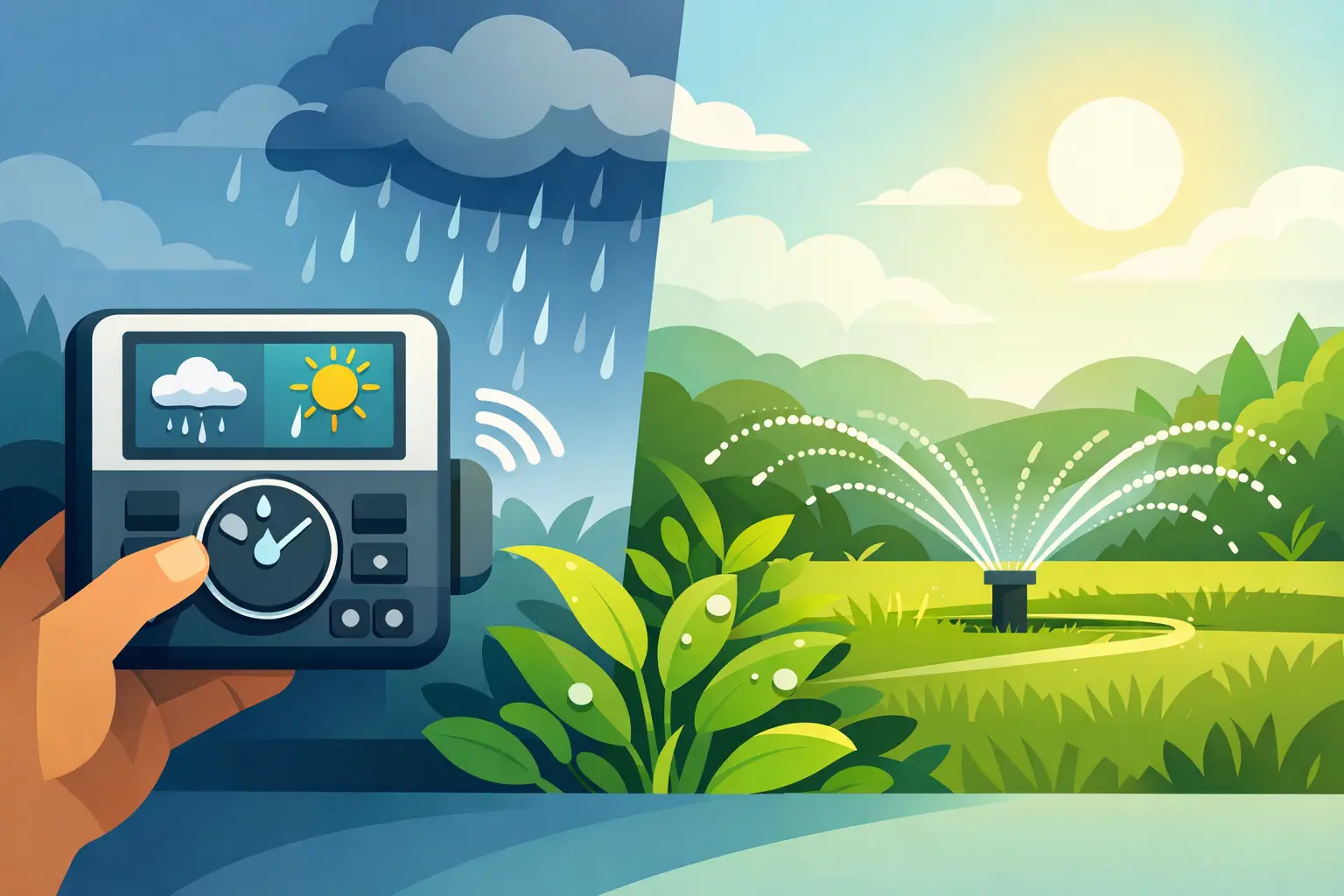
A sprinkler system should not keep watering simply because the controller says it is Tuesday. Ottawa weather can shift from dry and hot to heavy rain in a matter of hours, and watering on top of rainfall is one of the fastest ways to waste water, stress turf, and create soggy areas in the yard. When you program irrigation around rainfall, your system responds more closely to what your lawn actually needs.
The goal is not to shut off watering every time a few drops fall. It is to account for how much rain arrived, how quickly your soil drains, and how long your lawn can go before it needs moisture again. With the right controller settings and properly working equipment, your lawn receives consistent care without the daily guesswork.
Start With a Watering Schedule That Fits Your Lawn
Rainfall adjustments work best when the base irrigation schedule is sensible. A schedule that runs too often will still use more water than necessary, even with a rain sensor. A schedule that is too light may leave dry spots when a rain event does not deliver enough moisture to reach the root zone.
For most established lawns, deeper and less frequent watering is more effective than short, daily cycles. Deep watering encourages roots to grow farther into the soil, helping turf handle dry stretches with less stress. The exact schedule depends on your soil, sun exposure, grass type, slope, and the performance of each irrigation zone.
Sandy soil drains quickly and may need shorter run times more often. Clay-heavy soil absorbs water slowly, so long run times can cause runoff before the water has a chance to soak in. In that case, cycle-and-soak programming is often the better approach: run a zone for a shorter period, pause to let water absorb, then run it again.
A professionally designed system accounts for these differences from the start. If one area stays wet while another turns brown, changing the controller alone may not solve the issue. Incorrect nozzle types, poor coverage, broken heads, or a zone layout that does not match the landscape can all affect results.
Program Irrigation Around Rainfall, Not the Forecast Alone
Weather forecasts are useful, but they should not be the only reason to skip watering. Rain that is predicted may never reach your property. Even when it does, a brief shower may not provide enough water to replace a scheduled irrigation cycle.
What matters is measurable rainfall. As a general reference, many lawns need roughly 1 inch of water per week during active growing conditions, including rainfall. That is a starting point, not a fixed rule. A shaded lawn during a mild week needs less than a sunny lawn during a stretch of heat and wind.
A simple rain gauge can help you understand what actually fell on your property. If your lawn receives a meaningful soaking rain, delaying the next irrigation cycle may be appropriate. If it receives only a light shower, the scheduled watering may still be needed.
Avoid trying to manually reset the schedule after every weather event. It becomes inconvenient quickly, especially for busy households. A rain sensor or smart controller can make those adjustments automatically and more consistently.
Set a Sensible Rainfall Threshold
Most rain sensors can be adjusted to pause irrigation after a selected amount of precipitation. A common setting is around one-quarter inch of rain, but the right threshold depends on your lawn and local conditions.
A lower threshold will stop irrigation more often, which can save water during periods of frequent light rain. However, if your soil dries quickly or tree cover intercepts much of the rainfall, a very low setting may skip watering when the lawn still needs it. A higher threshold may work better for areas where small showers have little effect on soil moisture.
The sensor also needs to be placed correctly. It should be exposed to natural rainfall, not sheltered under an eave or directly under dense tree branches. It should also be away from sprinkler spray, which can cause it to shut down the system even when it has not rained.
Use Smart Controls for Better Seasonal Adjustments
A basic controller runs according to fixed days and times. A smart controller can use local weather data, seasonal conditions, and watering history to adjust run times or skip cycles. For homeowners who want reliable lawn care with less hands-on management, this is often the most practical upgrade.
Smart controls are especially useful in spring and fall, when cooler temperatures and regular rainfall reduce the need for irrigation. A summer schedule that keeps a lawn healthy in July can be excessive in May or September. Seasonal adjustments prevent the controller from treating every month the same.
That said, smart technology is not a substitute for a well-maintained sprinkler system. A controller cannot correct a clogged nozzle, a leaking valve, or a head that is spraying the sidewalk instead of the lawn. The system still needs periodic inspections to confirm every zone is covering the intended area efficiently.
At Advanced Irrigation, system upgrades are approached with the full property in mind. The right controller, sensor, and zone settings should work together to reduce waste while maintaining the healthy, even lawn homeowners expect.
Check How Your Lawn Responds After Rain
Your lawn will tell you whether the programming is working. Look for standing water, soft ground, persistent fungal patches, or unusually fast-growing areas. These can point to overwatering, poor drainage, or a zone that is running too long.
On the other hand, bluish-gray grass, footprints that remain visible after walking across the lawn, or dry, brittle blades can indicate a need for more water. Check the soil beneath the surface before increasing run times. The top layer may look dry while the root zone still has adequate moisture.
Pay close attention to different parts of the property. South-facing lawns, exposed areas near driveways, and turf beside retaining walls can dry faster than shaded sections. Separate zones make it possible to adjust for these conditions, but only if they are programmed independently rather than treated as one uniform lawn.
Do Not Forget Runoff and Drainage
Heavy rain does not always mean your lawn received usable moisture. On compacted ground or sloped areas, water may run off before it can soak in. If this happens regularly, simply skipping irrigation after a storm could leave the root zone drier than expected.
Shorter irrigation cycles with soak periods can help water penetrate more effectively. Aeration, improved grading, and drainage solutions may also be worth considering if certain areas remain saturated or dry out unevenly. The best irrigation schedule works with the property’s soil and drainage conditions, not against them.
Adjust the Plan Through the Ottawa Season
Spring irrigation should begin carefully. The ground may still hold moisture from snowmelt and early rain, so starting with reduced run times is usually wiser than immediately returning to peak summer settings. Monitor the lawn as temperatures rise and increase watering only when conditions call for it.
During hot, dry periods, water in the early morning. This gives the lawn time to absorb moisture before afternoon heat and reduces water loss from evaporation. Evening watering can leave grass wet overnight, which may increase disease pressure in humid conditions.
As fall arrives, reduce watering as temperatures cool and rainfall becomes more consistent. Before freezing weather sets in, winterization is essential. Properly clearing water from irrigation lines protects pipes, valves, and sprinkler components from freeze damage.
A well-programmed system does more than save water. It protects your lawn from the swings between dry heat and sudden rain, reduces unnecessary wear on equipment, and takes one more maintenance task off your schedule. If your controller has not been reviewed in years, a professional inspection can turn an outdated schedule into a dependable plan that fits your property and the weather outside.