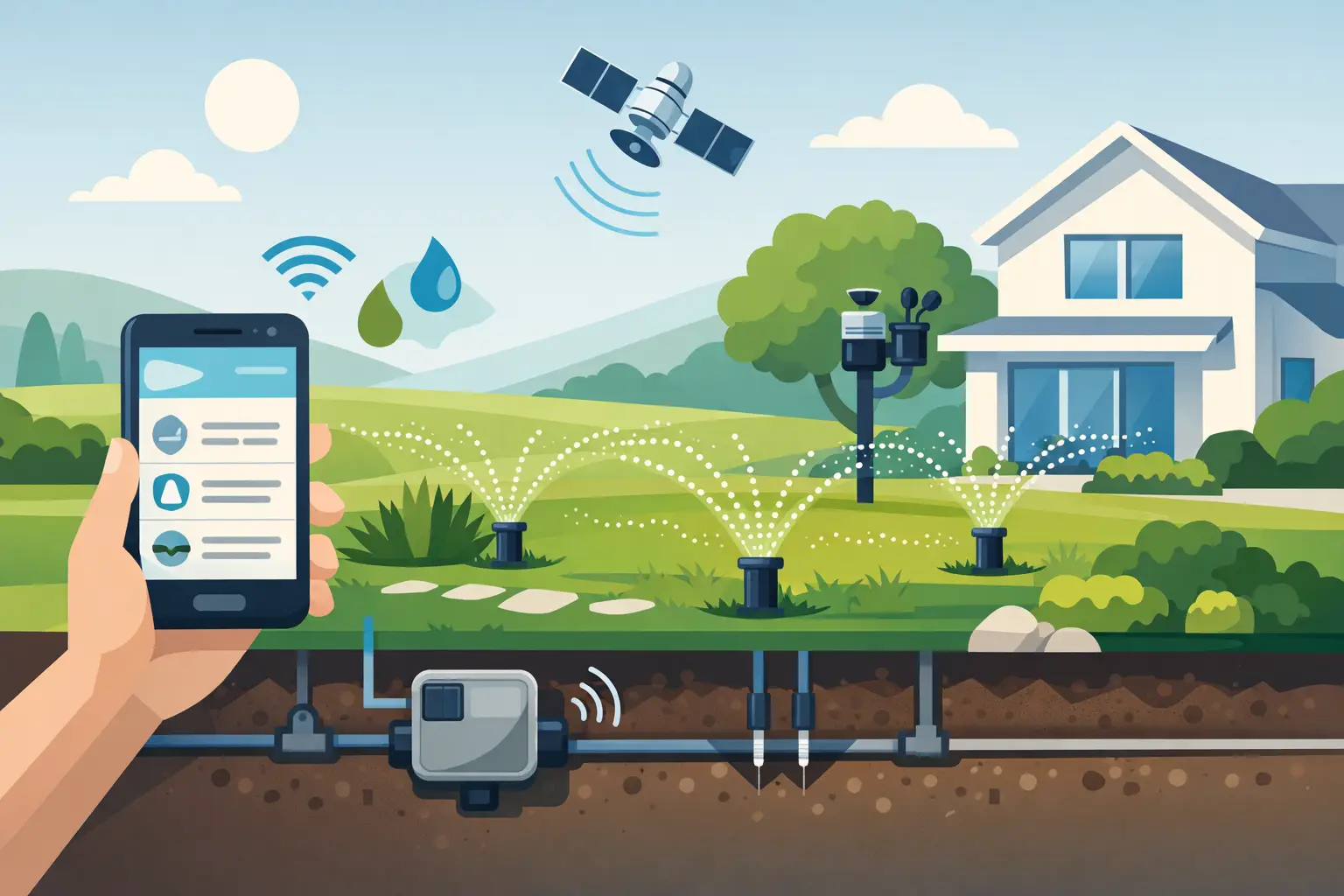
A lawn usually tells you when the watering system is falling behind. One area stays soggy, another turns brown, and someone ends up dragging a hose around to make up the difference. Smart irrigation technology is built to solve that problem by giving homeowners more precise, more consistent control over when, where, and how much water their lawn receives.
For homeowners, the appeal is simple. You want a lawn that looks healthy without having to think about it every day. You also do not want to waste water, overpay on utility bills, or deal with the damage that comes from an outdated system running at the wrong time or for too long. That is where a professionally designed smart system makes a real difference.
What smart irrigation technology actually does
At its core, smart irrigation technology uses automation and real-time data to improve watering decisions. Instead of relying on a fixed timer that runs the same schedule no matter what the weather is doing, a smart controller adjusts irrigation based on conditions.
That might include recent rainfall, temperature, seasonal changes, soil conditions, and the specific watering needs of different zones on your property. A shaded side yard does not dry out like a sunny front lawn. Garden beds do not need the same run times as turf. A smart system recognizes those differences and applies water more accurately.
This is what separates a modern irrigation upgrade from a basic sprinkler timer. The goal is not just convenience, although that matters. The goal is better performance. A healthy lawn depends on consistency, and consistency is hard to achieve when watering is based on guesswork.
Why homeowners are moving away from basic timers
Traditional timers are better than manual watering, but they still have limits. They run on fixed schedules. If it rains all night, they may still water in the morning. If the weather turns hot and dry, they may not increase watering enough to keep turf from stressing. Over time, that can lead to patchy growth, runoff, and unnecessary water use.
A smart controller is more responsive. It can skip watering when conditions do not call for it and make more informed adjustments as the season changes. That means less overwatering, less underwatering, and fewer situations where your system is technically running but not actually helping the lawn.
For busy homeowners, that matters. The less time you spend checking forecasts, changing schedules, or wondering whether your system is doing its job, the better. Smart irrigation technology removes much of the routine decision-making while improving the result.
Smart irrigation technology works best with good system design
One thing homeowners often find out too late is that a smart controller cannot fix poor layout, bad pressure, leaking heads, or misaligned spray patterns. Technology improves control, but it still depends on the rest of the system being designed and maintained properly.
If one zone has poor coverage or a broken head, the smartest controller in the world will not water that area evenly. If your system has old components or pressure problems, adding automation alone may not deliver the results you expect.
That is why professional design and service still matter. The most effective setup combines smart irrigation technology with proper zoning, matched heads, efficient nozzles, and routine maintenance. When those parts work together, homeowners see the full benefit – greener turf, less waste, and fewer surprises.
The features that make the biggest difference
Not every smart irrigation system is the same, and not every feature matters equally for every property. In most residential settings, the biggest value comes from weather-based scheduling, zone-specific programming, and remote access.
Weather-based scheduling helps the system make better watering decisions without constant manual changes. Zone-specific programming allows different areas of the yard to receive the right amount of water based on sun exposure, soil, slope, and plant type. Remote access gives homeowners and service professionals the ability to monitor or adjust the system without standing in the garage or at the controller box.
Some systems also include alerts for issues like communication failures or unusual watering activity. That can help catch problems earlier, especially when paired with regular service. Still, features should support performance, not distract from it. More settings are not always better if the system is not installed and programmed correctly.
Water savings are real, but they depend on how the system is used
Homeowners often ask whether smart irrigation technology actually saves water. In many cases, yes. But the amount depends on the starting point.
If your current system waters too often, runs after rain, or applies the same schedule across the whole property, the potential improvement can be significant. A smart system can reduce waste by adjusting run times and avoiding unnecessary watering cycles. That usually means lower water use without sacrificing lawn quality.
If your existing system is already well maintained and manually adjusted with care, the savings may be more modest. Even then, most homeowners gain better consistency and less day-to-day hassle. The value is not only in using less water. It is also in using water more effectively.
That distinction matters because healthy lawns are not created by watering more. They are created by watering correctly.
Ottawa-area conditions make precision more important
Properties in the Ottawa market deal with shifting weather patterns, summer heat, dry stretches, and the need to open and shut down systems properly through the season. Those conditions make precision especially valuable.
In spring, watering needs can change quickly as temperatures rise and rainfall varies. In summer, hot weather can stress turf fast, especially in full-sun areas. In fall, systems need to be managed carefully before winterization. A smart setup helps homeowners stay on top of those transitions without constantly reprogramming the system by hand.
It also supports better seasonal service. When a system is started up, adjusted during peak season, and winterized properly at the end of the year, it is far more likely to perform reliably long term. That is one reason many homeowners choose a full-service provider rather than treating irrigation as a one-time installation.
Upgrading an older system can be a practical move
You do not always need a full replacement to benefit from smart irrigation technology. In many cases, an older sprinkler system can be upgraded with a modern controller, better nozzles, sensor integration, or zone adjustments.
That can be a practical option for homeowners whose systems still have a solid foundation but need better control and efficiency. It can also be a good fit for properties where the lawn has changed over time, new landscaping has been added, or problem areas have started to show up.
The right upgrade depends on the condition of the existing system. Sometimes a controller swap is enough. Sometimes the smarter investment is to repair worn components, improve coverage, and modernize the system in stages. A good recommendation should be based on performance, not on selling more equipment than the property needs.
Professional service matters after installation
Smart systems are often marketed as set-it-and-forget-it solutions. That is only partly true. Automation reduces manual work, but irrigation systems still need attention.
Heads get damaged. Nozzles clog. Coverage can shift. Seasonal startup and winterization are still essential in colder climates. Programming may also need adjustment as weather patterns change or as the landscape matures.
That is why ongoing service is such a big part of long-term performance. A reliable system is not just about what gets installed on day one. It is about having support when repairs, updates, and seasonal changes come up. Advanced Irrigation has built its service model around that full lifecycle approach because homeowners need more than equipment – they need a system that keeps working year after year.
Is smart irrigation technology worth it?
For many homeowners, yes. If you care about curb appeal, want fewer watering headaches, and would rather not guess at what your lawn needs each week, the upgrade makes sense. The strongest results usually come when smart controls are paired with solid design, proper installation, and regular maintenance.
It is not magic, and it is not one-size-fits-all. Some properties need a complete system. Others need a smart upgrade and a few targeted repairs. The right answer depends on the age of the system, the layout of the property, and how reliably the lawn is being watered now.
A good irrigation system should make lawn care easier, not more complicated. When smart irrigation technology is installed and supported the right way, it does exactly that – giving homeowners a healthier lawn, better water efficiency, and one less thing to worry about through the season.