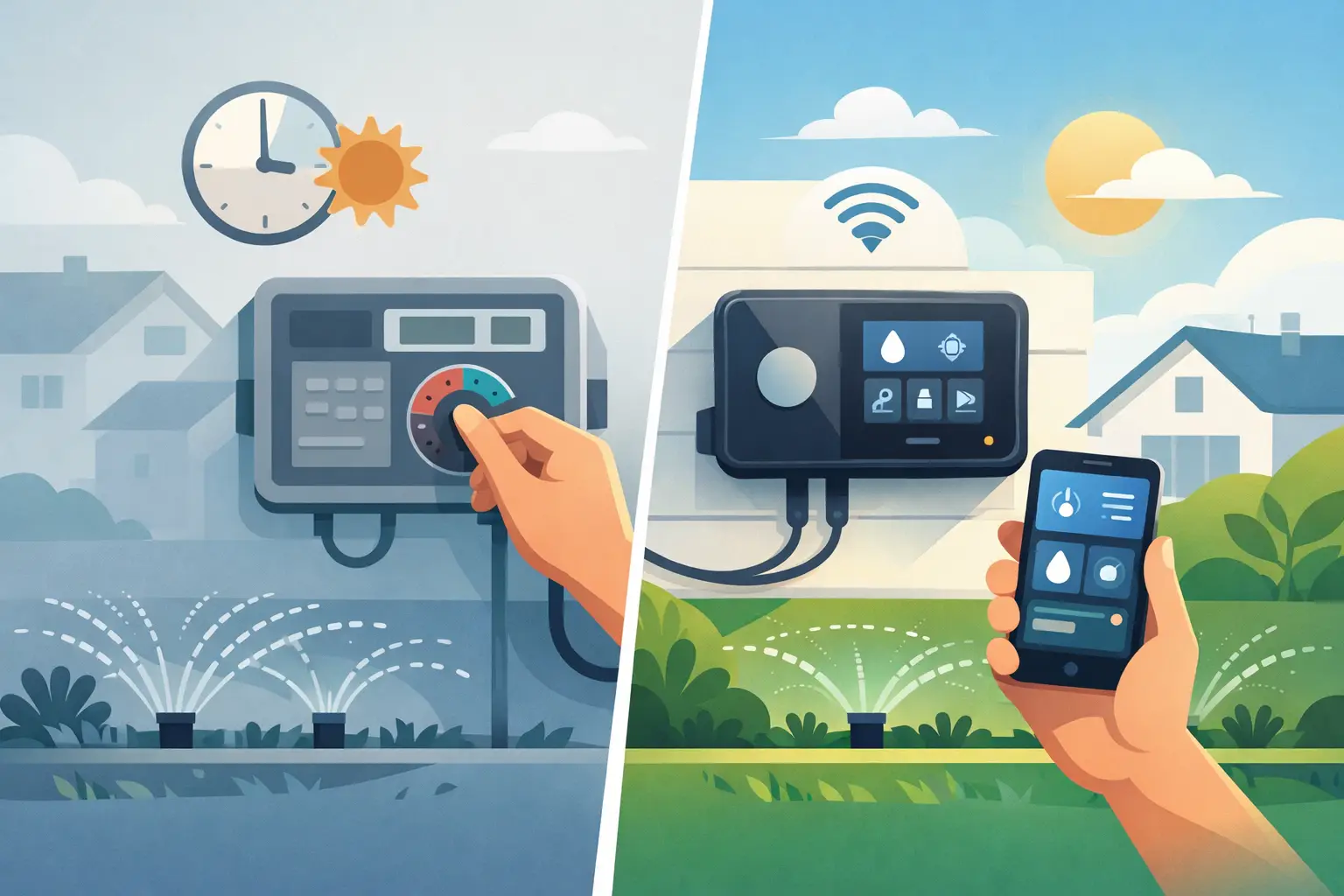
That patchy strip by the driveway and the soggy corner near the fence often point to the same issue: the timer on the wall is no longer keeping up with what your lawn actually needs. If you’re wondering whether to upgrade old sprinkler controller equipment, the short answer is this – if your system still runs, but watering feels inconsistent, wasteful, or harder to manage than it should, an upgrade is usually worth a close look.
For many homeowners, the controller is the forgotten part of the irrigation system. Sprinkler heads get noticed. Broken lines get noticed. A timer tucked away in the garage usually does not. But the controller is the part that tells the whole system when to run, how long to water, and whether your lawn gets steady coverage or too much of it. When that piece is outdated, the rest of the system can only perform so well.
Why homeowners upgrade old sprinkler controller systems
Most older controllers were built for a simpler kind of watering. They follow fixed schedules, run the same way week after week, and rely on manual adjustments when temperatures change or rainfall picks up. That worked years ago, but it often leads to overwatering, underwatering, and constant tinkering.
A newer controller gives you more control without creating more work. Smart scheduling, seasonal adjustments, and better zone management can make a noticeable difference in lawn health and water use. Instead of guessing when to dial times up or down, the system can respond more accurately to real conditions.
The benefit is not just convenience. A better controller helps protect the investment you already made in your irrigation system. If the valves, heads, and piping are still serviceable, replacing the controller is often one of the most practical ways to modernize performance without replacing everything.
Signs your old controller is holding the system back
Some controllers fail obviously. The display dies, the settings reset constantly, or stations stop responding. Those cases are straightforward. Other times, the problem is less dramatic. The system still turns on, but not in a way that supports efficient watering.
If your lawn has dry spots in one area and runoff in another, the first instinct is often to blame the heads. Sometimes that is correct. But uneven results can also come from poor programming and outdated scheduling options. Older controllers may not allow enough flexibility for different sun exposure, soil conditions, or plant needs across zones.
Another common sign is manual frustration. If adjusting the schedule feels confusing, if you avoid changing settings because the interface is a hassle, or if every heat wave turns into a trial-and-error exercise, the controller may be costing you time and water. Reliability matters too. If power interruptions erase programs or the unit behaves unpredictably at the start of each season, replacement becomes the safer choice.
What a modern upgrade actually improves
Upgrading the controller does not magically fix every irrigation problem. Worn heads, leaks, poor coverage, and valve issues still need proper repair. But when the hardware in the field is in decent shape, a new controller can improve how the entire system performs.
The biggest upgrade is scheduling intelligence. Modern controllers can water by zone with more precision and adjust runtimes to the season instead of sticking to one rigid summer setting in spring and fall. Many also make it easier to pause watering after rainfall or during cooler weather, which helps reduce unnecessary use.
Ease of use is another major improvement. A clear interface or app-based control means changes can be made quickly instead of getting buried in old menus and small buttons. For busy homeowners, that matters. A system that is easy to manage is more likely to be used properly.
There is also a long-term protection angle. Better control reduces stress on your lawn and on the irrigation system itself. Overwatering can lead to runoff, shallow roots, and wasted water. Underwatering can leave turf thin and vulnerable during hot stretches. A more capable controller helps narrow that gap.
Should you repair it or upgrade old sprinkler controller equipment?
It depends on the age of the unit, the parts available, and what you want from the system. If the controller is relatively modern and has a small issue like a bad transformer, a wiring problem, or a setup error, repair may make sense. If it is older, limited in features, and showing signs of decline, repair often turns into a short-term fix on a long-term problem.
This is especially true when replacement parts are hard to find or when the controller cannot support the features most homeowners now expect. Spending money to keep an outdated timer alive can make less sense than putting that same budget toward a unit that improves performance right away.
A professional inspection helps separate controller problems from broader system issues. Sometimes the controller is the weak link. Other times it is just one piece of a system that also needs zone adjustments, head replacement, or wiring cleanup. Honest evaluation matters because the goal is not just to swap parts. The goal is better watering.
What to expect during a controller upgrade
In many homes, upgrading the controller is a relatively straightforward service. The existing unit is removed, wiring is tested and transferred, the new controller is installed, and each zone is checked for proper operation. Then the real value comes from programming the system correctly.
That last step should not be rushed. A new controller only performs well if the schedule matches the property. Zone runtimes, start times, watering days, and seasonal settings should reflect how the lawn and beds actually behave. Sun-exposed areas often need different attention than shaded sections. Sloped areas may need shorter, repeated cycles to avoid runoff.
This is where experience shows. A clean installation matters, but so does knowing how to set the controller for practical results. Homeowners do not need more features for the sake of features. They need a system that waters consistently, saves time, and avoids waste.
Smart controllers and water savings
Smart irrigation has earned attention for a reason. A well-matched smart controller can reduce waste by helping the system respond better to changing conditions instead of running on a fixed calendar alone. That means fewer unnecessary cycles after rain and fewer guesswork adjustments during seasonal shifts.
Still, smart does not mean automatic perfection. The controller needs to be compatible with the system, installed correctly, and programmed with the property in mind. If zones are not working properly or coverage is poor, technology alone will not solve it. The best results come when smart control is paired with a sound irrigation system and proper service.
For homeowners who travel, manage busy schedules, or simply do not want to babysit watering times, the convenience is hard to ignore. Being able to monitor and adjust the system without standing in front of an old garage timer is a practical improvement, not just a gadget feature.
Is it worth upgrading if the sprinkler system is old too?
Often, yes. An older irrigation system does not always need a full replacement. Many systems have solid bones but outdated controls. If the piping layout is still effective and most components are serviceable, a controller upgrade can extend the useful life of the system and make it operate much more efficiently.
That said, there are limits. If the system has widespread leaks, poor zone design, failing valves, or repeated breakdowns, the controller should be evaluated as part of a larger plan. In those cases, upgrading the timer may still help, but it works best alongside targeted repairs or phased improvements.
A good service company will tell you where the upgrade makes sense and where it does not. That kind of straight answer matters more than pushing a replacement just because the current controller looks old.
Choosing the right time to upgrade
The best time is usually before peak watering season exposes every weakness in the system. Spring startup is a smart opportunity because the system is already being checked, tested, and brought online. If the controller is unreliable, hard to program, or clearly outdated, that is the moment to address it before summer stress hits the lawn.
Mid-season upgrades also happen often, especially when homeowners are tired of chasing dry spots or high water use. Fall can work too if you want the new controller in place and ready for the next season. What matters most is not waiting until repeated problems become the norm.
At Advanced Irrigation, we see this often: the sprinkler system itself still has years of life left, but the old controller is making the whole setup work harder than it should. Replacing that one component can bring back consistency, improve efficiency, and take a lot of the guesswork out of lawn care.
If your irrigation system feels outdated even though parts of it still work, the controller is one of the first places worth checking. A healthier lawn and fewer watering headaches usually start with better control.