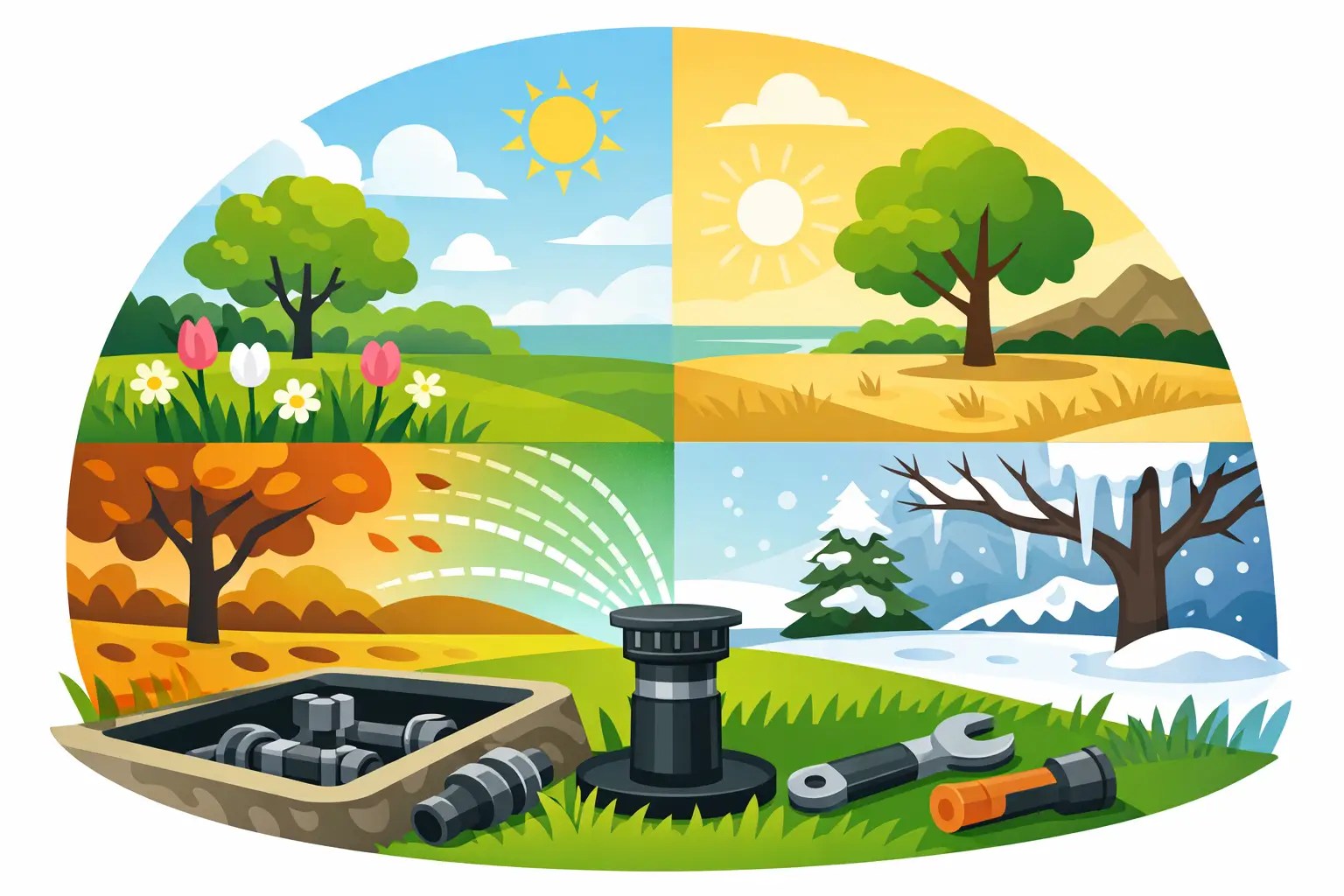
A sprinkler system can look fine from the surface while a small leak, blocked nozzle, or poorly set controller quietly wastes water beneath it. Seasonal lawn irrigation maintenance is what keeps those small issues from becoming dead grass, high water bills, or expensive repairs when the weather changes.
For Ottawa homeowners, the irrigation season is not a set-it-and-forget-it job. Spring thaw, summer heat, heavy rainfall, and freezing fall temperatures all place different demands on your system. The right service at the right time protects the equipment you have and helps your lawn receive consistent, efficient watering.
Why seasonal service protects your investment
A professionally installed irrigation system is designed around your property, but it still needs routine attention. Heads can be bumped by lawn equipment, soil can settle around fittings, roots can interfere with lines, and weather can change how much water your lawn actually needs. Left alone, even a well-designed system can lose efficiency over time.
Seasonal maintenance focuses on performance as well as protection. It confirms that each zone turns on correctly, spray patterns reach the intended areas, valves are operating properly, and the controller is following a sensible schedule. That means less water landing on driveways and sidewalks, fewer dry patches, and a healthier lawn without unnecessary daily effort.
The biggest risk in Ottawa is winter damage. Water expands as it freezes. If water remains in irrigation pipes, valves, or backflow components at the end of the season, it can crack parts that were working perfectly the day before. Proper fall winterization is not an optional extra. It is the service that helps prevent a costly surprise next spring.
Spring startup gets the season off right
Spring startup should happen after the risk of a hard freeze has passed and your property is ready for regular watering. Starting too early can expose lines and components to cold damage. Waiting too long can leave new grass, gardens, and established turf struggling during the first warm, dry stretch.
A proper startup is more than opening a water valve and turning on the controller. The system should be brought up to pressure carefully and checked zone by zone. This helps identify leaks, damaged heads, clogged nozzles, low-pressure areas, and valves that do not close fully. A technician can also confirm that the backflow device is functioning as intended and that the controller has the correct date, time, and seasonal settings.
This is also the best time to adjust for changes around the property. A new patio, garden bed, fence, tree, or play structure can block a spray pattern that worked last year. Sometimes a simple nozzle adjustment solves the problem. Other times, moving a head or adding a more efficient nozzle provides better coverage with less waste.
Set watering for the lawn you have now
Spring watering schedules should be conservative. Cool temperatures and spring rainfall often mean your lawn needs less irrigation than it will in July. Overwatering early in the season can encourage shallow roots and create soggy conditions that do not benefit turf.
A smart controller can make this easier by adjusting runtimes based on local weather conditions. Still, technology needs sensible programming. Soil type, sun exposure, slope, plant material, and the maturity of your lawn all affect how much water each zone needs. One schedule for the entire property is rarely the most efficient approach.
Midseason checks prevent wasted water
Summer is when irrigation problems become visible. You may notice a brown strip along the driveway, a soft spot near a valve box, water misting across a fence, or one area that stays green while another dries out. Those are signs to inspect the system rather than simply increasing the watering time.
A midseason service visit can correct issues before they affect the whole lawn. Sprinkler heads may need to be raised after soil settles, straightened after being hit, or cleaned when debris affects the nozzle. A zone with weak coverage could have a pressure issue, a partially closed valve, or a hidden leak. Adding more runtime without finding the cause usually wastes water and does not fix the dry area.
Controller programming deserves another look during hot weather. Longer, less frequent watering usually promotes deeper root growth better than short daily cycles, but the right schedule depends on your soil and local conditions. Clay soil absorbs water slowly and may need cycle-and-soak programming to avoid runoff. Sandy soil drains faster and may need a different approach. Sloped lawns also benefit from shorter cycles that allow water to soak in before the next run.
Rain sensors and smart controllers help prevent irrigation during wet weather, but they should be checked rather than assumed to be perfect. A sensor placed where it is shielded by an overhang or tree canopy may not reflect actual conditions on the lawn. Regular oversight is what turns smart equipment into real water savings.
Fall winterization is the service you should not skip
When temperatures begin to fall, it is time to plan for winterization. The goal is to remove water from the irrigation system before freezing conditions can damage the underground piping and above-ground components.
Professional winterization typically involves shutting off the water supply, isolating the system, and using controlled compressed air to clear water from the lines. Each zone must be cleared carefully. Too little pressure can leave water behind, while excessive pressure can damage fittings, valves, or sprinkler components. This is why a proper blowout requires the right equipment and experience.
The backflow device and other exposed components also need attention. Depending on the system design, these parts may require draining, insulation, or removal for protection. A quick shutdown without addressing the full system leaves vulnerable components exposed.
Do not wait for the first hard freeze to schedule service. Fall is busy for irrigation companies because every homeowner needs protection within a relatively short window. Booking early gives you more flexibility and helps ensure your system is shut down before freezing temperatures arrive.
Signs your system needs more than routine maintenance
Seasonal service often reveals repair or upgrade opportunities. Some are simple, such as replacing a broken head or worn nozzle. Others point to a system that no longer matches the property or the homeowner’s needs.
Consider an evaluation if you see recurring puddles, uneven growth, unusually high water use, zones that fail to activate, or water leaking after a cycle ends. Older controllers may also be worth upgrading if they cannot adjust for weather, manage separate zone needs, or provide convenient scheduling.
A system upgrade does not always mean replacing everything. Efficient rotary nozzles, pressure-regulating heads, drip irrigation for gardens, rain sensors, and smart controllers can often improve an existing system in targeted ways. The best choice depends on the age of the system, the layout of the property, and where water is being wasted.
What homeowners can watch between service visits
Homeowners do not need to troubleshoot every irrigation issue themselves, but a quick visual check once in a while is valuable. Run each zone during daylight and look for heads spraying onto pavement, water pooling near a sprinkler, mist instead of a defined spray, or an area that is clearly receiving too much or too little water.
Keep sprinkler heads clear of mulch, grass, and soil. If landscaping work, driveway repairs, or construction takes place near irrigation zones, make sure the system is checked afterward. Small changes above ground can affect equipment below it.
If you notice an issue, avoid repeatedly running the affected zone in hopes that it will correct itself. A broken head or leak can waste a surprising amount of water in a short time. Prompt repair protects both the lawn and the rest of the system.
Reliable care through every season
The value of seasonal lawn irrigation maintenance is simple: your system is ready when your lawn needs water, efficient when conditions change, and protected before winter arrives. It reduces the guesswork that comes with manual watering and helps preserve the equipment that keeps your property looking its best.
Advanced Irrigation brings more than 30 years of hands-on experience to spring startups, in-season repairs, smart upgrades, and fall winterization for Ottawa-area homeowners. A properly maintained system lets you spend less time watching the forecast and more time enjoying a healthy, well-watered lawn.