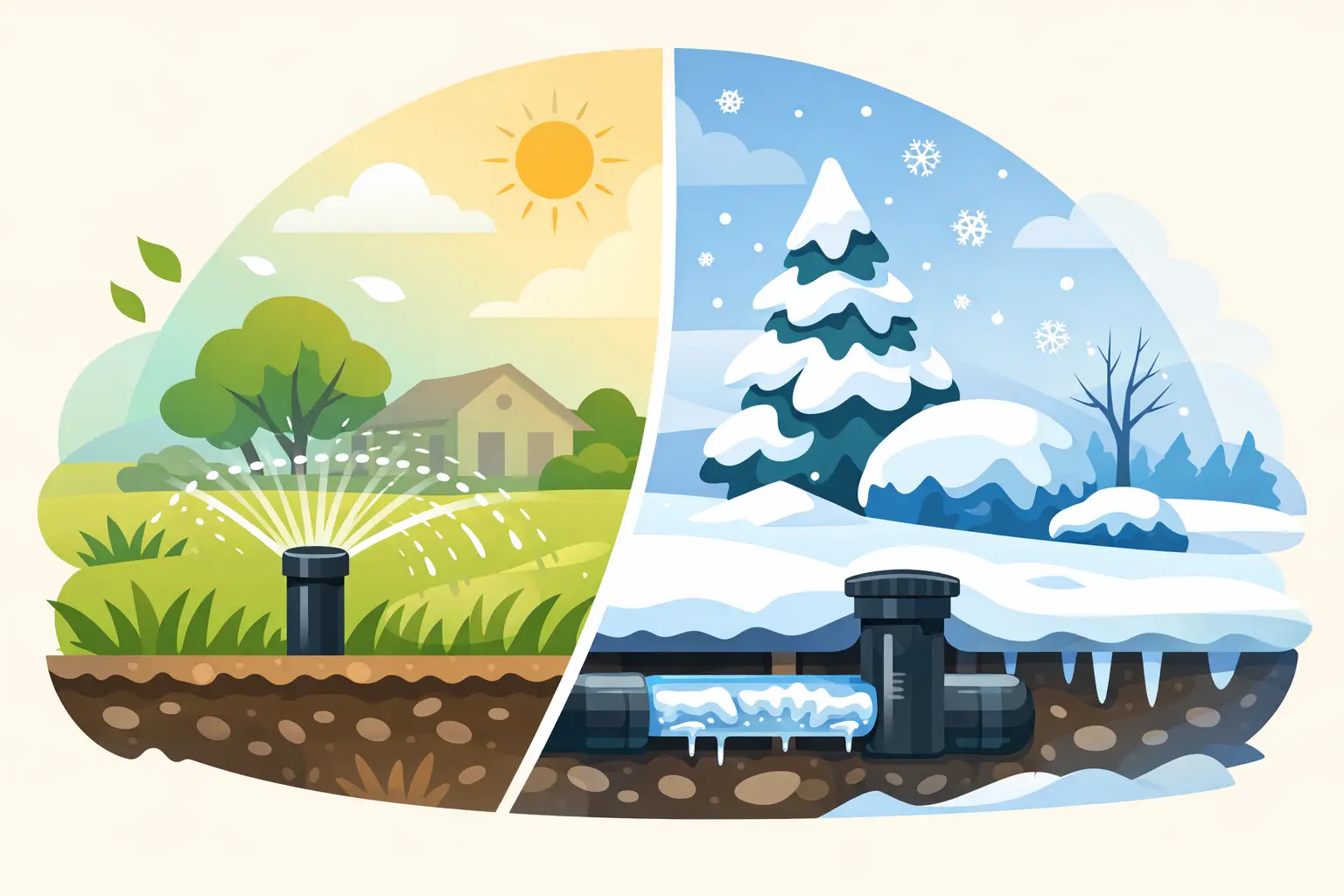
A single hard freeze can turn a well-performing sprinkler system into a spring repair project. For homeowners asking, is sprinkler blowout necessary, the answer in Ottawa is generally yes. Any water left inside irrigation pipes, valves, sprinkler heads, or backflow equipment can freeze, expand, and damage components that were working perfectly at the end of the season.
Fall winterization is not just another maintenance appointment. It is the step that protects the investment you made in a healthy lawn, reliable automation, and efficient watering. A professional sprinkler blowout removes water from the system before sustained freezing temperatures arrive, helping your system start cleanly and reliably next spring.
Is Sprinkler Blowout Necessary in Ottawa?
Ottawa winters bring extended cold, deep frost, and repeated freeze-thaw cycles. Those conditions make irrigation winterization essential for most residential systems. Draining a system by opening a low-point drain or shutting off the water supply is often not enough. Water can remain trapped in lateral lines, valves, manifolds, and sprinkler bodies, even when the system appears empty.
When trapped water freezes, it expands. That pressure can crack PVC piping, split fittings, damage valve diaphragms, break sprinkler heads, and affect the backflow preventer. The damage may not be visible until spring startup, when water pressure exposes a leak underground or inside a valve box.
A proper blowout uses compressed air to push residual water out through each irrigation zone. The goal is not to create extreme pressure. It is to use the right volume of air, controlled carefully, to clear water without putting unnecessary stress on the system.
What Can Happen If You Skip Winterization?
Skipping a sprinkler blowout can save a service call in the fall, but it can lead to a much more expensive and inconvenient repair in the spring. Some problems are minor, such as a cracked sprinkler head. Others can involve buried pipe breaks, damaged zone valves, or a failed backflow assembly.
Underground leaks are particularly frustrating because they may not show themselves until the lawn is soft, a zone will not hold pressure, or water begins surfacing in the wrong place. Locating and repairing the issue can require excavation, replacement parts, and additional time before the system is ready to run.
There is also a performance cost. A damaged sprinkler system may water unevenly, waste water, or leave dry sections of lawn behind. If you rely on a controller to keep your landscape healthy while you are busy or away, that reliability matters.
Why Turning Off the Water Is Not Enough
Many homeowners assume that shutting off the indoor supply line fully protects the sprinkler system. It protects the source of water, but it does not remove the water already inside the outdoor irrigation network.
Irrigation lines are installed with changes in elevation, branches, valves, and fittings. Water naturally settles in low spots and enclosed components. Even systems with manual drains can retain enough water to cause freeze damage. This is why professional winterization includes both shutting off and draining the water supply and clearing the remaining water with compressed air.
Backflow prevention devices deserve special attention. These assemblies help protect the household water supply from contamination, but they are vulnerable to freezing. They should be shut down and drained according to the equipment and system layout. In many cases, removing and storing a backflow device indoors provides an extra layer of protection.
How a Professional Sprinkler Blowout Works
A trained technician starts by reviewing the system layout and safely shutting off the irrigation water supply. The controller is placed in an off or rain mode, and the backflow assembly is prepared for winter. Then compressed air is connected at the appropriate point in the system.
Each zone is activated one at a time so the air can move water through the pipes and out of the sprinkler heads. Technicians watch the discharge at each head and avoid running a zone longer than necessary. Once the visible water has cleared, the process moves to the next zone.
This work requires the right equipment and judgment. Too little airflow may leave water behind. Too much pressure, or extended air time, can damage pipes, fittings, valves, or sprinkler components. A home air compressor is often not designed to supply the airflow needed for a full irrigation system, which is one reason DIY blowouts can be risky.
A professional service also provides an opportunity to spot concerns before winter. A leaking valve, broken head, controller issue, or aging backflow component is easier to address when it is identified early rather than discovered during the first spring watering cycle.
When Should You Schedule a Blowout?
The best time is after regular lawn watering is finished but before persistent freezing temperatures set in. In Ottawa, that usually means scheduling fall winterization in early to mid-fall, depending on the weather and your landscape needs.
Do not wait for the first major snowfall. The first hard freeze can come before winter looks fully settled, and exposed above-ground components are especially vulnerable. Booking early also gives you more flexibility and helps ensure your system is protected before the seasonal rush.
If you have recently installed new landscaping, added zones, or upgraded your controller, winterization is still required. Smart controllers improve scheduling and water efficiency during the growing season, but they do not prevent water inside pipes from freezing.
Are There Any Exceptions?
A sprinkler blowout may not be necessary only when an irrigation system has been specifically designed for year-round operation in a climate where freezing is not a concern. That is not the typical residential setup in Ottawa or surrounding communities.
Some systems have automatic drain valves, but these should not be treated as a guaranteed substitute for a blowout. They may help release water from certain areas, yet they cannot always clear every low point, valve, or fitting. The system design, pipe depth, elevation changes, and equipment type all affect the level of protection needed.
Drip irrigation should also be winterized. While drip lines may seem less vulnerable than pop-up sprinklers, water can still remain in tubing, emitters, filters, pressure regulators, and supply lines. Every part of the irrigation system needs a plan for freezing weather.
Protect the System You Depend On
Your sprinkler system works quietly through the summer to keep watering consistent, reduce waste, and support a greener lawn. Winterization is how you protect that performance when the temperature drops.
Advanced Irrigation provides careful seasonal blowouts for residential systems, using the proper equipment and process to help protect pipes, valves, heads, and backflow equipment. Whether your system is newly installed or has been serving your property for years, professional winterization helps reduce avoidable spring repairs.
Schedule the service before freezing conditions become routine, then head into winter knowing your irrigation system has been prepared for the season ahead.