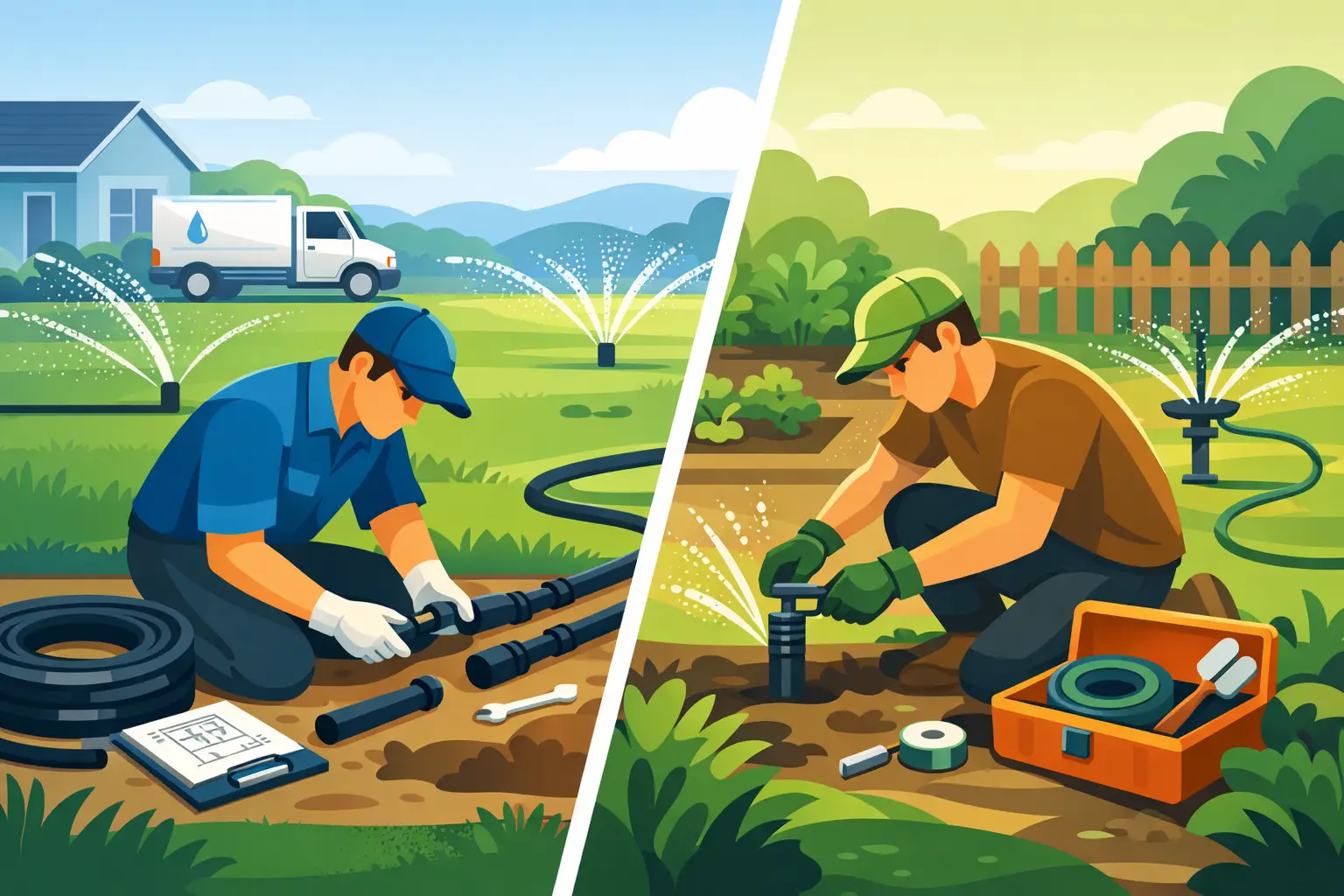
A lawn can look fine from the street while struggling below the surface. Brown edges, thin patches near walkways, soggy areas by the foundation, and weekly hose adjustments are often signs that watering is inconsistent, not that the lawn simply needs more water. When weighing professional versus DIY irrigation, the real question is whether a system will deliver reliable coverage, protect your property, and save you time year after year.
A DIY setup can be a reasonable fit for a small, simple yard and a homeowner who is comfortable handling seasonal upkeep. A professionally designed irrigation system is usually the better long-term choice when the property has multiple lawn zones, gardens, slopes, mature landscaping, or a busy household that needs dependable automation.
Professional Versus DIY Irrigation: The Real Differences
The biggest difference is not the sprinkler heads themselves. It is the planning behind them.
A professional irrigation contractor evaluates the entire property before installation. That includes sun exposure, soil conditions, lawn shape, water pressure, plant material, slopes, drainage, and the location of driveways, patios, fences, and utility lines. The goal is to place each zone and head where it can provide even coverage without spraying hard surfaces or overwatering areas that need less moisture.
DIY systems often begin with a kit, a hose connection, or an online layout tool. These can work for basic applications, but they are not always built around the actual water supply and conditions of the yard. A zone that looks right on paper may have weak pressure once several heads run at the same time. A sprinkler may water the lawn well but also soak the siding, sidewalk, or neighbor’s fence.
Those details matter because uneven watering creates predictable problems. Dry spots encourage turf stress and weeds. Oversaturated areas can lead to shallow roots, runoff, and disease pressure. A well-designed system applies the right amount of water where it is needed, at a schedule that supports stronger, healthier growth.
Upfront Cost Is Only Part of the Decision
DIY irrigation can cost less at the start, especially when the project uses above-ground hoses, portable sprinklers, or a small drip system for garden beds. For homeowners who only need occasional help through a dry stretch, that lower investment can make sense.
The cost picture changes when a project involves trenching, valves, a controller, underground piping, electrical connections, backflow protection, and a properly sized number of sprinkler zones. Buying parts individually can add up quickly. So can correcting a layout that does not provide enough pressure or coverage.
Professional installation generally costs more upfront because it includes system design, quality components, skilled labor, testing, and proper setup. It also gives the homeowner a complete system rather than a collection of parts that may need ongoing adjustment. The value is in performance: consistent watering, less manual work, fewer costly mistakes, and equipment selected to suit the property.
It is also worth considering the cost of water waste. A system that runs too long, waters during rain, or sprays pavement can quietly raise utility bills. Smart controllers, rain sensors, and properly adjusted heads help reduce that waste while keeping the lawn adequately watered.
Design and Water Pressure Are Where DIY Often Falls Short
Water pressure and flow rate determine how much a system can handle at one time. If too many sprinkler heads are installed on one zone, they may all pop up but fail to distribute water evenly. The result is weak coverage at the far end of the lawn and a temptation to run the zone longer, which can overwater the areas closest to the supply.
A professional design accounts for these limits before installation. Zones are grouped based on the amount of water available and the needs of the landscape. Sunny turf areas may need a different schedule than shaded lawn, flower beds, hedges, or newly planted material. This zoning approach is one reason automated systems can be both more convenient and more efficient.
Head spacing is equally important. Sprinklers need overlapping coverage to avoid dry gaps between them. Placement near corners, narrow side yards, curved beds, and sloped areas requires more thought than simply spacing heads evenly across a drawing.
A homeowner can learn these principles, but learning by trial and error can mean a season of patchy grass and unnecessary water use. For a permanent underground system, getting the design right from the beginning is usually the most practical route.
Installation Quality Affects Reliability
An irrigation system lives underground, where small installation errors can become hard-to-find problems. Pipes need to be installed at appropriate depths. Connections need to be secure. Valves must be accessible for service. Heads need to sit at the correct grade so they are not damaged by lawn equipment or buried under soil and turf.
Professional installation also considers the details that protect the home and water supply. Backflow prevention, proper connections, and system testing are not glamorous parts of the job, but they are essential. A system should operate safely, shut down correctly, and be easy to service when a repair is needed.
With DIY work, the homeowner takes responsibility for every one of these decisions. That may be manageable for a small drip line or a temporary sprinkler setup. It becomes much more demanding for a buried system with several zones and an automatic controller.
There is also the practical issue of troubleshooting. If a zone will not turn on, a valve leaks, a wire breaks, or a head is damaged, a professionally installed system has a clear layout and service history. That can make repairs faster and more straightforward over the life of the system.
Seasonal Maintenance Is Not Optional in Ottawa
Ottawa homeowners need to think beyond summer watering. Freezing temperatures can damage pipes, valves, and backflow devices if water remains in the system over winter. Proper fall winterization removes water from the irrigation lines using the right equipment and method, helping prevent cracked components and expensive spring repairs.
Spring startup is just as useful. Each zone should be checked for leaks, damaged heads, poor spray patterns, controller issues, and pressure concerns before the lawn needs regular watering. Adjustments made early can prevent waste and help the system perform as intended through the season.
DIY owners can handle these tasks if they have the knowledge, tools, and time. However, winterization is one area where cutting corners carries real risk. A basic compressor is not always suitable for clearing an irrigation system safely and completely. Professional seasonal service provides peace of mind that the system is protected before winter and ready to work when spring returns.
Smart Controls Make Professional Systems More Efficient
Modern irrigation is not about setting a timer and forgetting it. Smart controllers can adjust watering based on weather conditions, seasonal needs, and local rainfall. Rain sensors can pause the system during wet weather. Separate zones allow the lawn and landscape beds to receive different amounts of water.
These upgrades can also benefit existing systems. An older irrigation layout may still have useful piping and valves, but a new controller, better nozzles, repaired heads, or updated sensors can improve efficiency significantly. Homeowners do not always need a full replacement to get better results.
The advantage of professional guidance is that upgrades are recommended based on what the system actually needs. Some properties benefit most from a smart controller. Others need drainage corrections, repaired leaks, or redesigned zones before technology can make a meaningful difference.
When DIY Irrigation Makes Sense
DIY is not automatically the wrong choice. It can be a practical option for homeowners with a compact, flat yard, limited landscaping, and time to monitor watering regularly. A simple above-ground sprinkler setup or drip irrigation for containers and garden beds can solve a focused watering need without a major installation.
It is less suitable when the goal is a permanent, hidden system that covers the full property consistently. The more complex the yard, the more valuable professional design, installation, and seasonal service become.
For many homeowners, the decision comes down to how much time and risk they want to take on. If you enjoy hands-on projects and need a temporary solution, DIY may be enough. If you want dependable coverage, automated control, and support when something needs attention, professional service is built for that job.
A healthy lawn should not depend on whether someone remembers to move a hose after dinner. The right irrigation approach gives your property consistent care, protects your investment, and lets you enjoy the yard instead of constantly managing it. For a permanent system or an aging setup that no longer performs well, a local irrigation professional can help you make decisions that hold up season after season.