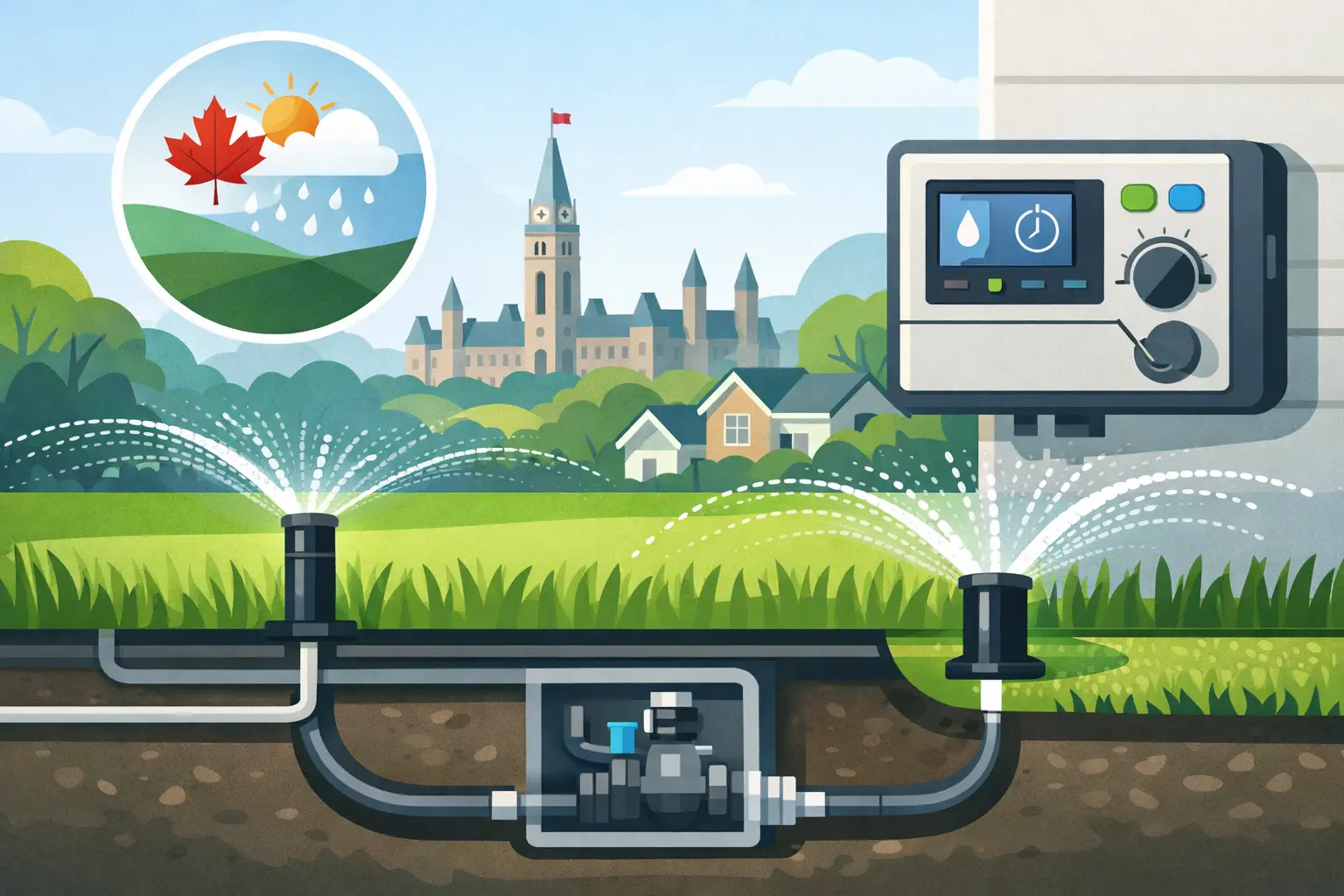
A lawn can look green near the house and stressed along the driveway even when the sprinklers run every morning. That is usually not a watering-time problem. It is a coverage and control problem. This automatic watering system guide explains what a properly designed residential system should do: deliver the right amount of water to each area, avoid waste, and make lawn care far less hands-on.
For Ottawa homeowners, an irrigation system also has to handle distinct seasons. It needs dependable spring startup, adjustment through changing summer weather, and proper winterization before freezing temperatures arrive. The goal is not simply to have sprinklers. It is to have a system that works accurately for your property year after year.
What an Automatic Watering System Should Solve
A well-designed sprinkler system replaces guesswork with consistent coverage. Instead of moving a hose, checking timers, and trying to remember which patch of grass was missed, the controller runs a programmed schedule and each zone receives water at the right time.
That consistency matters because lawns do not respond well to extremes. Too little water can leave turf thin, stressed, and vulnerable during hot stretches. Too much water can encourage shallow roots, disease, runoff, and unnecessary water use. Proper irrigation applies water slowly enough for the soil to absorb it, then adjusts as conditions change.
Convenience is a major benefit, but accuracy is what protects the value of the system. An automatic system should account for sunny and shaded areas, garden beds, slopes, narrow side yards, and different plant material. A single schedule for the entire property rarely produces the best result.
Start With Zone Design, Not Sprinkler Heads
The foundation of every reliable system is zoning. A zone is a group of sprinkler heads or drip lines that operate together. Because water pressure and flow are limited, a property is divided into sections so each area receives adequate coverage without overloading the water supply.
A front lawn exposed to afternoon sun may need a different runtime than a shaded backyard. Shrubs and flower beds generally need a different watering method than turf. Sloped areas may need shorter cycles with breaks in between to prevent water from running onto the sidewalk or driveway.
A professional site assessment considers the size and shape of the lawn, sun exposure, soil conditions, landscaping, water pressure, available flow, and drainage. It also identifies obstacles such as trees, walkways, retaining walls, and patios. These details determine where heads go, which nozzle types are used, and how many zones the system needs.
Head-to-head coverage is an important design principle for lawns. In simple terms, sprinkler patterns should overlap so one head reaches the next. This reduces dry strips between sprinklers and helps compensate for wind and changing conditions. Spacing heads too far apart may lower installation cost initially, but it often leads to uneven turf and repeated adjustments later.
Choose the Right Watering Method for Each Area
Pop-up spray heads and rotary nozzles are commonly used for residential lawns. Spray heads suit smaller, regularly shaped areas, while rotary nozzles often work well where slower application and longer throw are needed. The right choice depends on the zone, not on using one product everywhere.
Garden beds, foundation plantings, and hedges often benefit from drip irrigation. Drip lines direct water close to the root zone, where plants need it, rather than spraying foliage or hard surfaces. This can reduce evaporation and keep water off siding, windows, fences, and walkways.
Nozzle selection also needs to match within each zone. Combining heads with very different precipitation rates can cause one area to receive too much water while another stays dry. This is a common issue with older systems and a practical reason to consider an upgrade rather than continuing to make small adjustments to poor coverage.
Smart Controls Make Better Decisions Possible
A basic controller can run a fixed schedule, but a smart controller gives homeowners more flexibility and greater control over water use. Depending on the setup, it can adjust watering based on local weather conditions, seasonal changes, rainfall, and temperature.
Smart controls are most useful when paired with a sound system design. They cannot correct poorly placed heads, low pressure, leaks, or zones that combine incompatible plantings. But when the irrigation layout is right, a modern controller can reduce unnecessary watering without asking you to constantly change the schedule.
A rain sensor is another valuable safeguard. It pauses watering during or after rainfall so the system does not run when the lawn has already received enough moisture. In many cases, this is one of the simplest upgrades for an existing system.
Remote access can also be helpful for busy homeowners. You can check schedules, pause a cycle, or make seasonal adjustments from a phone instead of opening a controller in the garage or basement. The practical benefit is control without adding another household task to your routine.
Set Schedules for the Season, Not the Calendar
There is no single watering schedule that works for every lawn all summer. A cool, rainy week calls for a different approach than several days of heat, sun, and wind. Your lawn type, soil, shade, and slope also affect how quickly water is needed.
Early morning is generally the best time to water. It reduces evaporation compared with mid-day watering and gives grass blades time to dry after the cycle. Watering late at night can leave moisture sitting on the lawn longer, which may contribute to disease pressure.
Rather than running short, frequent cycles every day, many lawns perform better with deeper, less frequent watering. The exact runtime depends on the sprinkler type and soil’s absorption rate. Clay-heavy soil may need cycle-and-soak programming: a shorter run, a pause, then another short run. This allows water to move downward instead of pooling or running off.
Your system should be checked periodically during the season. Look for heads blocked by grass or mulch, tilted heads, broken nozzles, wet areas that may indicate a leak, and water spraying onto pavement. A small issue can waste a surprising amount of water while leaving the lawn unevenly watered.
Installation Quality Affects Long-Term Performance
An irrigation system is buried and largely out of sight, but the installation work matters every season afterward. Proper pipe sizing, valve placement, wire connections, backflow protection, head layout, and controller programming all affect reliability.
A quality installation should be planned around your property rather than forced into a standard layout. It should also be installed with future maintenance in mind. Accessible valves, clearly identified zones, and thoughtfully placed heads make repairs and adjustments more straightforward.
If you already have an older system, you may not need to replace everything. A service visit can identify whether the issue is a controller, valve, wiring fault, damaged head, poor nozzle selection, or a more significant design limitation. Upgrades such as smart controls, rain sensors, pressure-regulated heads, and drip zones can often improve performance while preserving usable parts of the existing system.
Do Not Skip Seasonal Service
In a climate with freezing winters, seasonal service is part of owning an irrigation system. A spring startup checks the controller, valves, zones, and heads before regular watering begins. It is the right time to catch winter damage, reset schedules, and confirm that coverage still matches the landscape.
Fall winterization is equally important. Water left in irrigation lines can freeze, expand, and damage pipes, fittings, valves, and backflow components. Professional blowout service removes water from the system using the proper equipment and pressure. Skipping this step can turn a small maintenance appointment into expensive spring repairs.
Advanced Irrigation provides installation, repairs, smart upgrades, spring startups, and winterization for homeowners who want one local team to support the full life of their system. More than 30 years of hands-on experience matters when the work needs to be precise, dependable, and suited to Ottawa properties.
A Better Lawn Should Not Require Constant Attention
The best automatic watering system is not the one with the most features. It is the one that fits your yard, applies water evenly, responds to changing conditions, and is maintained before small issues become larger ones. When your lawn has the right zones, properly selected heads, practical controls, and seasonal protection, it can stay healthier with less effort and less wasted water.
If you are tired of moving hoses, correcting dry patches, or wondering whether an aging sprinkler system is doing its job, start with a professional assessment. A few well-planned improvements can make every watering cycle more useful and every summer a little easier.