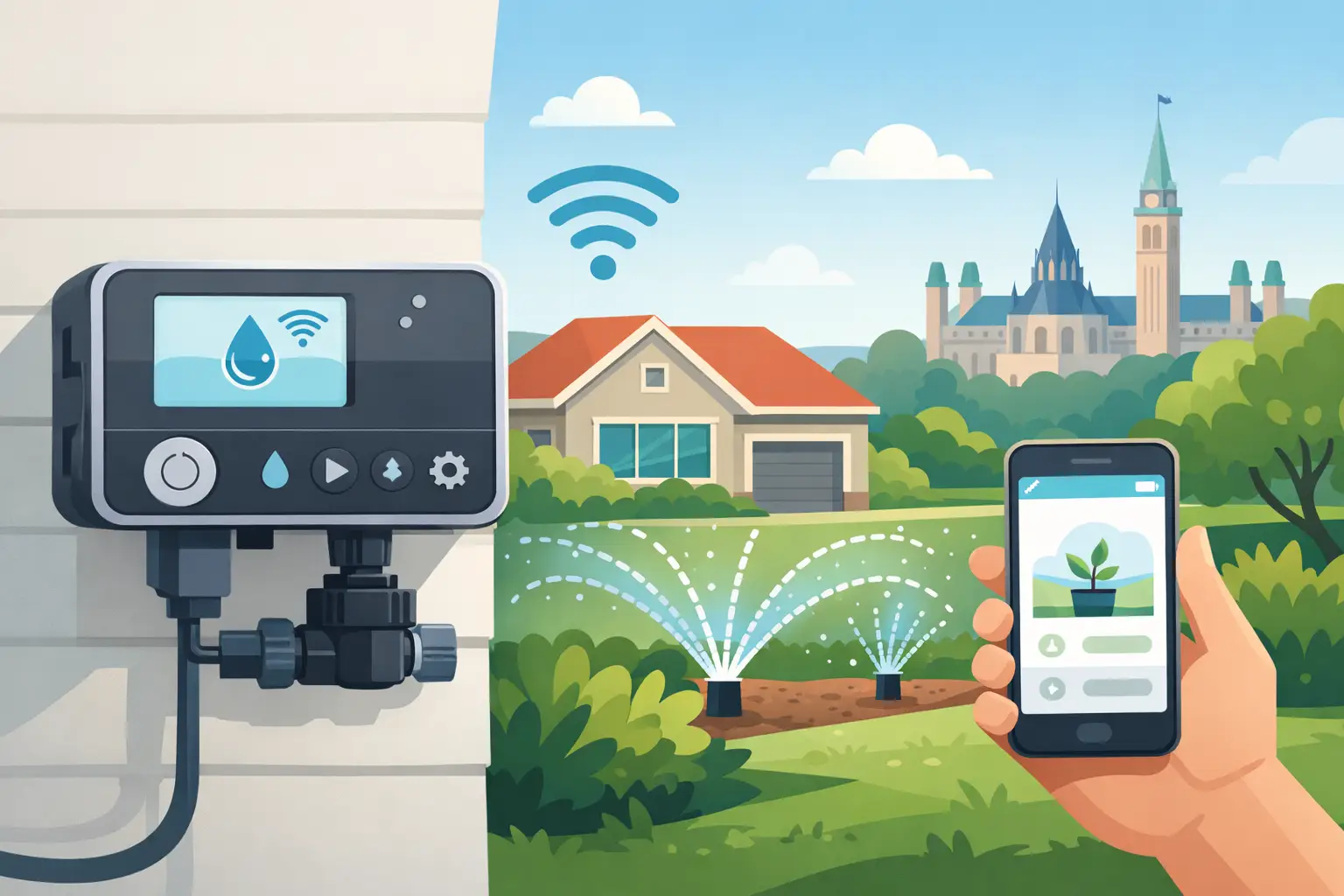
A lawn can look perfectly fine on Friday and show dry, uneven patches by Sunday after a hot Ottawa weekend. That is where a wifi irrigation controller review becomes practical rather than technical. The right smart controller gives homeowners better control over when, where, and how much their sprinkler system waters – without standing in the garage adjusting a dial every time the weather changes.
A WiFi controller is not a cure for poor sprinkler coverage, damaged heads, or a system that was never designed for the property. But when it is matched to a well-maintained irrigation system, it can reduce waste, improve consistency, and take much of the guesswork out of lawn care.
What a WiFi Irrigation Controller Actually Does
A traditional controller runs a fixed schedule. If it is programmed to water every Monday, Wednesday, and Saturday, it will generally do that whether the lawn has received a day of steady rain or is dealing with a dry stretch and high temperatures.
A WiFi irrigation controller connects the system to a mobile app and, depending on the model and settings, local weather information. From a phone, homeowners can change start times, skip a cycle, turn on a zone for a quick test, or receive alerts about issues that need attention. Better models can automatically adjust run times based on rainfall, temperature, season, and site conditions.
The biggest benefit is not simply being able to run sprinklers from a phone. It is making more informed watering decisions without having to constantly manage the schedule. For busy homeowners, that means a healthier lawn with less manual effort. For anyone concerned about water use, it means avoiding irrigation when the landscape has already received enough moisture.
WiFi Irrigation Controller Review: What Matters Most
Not every connected controller offers the same value. The best choice depends on the number of zones in the system, the condition of the existing wiring, the property’s WiFi signal, and how much control the homeowner wants.
Reliable weather-based adjustments
Weather adjustment is the feature most homeowners notice first. A capable controller can reduce or suspend watering after rain and increase watering during sustained heat. This helps prevent the common problem of a fixed schedule applying the same amount of water in May as it does in late July.
Still, weather data should support good system design, not replace it. A shaded backyard, a sunny boulevard, new sod, and established garden beds may all need different run times. The controller should allow zone-by-zone programming so the system can account for those differences.
Enough zones for the property
Controllers are commonly available in configurations that support several zones, with larger options for more complex properties. Homeowners should count the active zones in their existing system before choosing a unit. Buying a controller with too few stations creates an immediate limitation. Buying significantly more capacity than needed may not add much value unless an expansion is planned.
A professionally installed system often separates lawn areas, gardens, drip irrigation, and hard-to-water locations into different zones. That separation is what lets a smart controller use water accurately rather than treating the entire property as one large area.
A simple app that gets used
The best app is not necessarily the one with the most settings. It is the one a homeowner can understand and use when it matters. Look for clear zone labels, easy seasonal adjustments, rain-delay controls, notifications, and manual operation from the phone.
A complicated app can become a frustration, especially when a homeowner needs to pause watering before guests arrive or test a zone after noticing a dry area. Simple, dependable controls are usually more valuable than a long list of features that go untouched.
Strong WiFi at the controller location
This point is often overlooked. The controller is usually mounted in a garage, basement, utility room, or exterior enclosure, and those locations do not always have a reliable WiFi signal. If the connection drops regularly, weather updates and remote access may become inconsistent.
Before upgrading, test the home network where the controller will be located. A WiFi extender or network adjustment may be needed. The irrigation system will usually continue running its saved schedule if the internet is temporarily unavailable, but its smart features cannot perform as intended without a stable connection.
Compatibility with the existing system
Most modern WiFi controllers work with standard 24-volt residential sprinkler valves. That makes them a straightforward upgrade for many existing systems. However, older wiring, damaged solenoids, non-functioning valves, or a failing rain sensor can complicate the project.
This is why an upgrade should begin with an inspection rather than a box purchase. A controller can identify certain electrical issues on some systems, but it cannot repair a cut wire, correct a leaking valve, or fix uneven coverage caused by misplaced sprinkler heads.
Where Smart Controllers Deliver Real Value
For a homeowner who travels, works long hours, or simply does not want to think about sprinkler programming every week, a WiFi controller is a meaningful upgrade. It provides visibility. You can check whether the system is scheduled to run, pause it during a rainy period, or adjust a zone without walking to the controller.
It is also valuable on properties with changing needs. New landscaping, a renovated patio, newly planted trees, and fresh sod all require temporary watering adjustments. Rather than resetting a complicated dial-based timer, the schedule can be updated in minutes.
The water-saving potential is real, but it depends on the system. A smart controller can prevent unnecessary cycles and fine-tune run times. It cannot compensate for broken heads that spray sidewalks, overspray onto driveways, or zones running longer than the soil can absorb. Water efficiency comes from good programming, proper sprinkler placement, functional equipment, and seasonal adjustments working together.
The Trade-Offs Homeowners Should Know
Smart controllers cost more than basic timers, and some advanced features may require a subscription or depend on specific weather services. Before choosing a model, confirm what features are included with the controller and whether there are ongoing costs.
There is also a learning curve. Automatic scheduling is helpful, but it should be reviewed periodically. A homeowner should still know how to shut off the system, run a manual zone, and recognize signs of a problem such as pooling water, low pressure, or dry sections of turf.
Privacy and account access are worth considering as well. Like any connected home device, a WiFi controller uses an app and online account. Choose a reputable manufacturer, use a strong password, and keep the app updated.
Finally, a smart controller does not remove the need for seasonal service. In Ottawa, proper spring startup and fall winterization remain essential. The controller manages watering during the operating season, but the irrigation lines still need to be protected from freezing temperatures before winter.
Is a WiFi Controller Worth It for Your Lawn?
For most established homeowners with an existing sprinkler system, the answer is yes when the current controller is outdated, difficult to program, or poorly matched to the property’s needs. The upgrade is especially worthwhile when the system has multiple zones, landscape areas with different watering requirements, or a history of wasted water from rigid scheduling.
It may not be the first priority if the system has more basic problems. A controller upgrade should come after repairing leaks, correcting coverage issues, replacing damaged heads, and confirming that each zone operates properly. Technology performs best when the equipment it controls is in good condition.
Advanced Irrigation approaches controller upgrades as part of the entire irrigation system, not as a stand-alone gadget. After more than 30 years of working with residential sprinkler systems, the practical lesson is simple: the right controller, installed and programmed correctly, saves homeowners time and helps protect the investment they have made in their lawn.
Before selecting a WiFi controller, take a close look at the zones, the signal strength at the controller, and the condition of the system itself. A smart upgrade should make watering easier, but more importantly, it should give every part of the landscape the attention it actually needs.