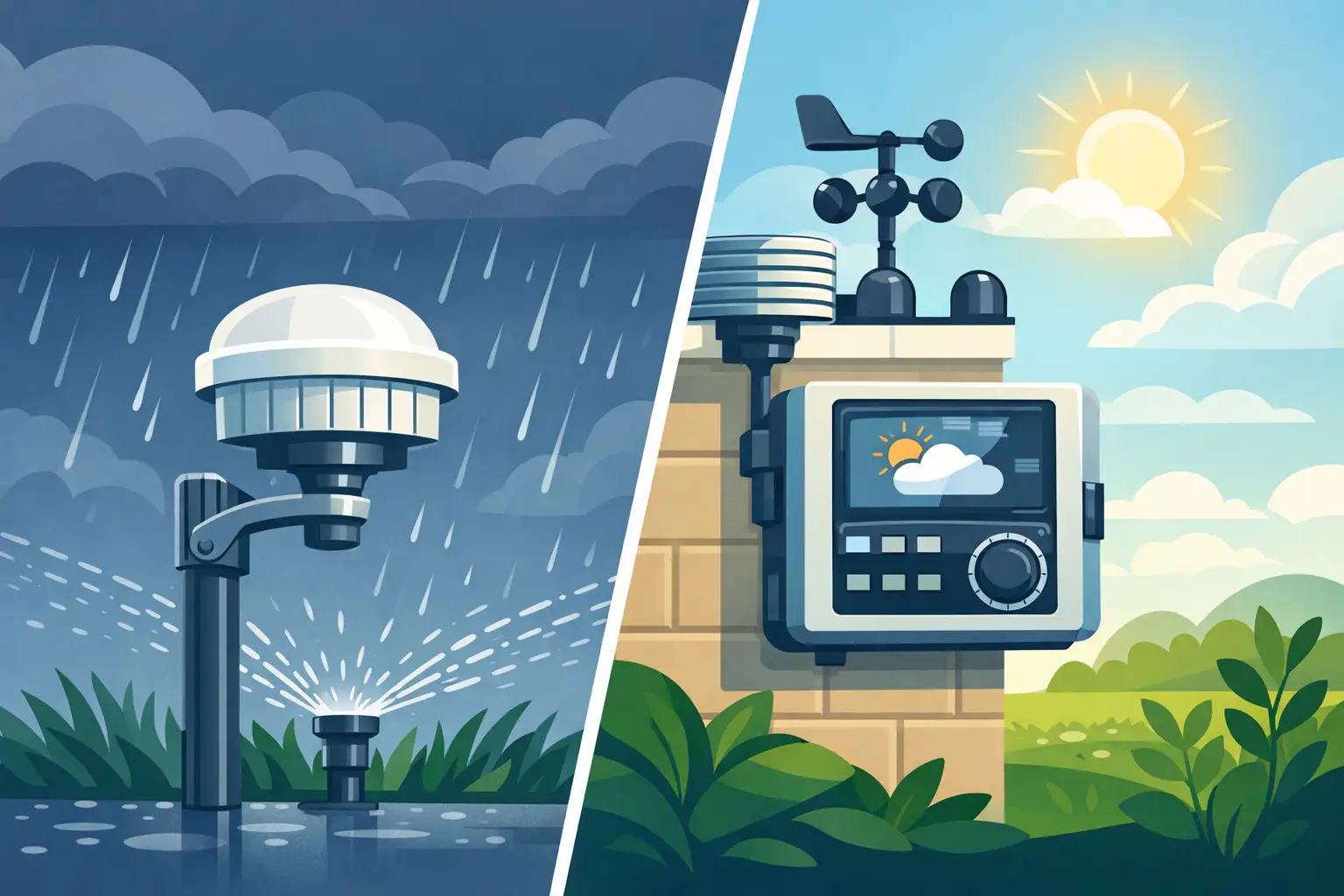
A sprinkler system should not keep running because a timer says Tuesday when the lawn has already received a full day of rain. That is the practical difference homeowners are weighing when comparing a rain sensor versus weather controller. Both can reduce waste and protect your lawn from overwatering, but they solve the problem in very different ways.
For many Ottawa-area homes, a rain sensor is a simple, reliable upgrade. A weather controller is a more advanced option that adjusts watering around changing conditions. The right choice depends on your existing system, landscape, budget, and how much automatic control you want.
Rain Sensor Versus Weather Controller: The Main Difference
A rain sensor is a small device mounted in an open area, often near the roofline or on a fence. It detects rainfall and temporarily shuts off scheduled irrigation once enough rain has fallen. As the sensor dries, it allows the sprinkler controller to resume its normal program.
A weather controller does more than stop watering during rain. It uses local weather information or on-site data to calculate how much water your landscape is likely to need. Depending on the controller, it may factor in rainfall, temperature, humidity, wind, and seasonal changes. It then adjusts run times or watering days automatically.
Put simply, a rain sensor prevents an obvious mistake: watering while it is raining or immediately afterward. A weather controller manages watering more actively, helping the system respond to both wet weeks and hot, dry stretches.
When a Rain Sensor Makes Sense
A rain sensor is often the right starting point for a homeowner with a dependable conventional timer. If your sprinkler system waters properly but does not account for rain, this upgrade can add useful protection without replacing the whole controller.
The benefits are straightforward. Rain sensors are generally less expensive than smart weather-based controllers, simple to install on many existing systems, and easy to understand. Once set correctly, they help avoid the familiar sight of sprinklers running during a storm or soaking ground that is already saturated.
They are especially practical for homeowners who prefer a fixed watering schedule. For example, if you are comfortable watering on set days and simply want the system to pause after rainfall, a rain sensor can do the job well.
There are limits. A rain sensor cannot tell whether several days of heat, wind, and sun have dried out your lawn after a brief shower. It does not adjust individual zone run times for a shaded side yard versus a sunny front lawn. It only knows whether enough rain has activated the sensor.
That does not make it a poor choice. It makes it a focused one. For a well-maintained system with sensible programming, a rain sensor is a cost-effective way to reduce unnecessary watering.
When a Weather Controller Is Worth the Upgrade
A weather controller is built for homeowners who want less guesswork from their irrigation system. Instead of relying on the same schedule through spring, summer, and fall, the controller makes regular adjustments based on current conditions.
This is valuable in Ottawa, where weather can change quickly. A cool, rainy week in May does not call for the same irrigation schedule as a hot, dry stretch in July. A weather controller can reduce watering when conditions are mild and increase it when turf and plant material need more moisture.
The greatest advantage is precision. A properly configured weather controller can apply seasonal adjustments automatically, helping prevent both overwatering and underwatering. That can support deeper roots, more consistent lawn color, and less runoff from compacted or oversaturated soil.
Many modern controllers also provide convenient access through a phone app. Homeowners can view schedules, pause watering, or make adjustments without going to the garage. That convenience is useful, but it is not the main reason to install one. The real value comes from making better watering decisions consistently.
A weather controller does require a larger upfront investment and proper setup. It must be programmed around your property, including zone types, sprinkler nozzles, soil conditions, sun exposure, and plant material. Installing advanced equipment without checking coverage or correcting damaged heads will not produce the results homeowners expect.
Your Lawn and System Condition Matter
Choosing between these options should not happen in isolation. The controller can only work with the system it is connected to.
If sprinkler heads are clogged, tilted, leaking, or spraying sidewalks, a rain sensor or weather controller will not fix those issues. If one zone waters a shaded garden bed and a full-sun lawn at the same time, no controller can perfectly meet both needs. Reliable irrigation starts with good design, even coverage, and equipment that is working as intended.
For an older system, a rain sensor may be the sensible first upgrade if the controller is still functional and coverage is generally sound. For a system that needs modernization, a weather controller can be part of a larger improvement that includes better nozzles, repaired valves, adjusted heads, and updated programming.
This is also why a professional inspection is helpful. The best recommendation is not always the most advanced product. It is the solution that matches the property and delivers measurable value.
Cost, Water Savings, and Long-Term Value
A rain sensor typically costs less to add than a weather controller, making it attractive for homeowners who want a practical water-saving improvement with minimal changes to their system. Its savings come from skipping irrigation after meaningful rain events.
A weather controller usually costs more because it replaces or upgrades the controller and requires more detailed programming. Its potential savings can be greater because it adjusts watering throughout the season, not only after rain. The actual results vary with your landscape, watering habits, and the condition of your system.
Homeowners should be cautious about promises of a specific percentage of water savings. A poorly programmed system may see a major improvement after an upgrade. A carefully managed system may see a more modest change. Either way, reducing unnecessary cycles helps control water use while avoiding the lawn stress that comes from inconsistent watering.
The long-term value is not just about utility use. Overwatering can contribute to shallow roots, disease pressure, runoff, and wasted effort. Underwatering can leave turf thin and stressed during the hottest parts of summer. The goal is to deliver the right amount of water at the right time, not simply to water less.
A Practical Choice for Ottawa Homeowners
Choose a rain sensor if your current controller is in good shape, you use a consistent schedule, and you want affordable protection against watering after rain. It is a dependable improvement for many residential sprinkler systems.
Choose a weather controller if you want the system to adapt automatically through the season, have varied sun exposure or landscape zones, or are already planning to modernize aging irrigation equipment. It is often the stronger choice for homeowners who value convenience, precision, and long-term water management.
In some cases, the best answer is both. Many weather controllers can work with a rain sensor, providing an additional local shutoff point while the controller manages broader seasonal adjustments. Whether that added layer is worthwhile depends on the controller model and the property.
Proper Setup Makes the Difference
Neither option is truly set-it-and-forget-it forever. Rain sensors need to be placed where they receive normal rainfall, not under an overhang or near a heat source that dries them too quickly. Weather controllers need accurate zone information and occasional review as landscaping matures or watering needs change.
Seasonal service matters as well. Spring startup is the right time to check sensor operation, controller programming, and sprinkler coverage before summer demand begins. Fall winterization protects irrigation components from freezing temperatures, while repairs completed during the season prevent small problems from becoming expensive ones.
A healthy lawn does not need a sprinkler system that runs more often. It needs one that responds to the property and the weather with the right amount of care. A properly selected and professionally programmed sensor or controller can make that easier every week of the growing season.